TRENDING

Sunday, 8 November 2026
----------------------
28 Jumada Al-Awwal 1448 AH
Four weeks of mass rallies have turned French cities into flashpoints as citizens confront rising prices and a government fighting to stay afloat. Police arrests and banned gatherings expose the clash between ordinary households and entrenched power structures.
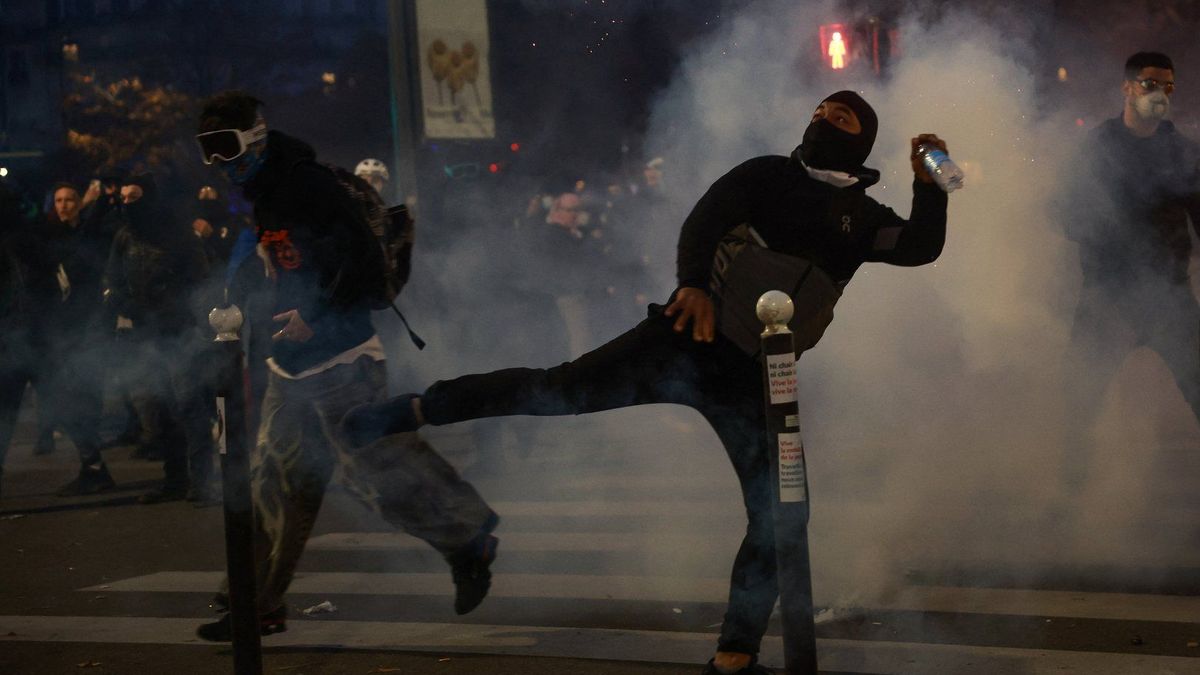
On Saturday, France saw an estimated 146,000 people march in cities from Paris to Marseille, defying a police ban on the traditional Yellow Vests rally. The demonstration turned violent when officers used tear‑gas and batons to disperse crowds, leading to the arrest of two protest coordinators and dozens of injuries on both sides. This marks the fourth consecutive week of nationwide unrest over soaring food, energy, and housing costs.
The unrest is rooted in a confluence of macro‑economic pressures and political calculations. After the 2024 European fiscal compact tightened budgetary leeway, President Emmanuel Macron’s administration was forced to curtail subsidies and delay pension reforms, sparking anger among workers already squeezed by inflation that has hovered above 7% for twelve months. The government’s reliance on EU‑approved deficit limits means any expansive social safety net faces bureaucratic roadblocks, pushing the burden onto households.
At the same time, the police apparatus has been reshaped under the 2025 security law, which expands surveillance powers and grants broader discretion for crowd‑control tactics. This legal framework emboldens law‑enforcement agencies to pre‑emptively ban assemblies deemed “threats to public order,” a tool used to suppress the Yellow Vests’s traditional Saturday demonstrations. Politically, the ruling party seeks to project competence ahead of the 2027 legislative elections; a hard line on protests is presented as a stance against chaos, even as the same leadership negotiates tax cuts for large corporations to keep foreign investment flowing.
Internationally, France’s position within the EU amplifies the stakes. A prolonged domestic crisis could weaken its bargaining power in negotiations over the EU’s climate fund and defense spending, prompting Brussels to quietly encourage a swift, visible crackdown to preserve the bloc’s image of stability.
In the agricultural heartland of Nouvelle‑Aquitaine, small‑scale farmers report that rising diesel prices have eroded profit margins, forcing some to abandon fields. The protests have halted local markets, depriving families of essential income and food access.
In Paris, commuters face daily disruptions as major arteries like the Boulevards are blocked. Delivery drivers, already coping with higher fuel costs, lose hours of work, while low‑wage service staff miss shifts due to curfews imposed after the clashes.
The police force itself sustains casualties: dozens of officers reported injuries from projectiles and chemical irritants. While the state frames these as “necessary sacrifices,” many rank‑and‑file members voice concerns over inadequate protective gear and the psychological toll of repeated confrontations.
While headlines focus on street battles, major retailers such as Carrefour and Auchan have quietly adjusted pricing algorithms to offset higher import costs, passing a portion of the burden onto consumers without public scrutiny. Their lobbying efforts in Brussels aim to secure temporary tariff relief, a detail largely omitted from official statements.
The French government repeatedly cites “European budget rules” as justification for austerity, yet the same rules have been flexibly applied to wealthier member states during crises. This selective enforcement is rarely highlighted, allowing policymakers to attribute hardship to external mandates rather than domestic policy choices.
State‑affiliated broadcasters have emphasized the “law‑breaking” nature of the protests, while independent outlets reporting on police misconduct face limited airtime. The narrative of a “peaceful citizenry versus violent agitators” obscures the systemic issues that fuel dissent, such as stagnant wages and unaffordable housing.
The next few months will test whether Macron can steer a compromise that eases household pressure without alienating his fiscal backers. Watch for any amendment to the 2025 security law that could further restrict assembly rights, and for the upcoming municipal elections in early 2027, which may serve as a barometer of public tolerance for the current approach. Internationally, monitor EU deliberations on the next multi‑annual financial framework; any softening of fiscal rules could reshape the calculus of French social policy. Finally, keep an eye on the legal outcomes for the arrested protest coordinators, as their trials may set precedents for how dissent is criminalized in the years ahead.
The movement revived after a series of price hikes in energy, food, and housing that pushed many households below the poverty line, reigniting the grievances that sparked the original 2018 protests.
The 2025 security law expanded police authority to pre‑emptively prohibit assemblies deemed a threat to public order, allowing officials to cancel protests like the traditional Saturday Yellow Vest gathering.
Source referenced: ALJAZEERA
This brief was synthesized by our Editorial Engine and reviewed by The Ground Narrative team.