TRENDING

Sunday, 8 November 2026
----------------------
28 Jumada Al-Awwal 1448 AH
Israeli President Isaac Herzog has tasked former military chief Gadi Eisenkot with forming the next government, bypassing Benjamin Netanyahu. This decision highlights the intricate coalition math and the surprising leverage of marginalized political blocs in shaping Israel's future.
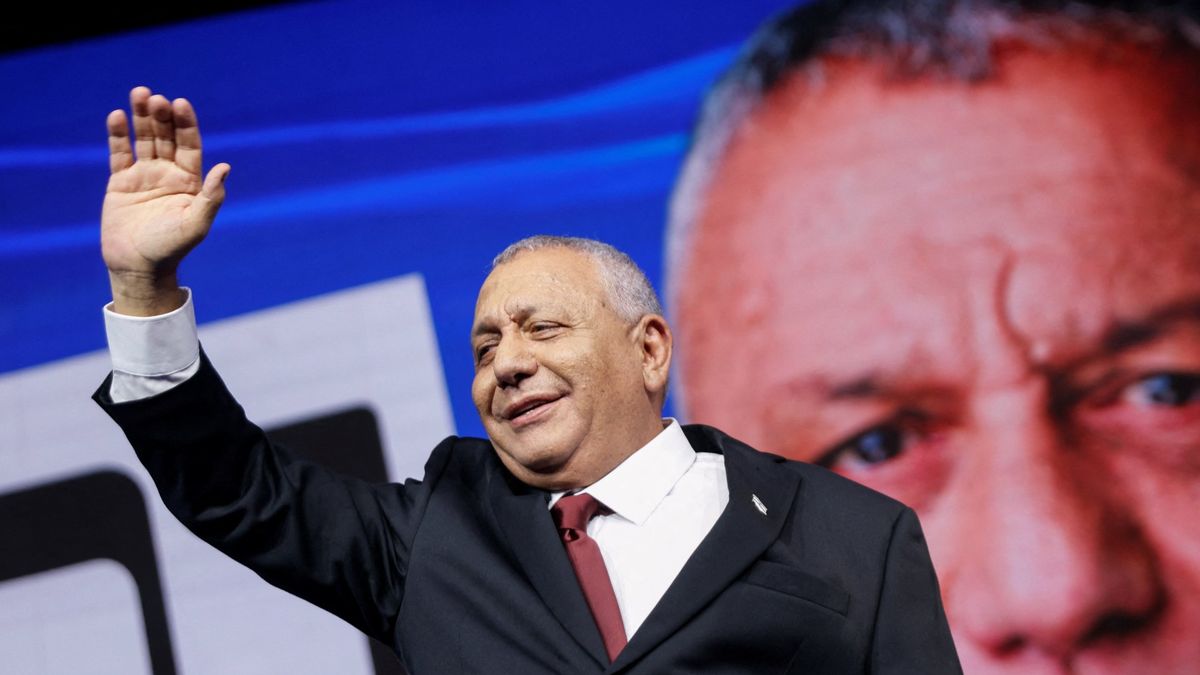
After a closely contested general election on October 27, Israeli President Isaac Herzog formally tasked Gadi Eisenkot, leader of the Yashar party and a former military chief, with forming the country's next government. This decision bypasses incumbent Prime Minister Benjamin Netanyahu, whose right-wing and religious bloc secured 53 seats, falling short of a majority. Eisenkot's alliance won 48 seats, but he garnered recommendations from 67 lawmakers, significantly more than Netanyahu's 46. Eisenkot now has 28 days, with a possible 14-day extension, to assemble a 61-seat coalition, a task complicated by his stated refusal to include Arab-led parties directly, despite their record 19 seats.
Israel's proportional representation system consistently leads to fractured parliaments, making coalition building a complex dance where smaller parties become kingmakers. President Herzog's decision to tap Eisenkot over Netanyahu was a strategic move to break political deadlock and potentially usher in different stability. By selecting Eisenkot, a figure with a strong military background but less entrenched in right-wing ideological battles, Herzog signals a desire for leadership perceived as more unifying. Eisenkot's past role as an observer in Netanyahu's war cabinet during the initial months of the Gaza conflict also lends him national security credibility.
Eisenkot's path to government is challenging. His alliance holds 48 seats; to reach the 61-seat threshold, he must secure support from other parties. The most direct route involves winning over the two ultra-Orthodox parties, United Torah Judaism and Shas, which together hold 13 seats, bringing him to exactly 61. These parties are known for specific demands concerning religious autonomy, state funding, and military service exemptions. Their support comes at a significant political and economic price, potentially alienating secular elements within Eisenkot's bloc.
The leverage of Arab-led parties is critical, yet often unacknowledged. Despite winning a record 19 seats, Eisenkot has ruled out forming a government *with* them. This exclusion, a long-standing feature of Israeli politics, highlights a deep reluctance among mainstream Zionist parties to fully legitimize Palestinian citizens of Israel as national governance partners. Yet, their numerical strength means they cannot be entirely ignored. Even if not formally part of the coalition, their tacit support or abstention in key votes could be crucial for Eisenkot to maintain a parliamentary majority. This creates a paradox: their exclusion paradoxically amplifies their indirect power.
Netanyahu's warning that a government supported by Arab-led parties would lead to Israel's "collapse" is a classic tactic of political delegitimization. It aims to rally his base and pressure potential coalition partners away from engagement with Palestinian-Israeli representatives. This rhetoric underscores the fragility of Israeli society's internal cohesion and deep mistrust. For Netanyahu, this election marks a significant personal setback, potentially signaling the end of an era, though his future influence from opposition remains to be seen.
The constant churn of Israeli politics, marked by frequent elections and protracted coalition negotiations, exacts a heavy toll on its citizens. Beyond abstract instability, real people bear the consequences of a government perpetually on the brink.
The most significant human cost falls upon the Palestinian citizens of Israel. Representing over 20% of the population, their record 19 seats in the Knesset should grant them influence. Instead, they face a "loyalty test" narrative, fueled by figures like Netanyahu, questioning their legitimacy as full citizens and their right to participate in governance. This framing justifies their exclusion from mainstream coalition building. This marginalization translates into tangible disadvantages: communities with high concentrations of Palestinian citizens of Israel often receive fewer state resources, face discriminatory planning policies, and experience higher rates of poverty. When their representatives are excluded, their specific needs are less likely to be addressed. The human cost is a perpetual state of second-class citizenship and a constant struggle for equality.
For the broader Israeli public, the cycle of instability leads to policy paralysis. Critical long-term issues—from economic reforms to social welfare—often languish as leaders prioritize short-term survival. This instability breeds cynicism and erodes public trust, diverting resources from pressing societal needs. Furthermore, the highly charged political climate deepens existing societal fissures: between secular and religious Jews, and most profoundly, between Jewish and Palestinian citizens. This constant internal friction strains the social fabric, leading to increased polarization and distrust. The human cost is a society struggling to find common ground, where political differences are often framed as existential threats.
The ongoing "genocidal war on Gaza" casts a long shadow over Israeli politics. A government preoccupied with its own survival may be less capable of making strategic, long-term decisions regarding the conflict, potentially prolonging suffering or escalating tensions. Eisenkot's past role in the war cabinet suggests continuity in military and security thinking. For Palestinians in Gaza, this means the prospect of continued military operations, blockades, and humanitarian crises. The human cost is measured in lives lost, homes destroyed, and a population pushed to the brink. For Israelis, the conflict also carries a heavy human cost, from the psychological burden of perpetual conflict to the economic strain of military expenditure. A stable, decisive government is crucial, and its absence compounds suffering on all sides.
Behind the headlines of coalition talks, several critical narratives are either downplayed, omitted, or framed to obscure their true significance by powerful actors.
The most glaring omission is the consistent effort to delegitimize the political participation of Palestinian citizens of Israel. Netanyahu's warning about a government supported by Arab-led parties leading to Israel's "collapse" is a strategic move to reinforce a narrative that positions Palestinian-Israeli political aspirations as inherently disloyal. This framing justifies their exclusion from mainstream coalition building, despite their significant electoral mandate. What is downplayed is that these Arab-led parties represent the democratic will of a substantial citizenry, focusing on civil equality and social justice. By painting them as an external threat, powerful Israeli political figures avoid engaging with fundamental questions of equality and shared citizenship.
While Eisenkot's mandate is presented as a break from the Netanyahu era, the extent to which it represents a genuine shift in policy or ideology is often downplayed. Eisenkot is a former military chief, deeply embedded in Israel's security establishment. His participation as an observer in Netanyahu's war cabinet during the initial phase of the Gaza conflict suggests continuity in strategic thinking. The narrative of a "new face" can obscure the underlying consensus among much of Israel's political elite on core issues like the occupation and settlement expansion. While rhetoric might soften, fundamental power imbalances and state policy on critical fronts may remain largely unaltered. Powerful actors benefit from presenting him as a stark alternative, even if his policy positions are only marginally different.
Public discourse often focuses on ministerial portfolios. What is downplayed are the specific and far-reaching demands of the ultra-Orthodox parties. Their support is crucial, and they leverage this power for concessions that profoundly impact Israeli society, including increased funding for religious schools and exemptions from military service. These concessions, while framed as necessary for coalition stability, have significant long-term implications for the character of the Israeli state, its economy, and its social cohesion. They contribute to a growing burden on the secular tax base, exacerbate inequalities in military service, and deepen societal divides. The broader public is rarely given a clear account of the full societal cost of these "kingmaker" demands.
The coming weeks are critical as Gadi Eisenkot navigates Israeli coalition politics. Observers should focus on several key indicators.
First, pay close attention to the specific demands and concessions made to the ultra-Orthodox parties, United Torah Judaism and Shas. Their price for joining the coalition will reveal much about the incoming government's priorities and its willingness to compromise on military conscription and religious law, impacting Israeli society and its economy.
Second, monitor the subtle interactions between Eisenkot's emerging coalition and the Arab-led parties. While direct inclusion is ruled out, their numerical reality means tacit support or abstention could be essential for stability. Watch for informal understandings or symbolic gestures indicating pragmatic engagement, despite public rhetoric. This will test whether the new government can move beyond past polarizing politics.
Third, observe Benjamin Netanyahu's role from opposition. His experience means he won't fade quietly. Watch for strategies to undermine the government, exploit divisions, and maintain relevance, especially with ongoing legal challenges. His ability to rally his base will remain a significant factor.
Finally, scrutinize the new government's approach to the ongoing conflict in Gaza and the broader Palestinian issue. While leadership changes, policy substance could remain consistent, given Eisenkot's military background. Any shifts in humanitarian aid, security operations, or diplomatic engagement will indicate whether this new government represents a genuine departure or merely a recalibration. The human cost of these decisions, particularly for Palestinians, will be the ultimate measure.
President Isaac Herzog tasked Eisenkot due to his broader support among lawmakers (67 vs. 46 for Netanyahu) and a desire to break political deadlock. Eisenkot, a former military chief, is perceived as a potentially more unifying figure than the polarizing Netanyahu.
Despite winning a record 19 seats, Arab-led parties are unlikely to be formally included in Eisenkot's coalition due to historical exclusion. However, their significant bloc means their tacit support or abstention in key votes could be crucial for the government's stability, giving them indirect but substantial leverage.
Eisenkot needs 61 seats and plans to secure this by winning over two ultra-Orthodox parties (United Torah Judaism and Shas). This strategy requires significant concessions on religious autonomy and military service exemptions, which could alienate secular members of his own bloc and lead to societal friction.
Source referenced: ALJAZEERA
This brief was synthesized by our Editorial Engine and reviewed by The Ground Narrative team.