TRENDING

Friday, 7 August 2026
----------------------
24 Safar 1448 AH
The petrol-bombing of a former cricket captain's home signals the escalating stakes in Bangladesh's political vacuum, as ousted leader Sheikh Hasina attempts a return from exile. This incident reveals the volatile intersection of celebrity, power, and popular anger in a nation grappling with deep divisions.
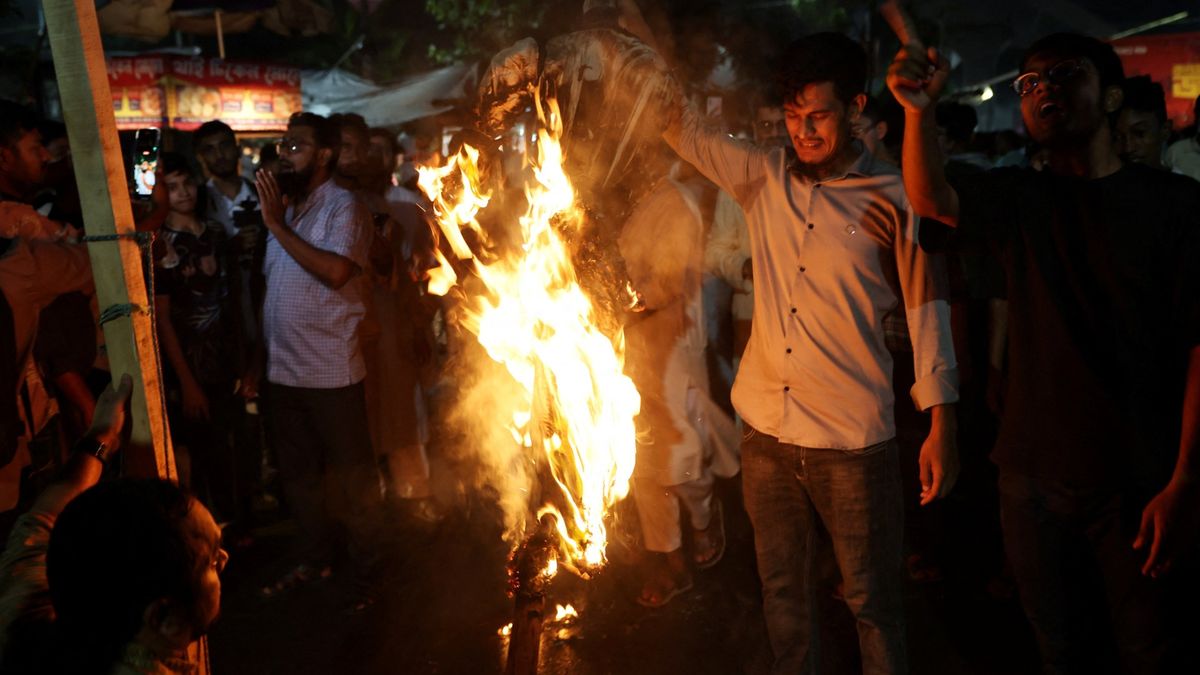
Windows were smashed and petrol bombs hurled at the ancestral home of former Bangladesh cricket captain Shakib Al Hasan in Magura, causing a fire on an upper floor. The attack came swiftly after Shakib, a former Awami League lawmaker, joined a virtual event with ousted Prime Minister Sheikh Hasina, who used the platform to reiterate her pledge to return to Bangladesh despite facing a death sentence in absentia. The property was unoccupied, and no injuries were reported, but the message was clear and chilling.
This incident is not merely an act of vandalism; it is a stark illustration of the intense power struggle unfolding in Bangladesh. Sheikh Hasina, ousted in 2024 by a student-led uprising and now living in New Delhi, is actively attempting to reassert her political relevance and challenge the legitimacy of the current government. Her public address from India, on the second anniversary of her ouster, is a calculated move to test the waters, rally support among her loyalists, and leverage international attention. For the current Bangladeshi administration, Hasina's actions, and India's perceived leniency in hosting her, represent a direct threat to their consolidation of power. The Ministry of Foreign Affairs' swift condemnation of Hasina's media appearance and its warning about potential harm to bilateral relations with India underscore the high stakes. Shakib Al Hasan, a national celebrity and former Awami League parliamentarian, finds himself caught in the crossfire. His association with Hasina transforms him from a sports icon into a potent political symbol, making him a target for those seeking to intimidate and silence any perceived opposition or support for the former regime.
The human cost of this political volatility extends far beyond the direct targets. While Shakib's home was empty, the attack sends a powerful message of intimidation to anyone considering aligning with the opposition or expressing dissent. This erosion of civic space and the threat of violence create a climate of fear, chilling free expression and political participation for ordinary citizens. Families and communities are forced to navigate a deeply polarized landscape where political allegiances can have severe personal consequences. The constant threat of instability impacts daily life, economic activity, and the overall sense of security for millions of Bangladeshis who are simply trying to live their lives, far removed from the power plays of political elites. The focus on high-profile figures like Shakib can overshadow the quiet suffering and anxiety of the general populace caught between warring factions.
What is often downplayed or omitted in official statements and media narratives is the profound depth of public discontent that led to Hasina's ouster. Her removal was not merely a 'student-led uprising' but a culmination of widespread grievances against her long rule, including allegations of authoritarianism, corruption, and human rights abuses. While Hasina dismisses the murder, embezzlement, fraud, money laundering, and war crimes charges against her as 'politically motivated,' these accusations resonate deeply with a significant segment of the population and fueled the movement that toppled her government. Furthermore, India's delicate balancing act of hosting Hasina while maintaining relations with the current Bangladeshi government is driven by complex strategic interests. While publicly examining Bangladesh's extradition request, India's long-term calculus involves maintaining influence in its neighborhood, potentially keeping Hasina as a political lever, or at least avoiding alienating a significant political force with historical ties to Delhi. This strategic ambiguity adds another layer of complexity to Bangladesh's internal power dynamics.
All eyes will be on Sheikh Hasina's promised return to Bangladesh in December. Will she attempt it, and if so, what will be the reaction from the current government, the military, and the public? India's decision regarding Bangladesh's extradition request for Hasina will be a critical test of its regional foreign policy and its relationship with Dhaka. Domestically, observers should watch for further acts of political violence or intimidation, which could signal an escalation of the power struggle. The ability of the current Bangladeshi government to maintain stability and consolidate its authority in the face of Hasina's challenges will be crucial. The role of the military and security forces in maintaining order and their alignment with the ruling powers will also be a key factor in determining the nation's immediate future.
Source referenced: ALJAZEERA
This brief was synthesized by our Editorial Engine and reviewed by The Ground Narrative team.