TRENDING

Sunday, 20 September 2026
----------------------
9 Rabi' Al-Thani 1448 AH
Russian drones have struck over 1,600 Ukrainian trains this year, threatening the lifeline that moves civilians and grain across the country. Kyiv’s scramble to protect railways reveals the power play behind logistics and the human toll of a war fought in the skies.
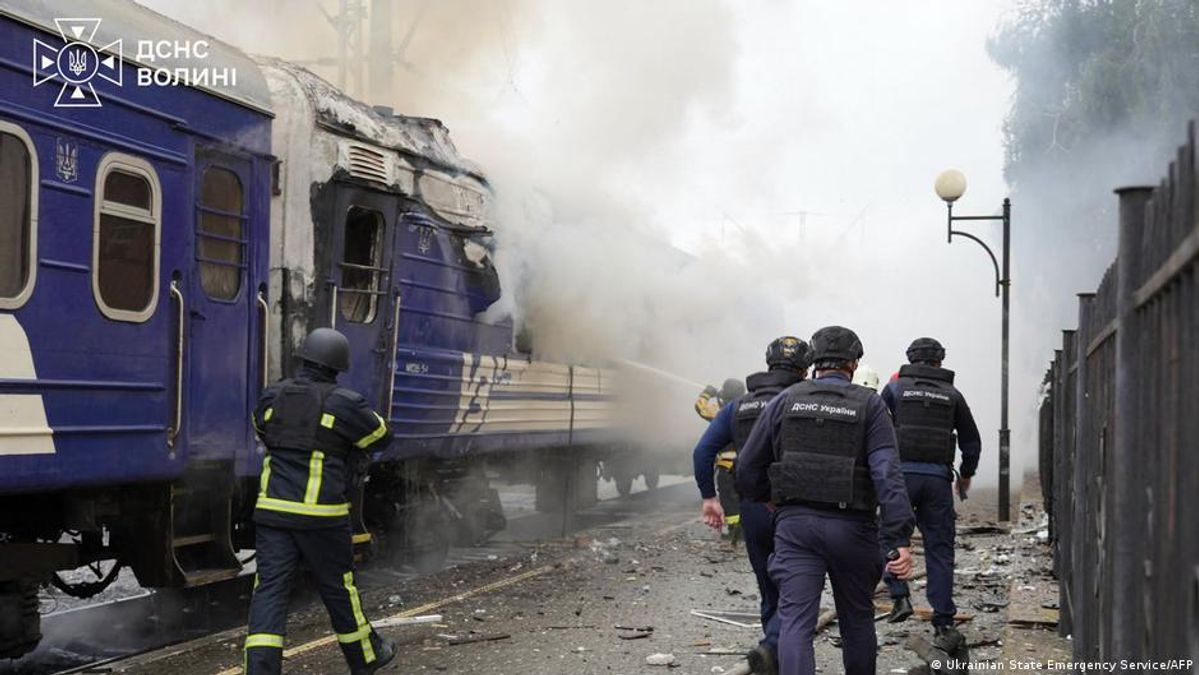
Ukrainian state rail operator Ukrzaliznytsia reported more than 1,600 drone attacks on locomotives, stations and tracks in the first eight months of 2026. Notable incidents include a strike on a Kyiv‑Mykolaiv passenger train on September 16 and a near‑miss on a diplomatic train carrying former European leaders just days earlier. The attacks have destroyed or damaged over 500 locomotives since the war began in 2022, prompting President Zelenskyy to order an emergency overhaul of rail protection measures.
The Russian campaign against Ukraine’s rail network serves multiple strategic functions. First, railways are the backbone of Ukraine’s logistics, moving civilians away from front‑line zones, delivering humanitarian aid and exporting grain that funds the war effort. By crippling locomotives, Moscow forces Kyiv to divert scarce resources to repairs, procurement and ad‑hoc security, eroding the state’s operational tempo. Second, the attacks exploit a technical vulnerability: locomotives emit a large thermal signature, making them easy to locate with off‑the‑shelf drones, especially the newer jet‑powered Shahed variants that reduce reaction time. Third, the targeting aligns with Russia’s broader “terror” narrative, aiming to demoralize a population already strained by displacement and winter preparations. Finally, the attacks pressure Ukraine’s allies. By highlighting the need for new, Western‑compatible locomotives—such as the Alstom contract signed this year—Moscow nudges Kyiv to seek deeper material support, potentially reshaping aid packages and procurement channels.
Every delayed or destroyed train ripples through ordinary lives. Rural communities in the east and south rely on rail for food, medicine and school supplies; when a line is shut, markets empty and prices spike. Evacuees fleeing combat zones face longer, colder journeys as buses replace trains on high‑risk routes, stretching already thin public transport. Railway workers endure heightened stress, receiving psychological support to cope with constant alarms and the knowledge that a single drone strike can turn a routine shift into a fatal incident. Seasonal winter preparations amplify the risk: without heat, stranded passengers in snow‑bound carriages face hypothermia, while families waiting at stations confront uncertainty about whether the next train will arrive.
Official statements emphasize the heroism of Ukrainian crews and the need for more Western locomotives, but they downplay two critical dimensions. First, the financial burden of rebuilding a rail fleet compatible with the Soviet‑era 1,520 mm gauge falls largely on Ukraine’s war‑torn economy, yet donor discussions often skirt the long‑term debt implications of such procurement. Second, the narrative of “terror” obscures Moscow’s testing ground for drone warfare that could be exported to other conflict zones, normalizing low‑cost aerial attacks on civilian infrastructure worldwide. Finally, the focus on high‑profile diplomatic trains masks a systematic pattern: attacks cluster near border regions, suggesting coordination with Russian intelligence to disrupt cross‑border trade and signal to neighboring states the reach of Russian strike capabilities.
Watch for three developments. One, the rollout of Alstom locomotives: delivery schedules, financing terms and any conditionalities will reveal how deeply Western firms become entangled in Ukraine’s logistics chain. Two, the evolution of Ukraine’s electronic‑warfare and air‑defence layers around rail corridors; successful integration could shift the cost‑benefit calculus for Russian drone operators. Three, diplomatic signals from the EU and the United States regarding expanded sanctions aimed at Russian drone manufacturers and supply chains—if tightened, they may blunt Moscow’s ability to field newer Shahed models, altering the tempo of attacks. Monitoring these variables will indicate whether Ukraine can keep its rail arteries open or if the network will become a chronic vulnerability in the protracted conflict.
Source referenced: DW
This brief was synthesized by our Editorial Engine and reviewed by The Ground Narrative team.


