TRENDING

Sunday, 8 November 2026
----------------------
28 Jumada Al-Awwal 1448 AH
Russia has intensified its aerial campaign against Ukraine's energy infrastructure, leaving hundreds of thousands without power as winter approaches. These strikes aim to gain leverage ahead of US-brokered peace talks, turning civilian homes into a new front in the conflict.
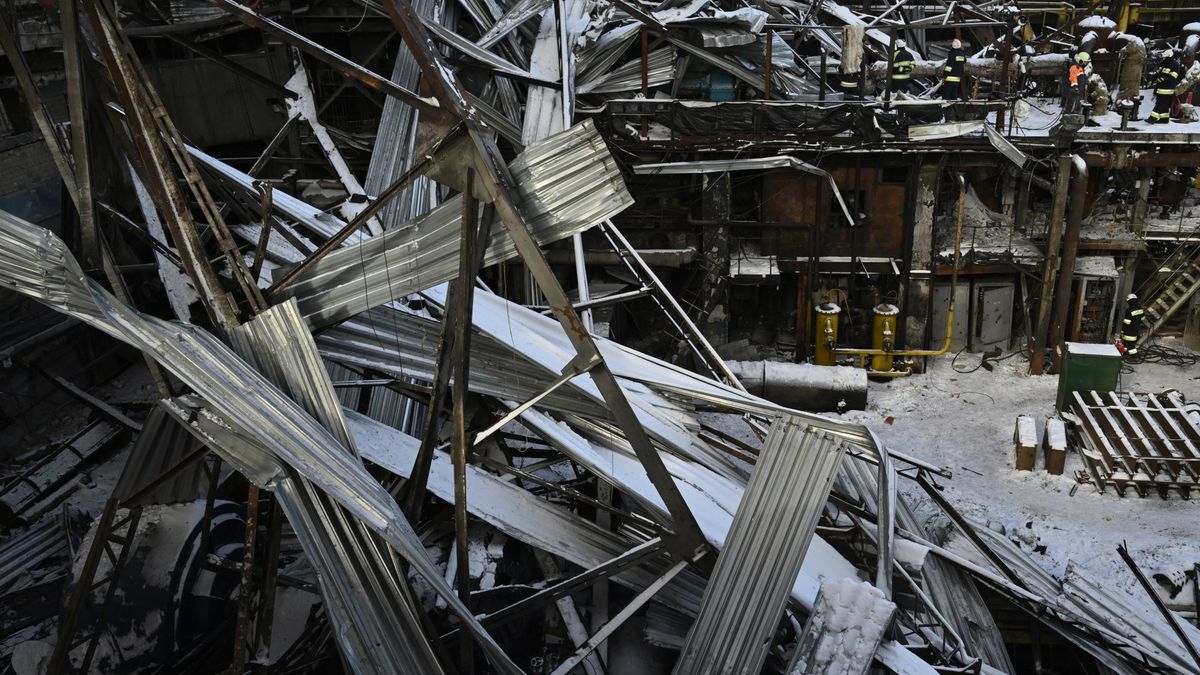
Russia has launched a series of concentrated aerial attacks on Ukraine's energy infrastructure, plunging hundreds of thousands of citizens into darkness and cold. Most recently, over 600,000 people in the eastern Dnipropetrovsk region, including the city of Dnipro, lost electricity after an overnight strike on an energy facility. Simultaneously, another 250,000 Ukrainians in the northeastern Kharkiv region suffered power outages from a separate attack. These assaults, which Ukrainian energy provider DTEK described as difficult to repair due to repeated targeting, come just days after a massive attack left residents in five regions without power and significantly hampered transmission in Kyiv. The intensification of these strikes precedes United States-brokered trilateral talks in Abu Dhabi, with Ukrainian President Volodymyr Zelenskyy accusing Russia of escalating attacks to exert pressure.
Russia's strategy of systematically targeting Ukraine's energy infrastructure is a calculated maneuver, transforming the battlefield from front lines to civilian homes. This is not merely an act of destruction but a sophisticated application of power designed to achieve multiple strategic objectives. Firstly, it aims to degrade Ukraine's ability to sustain its military operations by disrupting logistical chains, communication networks, and industrial capacity. While Russia's Ministry of Defence claims these facilities aid the Ukrainian military, the primary impact is often on civilian life, creating a severe humanitarian crisis that saps national morale and resources.
Secondly, these strikes are a direct attempt to generate leverage in ongoing and upcoming diplomatic engagements. By creating immense suffering and instability, Moscow seeks to pressure Kyiv into making concessions at the negotiating table. The timing of the recent attacks, just before US-brokered trilateral talks in Abu Dhabi, underscores this intent. Russia aims to present Ukraine with a stark choice: continue fighting and endure a brutal, dark winter, or compromise on its territorial and sovereignty demands. This tactic leverages the immediate suffering of the population as a bargaining chip, weaponizing winter itself.
Thirdly, the campaign is designed to overwhelm Ukraine's air defense systems and exhaust its repair capabilities. Each wave of drones and missiles forces Ukraine to expend valuable interceptors and deploy limited engineering resources. The cumulative damage to the grid, even if individual facilities are eventually repaired, weakens the overall resilience of the system, making it more vulnerable to subsequent attacks. This creates a cycle of destruction and repair that drains Ukraine's financial and human capital, diverting resources from other critical areas of national defense and recovery. The repeated targeting of damaged facilities, as reported by DTEK, indicates a deliberate strategy to prevent full restoration and maintain a state of chronic energy insecurity.
Finally, this strategy reflects a broader doctrine of attrition and psychological warfare. By making daily life unbearable, Russia hopes to erode the will of the Ukrainian people to resist, fostering internal dissent and pressure on the government to seek an end to hostilities on Russia's terms. It is a modern form of siege warfare, where the entire country becomes the besieged city, and essential utilities are the walls being breached. This approach bypasses direct military confrontation in many areas, instead attacking the very fabric of civilian society, a tactic historically used to break an opponent's spirit without necessarily defeating their armed forces on the battlefield.
The immediate and devastating cost of these attacks falls squarely on Ukrainian civilians. Hundreds of thousands are left without basic necessities, transforming homes into perilous environments as winter's grip tightens. The absence of electricity means more than just darkness; it cripples essential services and endangers lives.
Without power, heating systems fail, leaving families vulnerable to freezing temperatures. This is particularly acute in a country where winter temperatures can plummet well below zero. The lack of light disrupts daily routines, education, and work, forcing communities to rely on generators, candles, or simply endure the dark. For the elderly, infants, and those with chronic health conditions, the cold and lack of basic amenities pose severe health risks, exacerbating respiratory illnesses and hypothermia. Hospitals, even with backup generators, face immense strain, struggling to maintain critical equipment and provide consistent care.
Electricity outages cascade into failures of other vital services. Water pumps often rely on electricity, leading to disruptions in water supply and sanitation. Communication networks can become unreliable, isolating communities and hindering emergency responses. Food preservation becomes challenging without refrigeration, leading to waste and potential health hazards. Schools and businesses are forced to close or operate with severe limitations, impacting education, employment, and the local economy. The constant threat of blackouts creates a pervasive sense of anxiety and uncertainty, forcing families to live in a perpetual state of preparedness for the next attack.
The psychological impact on the population is profound. Living under the constant threat of losing power, heat, and water takes a heavy toll on mental health, fostering chronic stress, fear, and a sense of vulnerability. Children, in particular, experience significant disruption to their development and sense of security. Economically, the damage extends far beyond the immediate cost of repairs. Businesses, especially small and medium-sized enterprises, suffer immense losses due to disrupted operations, damaged equipment, and a lack of customers. The long-term economic recovery of Ukraine is severely hampered by the systematic destruction of its critical infrastructure, requiring massive investments in reconstruction and modernization, often while the conflict is still ongoing.
While official statements from both sides focus on military objectives or immediate humanitarian concerns, several critical aspects of Russia's energy infrastructure campaign in Ukraine are often downplayed or omitted. These unspoken narratives reveal deeper implications for the conflict and its long-term consequences.
Governments and energy providers often highlight successful repairs and the resilience of the grid. What is less discussed is the cumulative, systemic damage being inflicted. Each strike, even if repaired, weakens the overall integrity of the system. Transformers, substations, and power plants are not easily or quickly replaced, especially under wartime conditions. The repeated targeting means that even if power is restored, the grid operates with less redundancy, older equipment, and increased vulnerability. This slow, deliberate degradation could lead to a point where repairs become exponentially more difficult, or even impossible, in certain regions, risking a more permanent collapse of energy supply rather than temporary outages. The true cost is not just the immediate repair bill, but the erosion of a nation's foundational infrastructure, which takes decades to build and modernize.
President Zelenskyy correctly points to the strikes as a tactic for leverage in peace talks. However, Russia's strategy likely extends beyond mere negotiation. By making parts of Ukraine uninhabitable, Moscow aims to trigger mass internal displacement, creating a refugee crisis within Ukraine's borders. This strains Ukraine's social services, housing, and humanitarian aid capacity, diverting resources and attention from the war effort. It also creates a demographic shift, potentially driving people away from territories Russia seeks to control or destabilize, thereby simplifying future occupation or political maneuvering. The long-term goal might be to render certain areas economically unviable or depopulated, making them easier to control or integrate into a Russian sphere of influence.
The destruction of large-scale energy infrastructure, particularly thermal power plants, carries significant environmental risks that are rarely discussed in official reports. Damaged facilities can release pollutants into the air, soil, and water, impacting local ecosystems and public health for years to come. The long-term clean-up and remediation costs associated with such environmental damage are immense and often fall to the affected nation, adding another layer of burden to an already devastated country. These environmental consequences are a silent, enduring cost of the conflict, affecting future generations long after the fighting ceases.
While international partners provide significant financial and military aid, there are inherent limitations to protecting a vast, dispersed energy grid from persistent aerial attacks. Providing enough air defense systems to cover every critical substation or power plant across Ukraine's territory is an immense logistical and financial challenge. Furthermore, the specialized components required for repairing high-voltage infrastructure are often custom-made and have long lead times, making rapid, comprehensive restoration difficult even with external support. The narrative often focuses on the provision of aid, but less on the sheer scale of the challenge and the practical constraints on effectively countering this specific form of warfare.
As Russia's campaign against Ukraine's energy infrastructure intensifies, several critical indicators will reveal the evolving dynamics of the conflict and its human toll.
First, closely monitor the resilience of Ukraine's energy grid as winter progresses. The severity of the cold will amplify the impact of each strike, testing the limits of repair crews and emergency services. Watch for reports on the duration and geographical spread of power outages, as well as the number of people affected. A widespread, prolonged collapse in a major urban center could signal a significant escalation of the humanitarian crisis.
Second, observe the outcomes of the US-brokered trilateral talks in Abu Dhabi and subsequent diplomatic efforts. The extent to which Russia's energy strikes translate into tangible concessions from Ukraine or its allies will indicate the efficacy of Moscow's coercive strategy. Any shifts in negotiating positions, particularly concerning territorial integrity or security guarantees, could be directly linked to the pressure generated by these attacks.
Third, pay attention to the nature and speed of international aid for Ukraine's energy sector. Look beyond general financial pledges to specific deliveries of specialized equipment, spare parts, and technical expertise. The capacity of international partners to provide timely and sufficient resources for reconstruction will be crucial in mitigating the long-term damage and preventing a systemic collapse of the grid. Also, watch for increased efforts to bolster Ukraine's air defense capabilities specifically designed to counter drone and missile attacks on critical infrastructure.
Finally, track the internal displacement figures within Ukraine. A significant increase in people forced to leave their homes due to uninhabitable conditions, particularly from eastern and northeastern regions, would underscore the success of Russia's strategy to weaponize winter and generate a humanitarian crisis that further strains Ukraine's resources and resilience. The ability of Ukrainian communities to adapt, innovate, and support each other through these challenges will be a testament to their enduring spirit, but also a measure of the immense human cost being exacted.
Russia targets Ukraine's energy infrastructure to degrade its military's logistical and communication capabilities, create leverage for peace negotiations, and break civilian morale by making daily life unbearable, especially during winter.
The immediate human costs include hundreds of thousands without electricity, heat, and water, leading to health risks from cold, disrupted essential services, and significant psychological distress for the civilian population.
These attacks are intended to pressure Ukraine into making concessions at the negotiating table. By creating severe humanitarian conditions, Russia aims to weaken Ukraine's bargaining position and force a resolution on Moscow's terms.
Editor's Note: Analysis is based on provided intelligence and established geopolitical patterns of conflict. The focus on human cost and power mechanics aligns with TGN doctrine.
Source referenced: ALJAZEERA
This brief was synthesized by our Editorial Engine and reviewed by The Ground Narrative team.