TRENDING
Wednesday, 5 August 2026
----------------------
22 Safar 1448 AH
US Federal Reserve Chair Kevin Warsh is facing criticism for his handling of interest rates and inflation, with some experts saying he's 'rolling the dice' by not raising rates. The decision has significant implications for the US and global economies. As Warsh navigates the complex landscape of monetary policy, he must balance the demands of the White House with the need to control inflation and maintain economic stability.
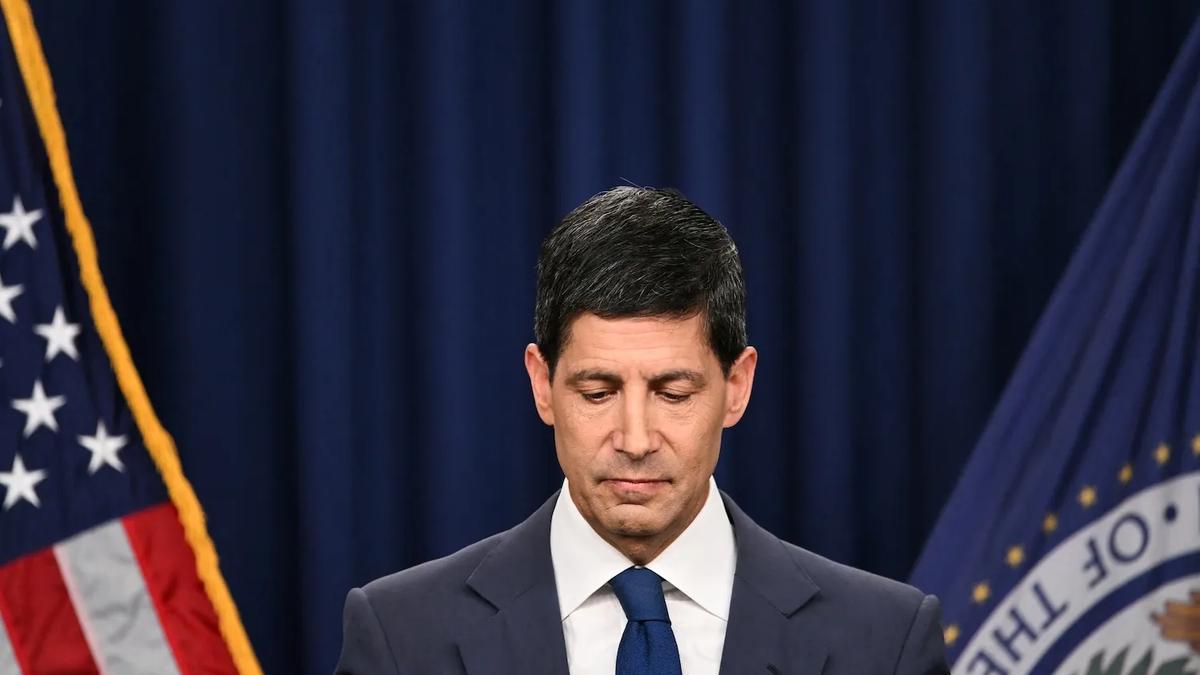
The US Federal Reserve, led by Chair Kevin Warsh, has decided to hold interest rates steady despite rising inflation. This move has been met with criticism from experts, who argue that the Fed is not doing enough to control inflation. Warsh's communication style has also been called into question, with some saying he is not providing clear guidance on the Fed's plans.
The Federal Reserve is facing a difficult situation, with the White House pushing for lower interest rates to boost the economy. However, the Fed's primary goal is to control inflation, which is currently running at nearly twice the central bank's target rate. Warsh's decision to hold interest rates steady has been seen as a attempt to balance these competing demands. However, this approach has been criticized for being unclear and potentially risky.
The impact of the Fed's decision will be felt by ordinary Americans, who will see higher prices and reduced purchasing power if inflation continues to rise. The decision will also have significant implications for the global economy, as the US is a major driver of global economic activity. The uncertainty surrounding the Fed's plans is also likely to affect businesses and investors, who rely on clear guidance from the central bank to make informed decisions.
One aspect of the story that is not being fully discussed is the potential for political interference in the Fed's decision-making process. The White House has been pushing for lower interest rates, and there are concerns that Warsh may be facing pressure to deliver on this demand. This could undermine the independence of the Fed and potentially lead to decisions that are not in the best interests of the economy.
In the coming months, it will be important to watch how the Fed navigates the complex landscape of monetary policy. Will Warsh continue to hold interest rates steady, or will he eventually raise rates to control inflation? How will the White House respond to the Fed's decisions, and will there be any attempts to interfere with the central bank's independence? These are all key questions that will have significant implications for the US and global economies.
Editor's Note: The analysis is based on publicly available information and may not reflect the full complexity of the situation.
Source referenced: FOREIGNPOLICY
This brief was synthesized by our Editorial Engine and reviewed by The Ground Narrative team.