TRENDING

Wednesday, 5 August 2026
----------------------
22 Safar 1448 AH
The Ceuta crisis has exposed the limitations of European defense cooperation, as 22 European leaders blamed Spain for the border breach by over 70,000 migrants. This reaction has significant implications for the continent's ability to respond to future crises. The unwillingness of EU member states to provide support to Spain raises questions about the effectiveness of European collective defense and the potential for a 'European NATO'.
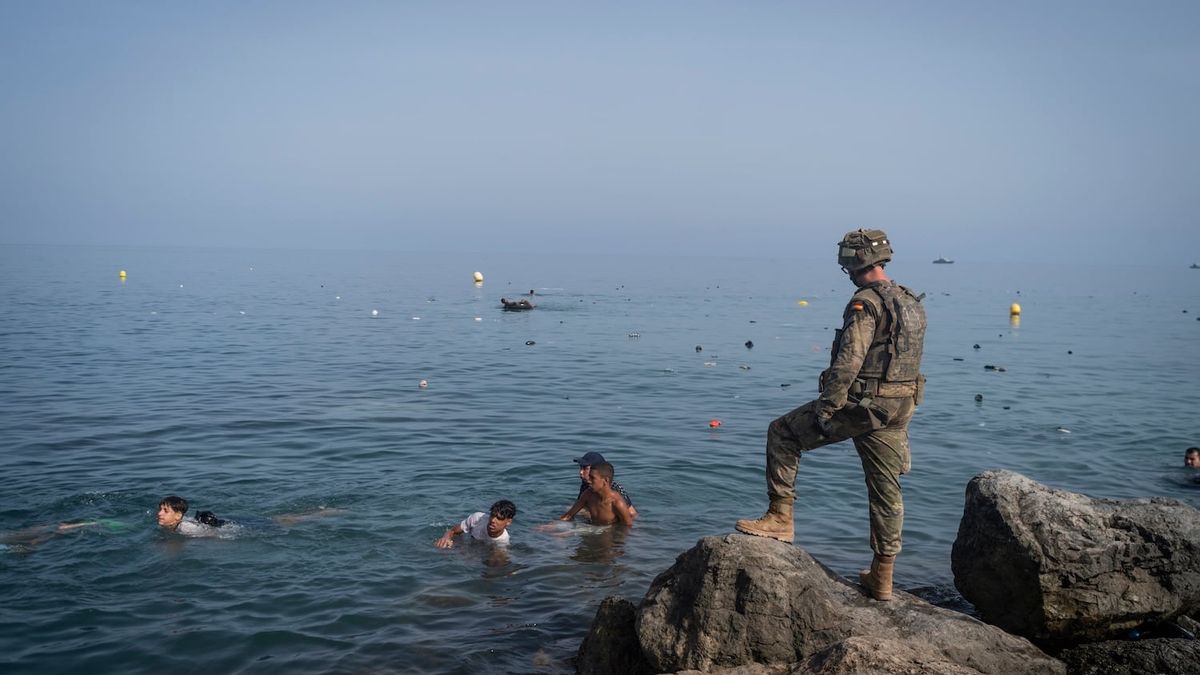
The Ceuta crisis began on July 31, when over 70,000 migrants crossed from Morocco into the Spanish exclave of Ceuta. In response, 22 European leaders signed a letter criticizing Spain's handling of the situation, arguing that the country's decision to provide a path toward regularization for irregular migrants and a recent Spanish Supreme Court ruling had created a 'pull factor' for migrants. This reaction has sparked concerns about the limitations of European defense cooperation and the potential for a unified response to future crises.
The Ceuta crisis has highlighted the power dynamics at play in European defense cooperation. The letter signed by 22 European leaders demonstrates a willingness to blame Spain for the border breach, rather than providing support and solidarity. This reaction is driven by domestic political considerations, as national leaders seek to present themselves as tough on migration. However, this approach undermines the potential for European collective defense and raises questions about the effectiveness of a 'European NATO'. The fact that the letter was written by national leaders and addressed to the EU's leadership further highlights the limits of supranational crisis response.
The Ceuta crisis has had a significant human impact, with over 70,000 migrants attempting to cross into Spain. The migrants, many of whom are fleeing poverty, conflict, and persecution, have been met with a mixture of hostility and indifference by European leaders. The decision by Italy to suspend the Schengen agreement and reimpose controls with Spain, despite the fact that the two countries do not share a land border, has further exacerbated the situation. The human cost of the crisis is not limited to the migrants themselves, but also affects the local communities in Ceuta and other parts of Spain.
The Ceuta crisis has also exposed the untold story of European defense cooperation. The reaction of European leaders to the crisis has been driven by a desire to maintain domestic political support, rather than a commitment to collective defense. The fact that the EU's Pact on Migration and Asylum, which took effect in June, was unable to prevent the crisis from escalating highlights the limitations of European cooperation on migration. Furthermore, the decision by European leaders to blame Spain for the crisis, rather than providing support, raises questions about the effectiveness of a 'European NATO' and the potential for a unified response to future crises.
The Ceuta crisis has significant implications for the future of European defense cooperation. As the continent faces a range of challenges, from migration to terrorism, the ability of European leaders to respond in a unified and effective manner will be crucial. The reaction to the Ceuta crisis suggests that this may be a challenge, as national leaders prioritize domestic political considerations over collective defense. The development of a 'European NATO' will require a significant shift in the way that European leaders approach defense cooperation, prioritizing solidarity and collective action over domestic political interests. The next few months will be critical in determining the trajectory of European defense cooperation, as leaders seek to respond to the challenges posed by the Ceuta crisis and other emerging threats.
Editor's Note: The analysis is based on publicly available information and may not reflect the full complexity of the situation.
Source referenced: FOREIGNPOLICY
This brief was synthesized by our Editorial Engine and reviewed by The Ground Narrative team.