TRENDING

Saturday, 19 September 2026
----------------------
8 Rabi' Al-Thani 1448 AH
Nigerian President Tinubu has approved significant military pay raises to combat widespread insecurity. This analysis examines the power dynamics, economic trade-offs, and the human cost of prioritizing a military solution over addressing root causes.
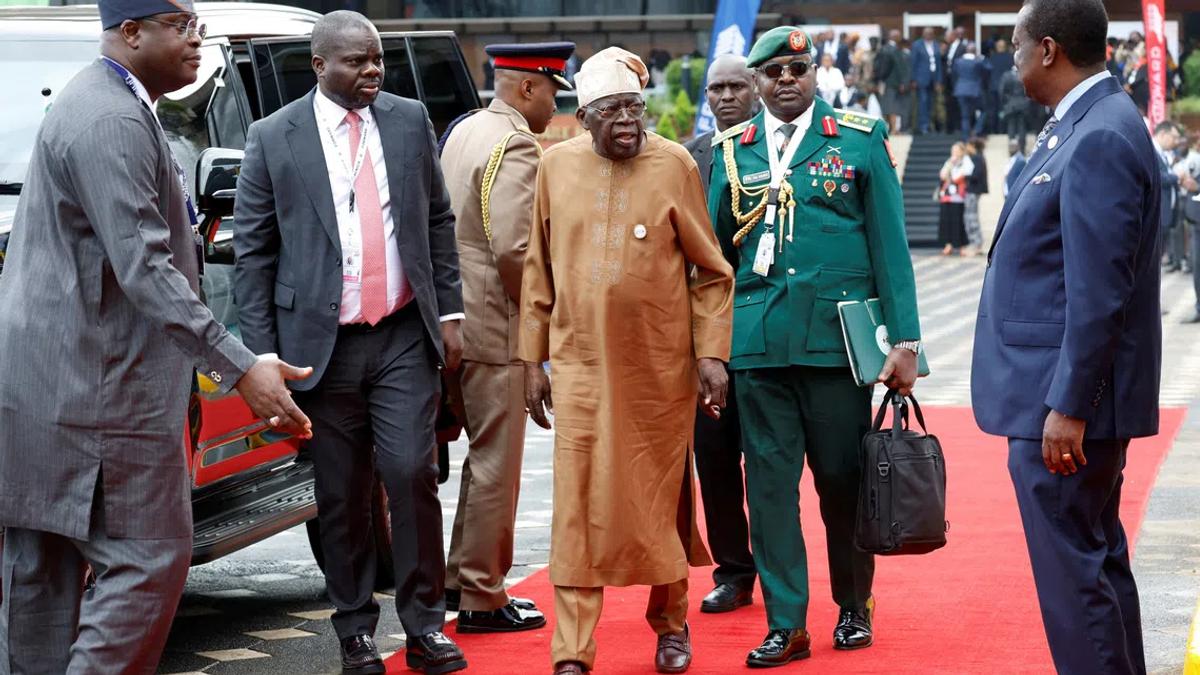
Nigerian President Bola Tinubu has approved significant salary increases for the nation's armed forces, with raises ranging from 30% for senior officers to 80% for lower ranks. This move, effective September 1, will boost the military's annual wage bill from 660 billion to 924 billion naira ($678.68 million), coming as Nigeria grapples with a multi-front security crisis encompassing Islamist insurgencies, rampant banditry, and widespread kidnappings across its diverse regions.
This substantial pay raise is a direct response to a critical challenge facing President Tinubu's administration: maintaining stability and legitimacy in the face of escalating insecurity. For any government, the ability to protect its citizens is foundational. By boosting military welfare, Tinubu aims to address long-standing issues of low morale, potential for corruption, and inadequate compensation that have plagued Nigeria's armed forces. The underlying calculation is that a better-paid soldier is a more motivated and effective soldier, less susceptible to external influences or internal grievances. This strategy prioritizes a military solution, signaling a commitment to strengthen the state's coercive apparatus. However, it also represents a significant economic trade-off, diverting substantial public funds towards security at a time when Nigeria's economy faces its own set of formidable challenges, including high inflation and unemployment. The move is a gamble that improved military performance will translate directly into tangible security gains, thereby shoring up public confidence in the government's capacity to govern.
While soldiers receive a much-needed financial boost, the primary human cost of Nigeria's persistent insecurity continues to be borne by its civilian population. Across the northeast, families live under the constant threat of Boko Haram and ISWAP attacks. In the northwest, heavily armed bandit gangs terrorize communities, disrupting agriculture and trade. In the north-central states, the specter of kidnapping for ransom has become a daily reality, forcing families into destitution to secure their loved ones' release. And in the southeast, separatist violence periodically erupts. These are the people whose lives are upended, whose children cannot attend school, whose farms lie fallow, and whose sense of safety has evaporated. The increased military budget, while intended to protect them, does not directly address their immediate suffering or the deep-seated vulnerabilities that make them targets. Furthermore, the substantial allocation of funds to the military could mean fewer resources for crucial social services, infrastructure development, or poverty alleviation programs, indirectly impacting the very communities most affected by violence. For these millions, the pay raise for soldiers is a distant abstract, while the daily struggle for survival remains acutely real.
What official statements and the focus on military solutions often downplay or omit are the deeper, systemic drivers of Nigeria's insecurity. The narrative often centers on the "bad actors" – insurgents, bandits, separatists – without adequately exploring *why* these groups proliferate and gain traction. The untold story lies in the pervasive issues of governance failures, endemic corruption, deepening poverty, youth unemployment, and the erosion of trust between the state and its citizens. Decades of underinvestment in education, healthcare, and economic opportunities, coupled with perceived impunity for powerful elites, have created fertile ground for grievances to fester. Climate change, particularly desertification in the north, exacerbates resource scarcity and inter-communal conflicts, pushing more people into desperation. A pay raise for soldiers, while addressing a critical internal military issue, does not magically resolve these complex socio-economic and political pathologies. Governments often prefer to frame security challenges as purely military problems, as this avoids a more difficult, expensive, and politically risky reckoning with fundamental structural inequalities and failures of governance.
The coming months will reveal whether this significant investment in military welfare translates into a measurable improvement in Nigeria's security landscape. Observers should closely watch several indicators: Firstly, will the actual incidence of attacks, kidnappings, and banditry decrease, particularly in the most affected regions? Secondly, how will the increased wage bill impact Nigeria's broader economic stability? Will it necessitate cuts elsewhere, or will the government find sustainable ways to finance it without further burdening the populace? Thirdly, beyond the immediate pay raise, will the Tinubu administration demonstrate a willingness to tackle the underlying socio-economic issues that fuel insecurity? A purely military approach, as history has shown in Nigeria and elsewhere, often proves insufficient without parallel efforts to improve governance, foster economic inclusion, and build trust at the community level. The true test of this policy will not be in the size of the paychecks, but in the tangible peace and security it delivers to Nigeria's long-suffering citizens.
Source referenced: STRAITSTIMES
This brief was synthesized by our Editorial Engine and reviewed by The Ground Narrative team.


