TRENDING

Saturday, 19 September 2026
----------------------
8 Rabi' Al-Thani 1448 AH
As Lebanon and Israel engage in US-sponsored talks in Rome, a powerful internal actor rejects the very premise of de-escalation. This diplomatic effort unfolds against a backdrop of military conflict and a deep struggle for Lebanese sovereignty.
What Happened:
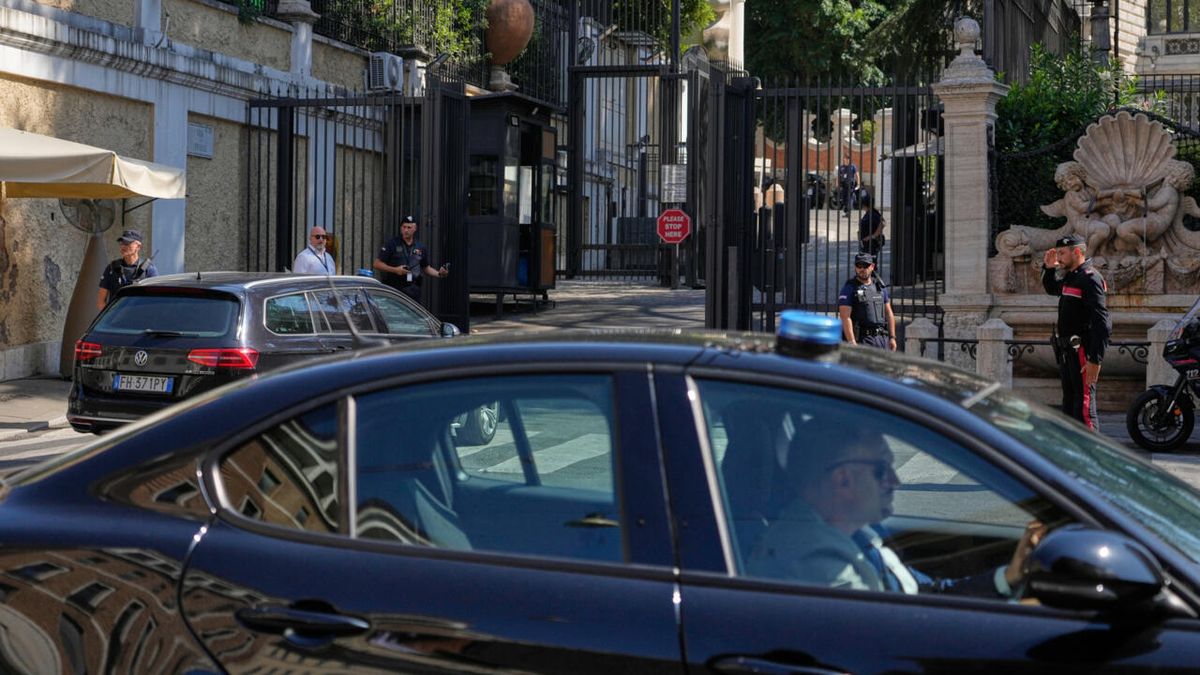
Lebanon and Israel have commenced a seventh round of direct talks in Rome, facilitated by the United States. These discussions aim to address the ongoing conflict that escalated in March, following rocket fire from Hezbollah into Israel, which prompted significant Israeli airstrikes and a ground invasion. The negotiations, however, face immediate internal opposition, with Hezbollah's leader publicly denouncing them as a source of "shame" and "humiliation" for Lebanon.
The current round of US-sponsored talks between Lebanon and Israel is less a negotiation between equal states and more a complex power play involving multiple actors with divergent interests. For the United States, these talks represent an attempt to de-escalate a volatile regional conflict and reassert its diplomatic influence, particularly in a region where its standing has been tested. Israel's participation is driven by a desire to secure its northern border, push back Hezbollah’s operational capabilities, and potentially formalize some form of security arrangement, even if indirect. The Lebanese government, in its official capacity, seeks an end to the hostilities that have devastated its southern regions and further crippled its already collapsing economy. However, its agency is severely constrained.
Hezbollah, a non-state actor with significant military and political power within Lebanon, fundamentally rejects the premise of these talks. Its power derives from its armed resistance narrative against Israel, its deep integration into Lebanese political life, and its strategic alliance with Iran. For Hezbollah, engaging in direct negotiations with Israel, especially under US sponsorship, undermines its core ideological legitimacy and its role as the "protector" of Lebanon against Israeli aggression. Its rejection signals a clear intent to maintain its independent decision-making on matters of war and peace, effectively holding a veto over the official Lebanese state's foreign policy regarding Israel. This dynamic exposes the profound internal power imbalance within Lebanon, where the state struggles to assert its sovereignty against a heavily armed and politically entrenched non-state actor. The talks, therefore, are not just about borders or security; they are a battleground for who ultimately dictates Lebanon's future.
The most immediate and devastating human cost of this protracted standoff falls squarely on the shoulders of ordinary Lebanese citizens, particularly those in the south. The "heavy airstrikes and a ground invasion" mentioned in the official reports translate to destroyed homes, displaced families, and shattered livelihoods. Villages along the border have been emptied, agricultural lands rendered unusable, and essential infrastructure damaged. For these communities, the talks in Rome offer a distant hope, but Hezbollah's rejection means the immediate future remains one of uncertainty, fear, and continued displacement. Israeli communities near the border also bear a significant burden, living under the constant threat of rocket fire and experiencing their own cycles of evacuation and disruption.
Beyond the direct conflict zone, the economic strain on Lebanon as a whole is immense. A country already grappling with hyperinflation, a banking crisis, and widespread poverty cannot afford the economic fallout of prolonged conflict. The talks, even if successful, would only begin to address the symptoms, not the underlying structural issues of governance and sovereignty that prevent Lebanon from charting a stable course. The human cost here is not just about direct casualties; it's about the erosion of a nation's future, the brain drain of its youth, and the deepening despair of a populace caught between powerful regional and internal forces.
What is consistently downplayed or omitted in official statements surrounding these talks is the extent to which the Lebanese state itself is a hollowed-out entity, its sovereignty compromised by internal and external pressures. The US, in sponsoring these talks, frames them as a dialogue between two sovereign nations, Lebanon and Israel. This framing conveniently overlooks the reality that the Lebanese delegation's ability to negotiate a lasting peace is severely limited by Hezbollah's independent military and political agenda. The "shame" and "humiliation" Hezbollah's leader speaks of are not just about negotiating with Israel, but about the Lebanese state's perceived weakness in asserting its own will.
Furthermore, the broader regional context of Iran's influence on Hezbollah is often understated in direct talk narratives. Hezbollah's actions are not solely independent; they are often aligned with Iran's strategic objectives in the Levant. This means any lasting resolution requires addressing not just the immediate Lebanon-Israel dynamic, but the wider proxy conflicts and power struggles involving Iran, Israel, and the US. The current talks, while necessary, are essentially treating a symptom while the underlying regional power disease continues to fester, ensuring that any agreement reached in Rome remains fragile and subject to external spoilers.
The immediate watch points will be the *duration and outcomes* of these specific talks in Rome. Will the US be able to extract any tangible commitments from either side, despite Hezbollah's rejection? More critically, observers should watch for *Hezbollah's response on the ground*. Will its rhetoric translate into increased military action, or will it maintain a calculated level of engagement to assert its rejection without fully derailing the diplomatic effort?
Longer-term, the focus will shift to the *internal dynamics within Lebanon*. Can the official government, backed by international pressure, begin to assert greater control over its own territory and foreign policy? Or will Hezbollah's effective veto power solidify, further entrenching the parallel state structure? The interplay between international diplomatic efforts and the realities of power on the ground in Lebanon will determine whether these talks are a genuine step towards de-escalation or merely a temporary pause in a deeper, more intractable conflict.
Source referenced: FRANCE24
This brief was synthesized by our Editorial Engine and reviewed by The Ground Narrative team.