TRENDING

Saturday, 19 September 2026
----------------------
8 Rabi' Al-Thani 1448 AH
A legal battle over unchecked tourism development in Kenya's Maasai Mara threatens the iconic wildebeest migration and the ecosystem it sustains. This struggle pits economic gain against environmental survival, revealing the true cost of luxury on a fragile landscape.
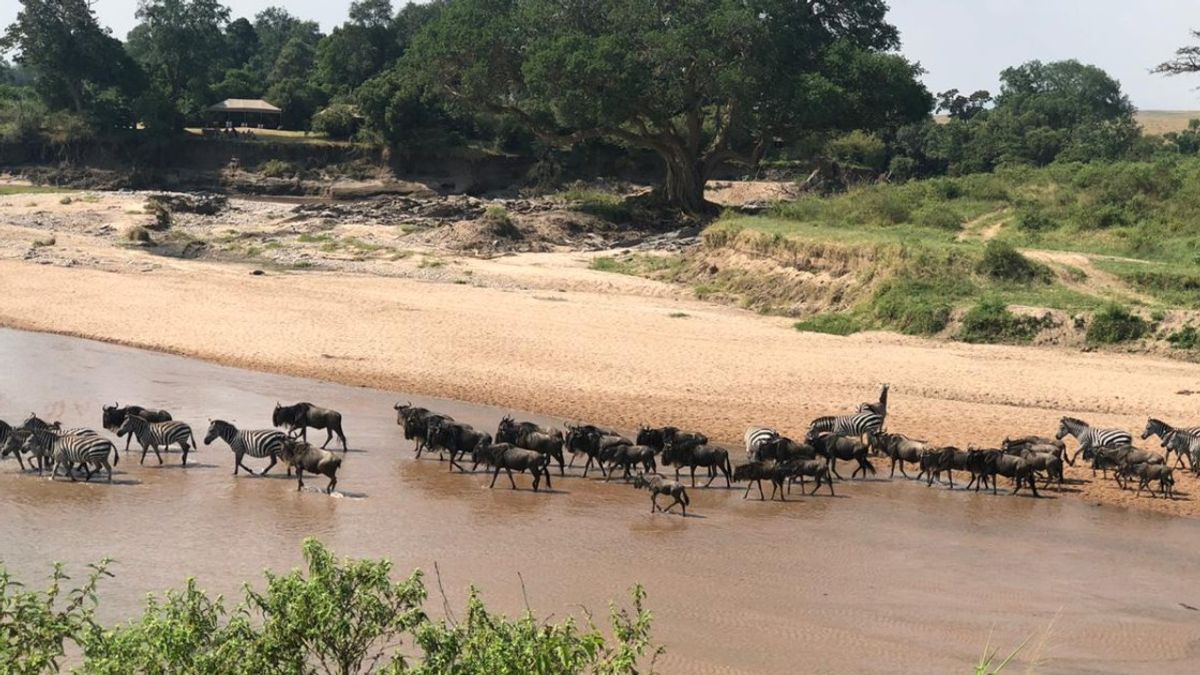
Kenya's Maasai Mara, a globally renowned wildlife reserve, is currently the center of a contentious legal battle. Conservation groups have filed petitions challenging the rapid construction and expansion of luxury tourist camps, including a Ritz-Carlton facility, within and around the reserve. These legal challenges allege that developments are proceeding without adequate environmental safeguards and in violation of a 2023 moratorium on new accommodation in sensitive ecological zones, particularly along critical wildebeest migration corridors. The core dispute pits Kenya's significant economic reliance on tourism against the accelerating degradation of one of the world's most vital ecosystems and its iconic annual migration.
The conflict in the Maasai Mara is a stark illustration of how economic imperatives can override environmental stewardship and regulatory frameworks. For Kenya, tourism is a cornerstone of its economy, generating substantial foreign exchange and employment. This creates a powerful incentive for both national and local governments, like Narok County, to prioritize development that promises immediate revenue. International hospitality giants, such as Marriott International and Minor Hotels, enter this landscape, leveraging their capital and global brand appeal to secure permits and build infrastructure, often framing their projects as "investment" and "job creation."
The power dynamic reveals a system where the pursuit of profit by well-resourced corporations, often in partnership with local political entities eager for tax revenue, can weaken regulatory enforcement. Despite a clear moratorium on new construction in sensitive areas, development appears to continue, suggesting either a deliberate sidestepping of rules or a lack of political will to enforce them against powerful interests. The legal system, therefore, becomes the primary arena where conservation groups, representing broader public and environmental interests, attempt to hold these powerful economic and governmental actors accountable. It's a test of whether the rule of law can genuinely protect shared natural assets against concentrated commercial power.
While the debate often centers on wildlife, the human cost of unchecked development in the Maasai Mara is profound and often borne by those with the least voice. The Maasai communities, who have coexisted with this ecosystem for centuries, face the erosion of their traditional lands and livelihoods. While some benefit from tourism-related jobs, the overall degradation of the environment—through habitat loss, disrupted migration routes, and increased human-wildlife conflict—threatens their pastoral way of life and cultural heritage. Their traditional knowledge of sustainable land management is often sidelined in favor of commercial ventures.
Beyond the Maasai, the long-term economic stability of countless Kenyans dependent on the Mara's health is at risk. Safari guides, craft sellers, transport operators, and local businesses all rely on a thriving ecosystem to attract visitors. As wildlife populations decline and the wilderness experience diminishes, the very industry that provides their income begins to cannibalize itself. The promise of short-term economic gains from luxury tourism development risks creating a future where the primary asset—the natural spectacle—is irreparably damaged, leaving a legacy of environmental degradation and economic vulnerability for future generations.
Governments and corporate entities involved in Maasai Mara development consistently frame their actions through the lens of "sustainable development" and "economic growth." What is often omitted or downplayed is the actual enforcement deficit and the selective application of environmental regulations. The 2023 moratorium on new construction in sensitive areas, for instance, appears to have been largely ineffective, suggesting a gap between policy declaration and practical implementation.
Furthermore, the narrative rarely scrutinizes the true environmental footprint of luxury tourism. While high-end lodges bring in significant revenue per visitor, they often demand extensive infrastructure, water resources, and waste management solutions that place immense pressure on fragile ecosystems. The focus on maximizing commercial demand, rather than adhering to ecological limits, is a critical omission. There's also a subtle downplaying of the global demand side: the responsibility of international tourists and tour operators who seek exclusive, often resource-intensive, experiences without fully understanding or acknowledging the local environmental and social costs. The question of who truly benefits from these ventures, and at what cost to the local populace and the environment, remains largely unaddressed in official statements.
The immediate focus will be on the outcomes of the ongoing legal challenges. Court rulings could either reinforce existing environmental protections or signal a continued prioritization of commercial interests. Beyond the courtroom, observers should watch for concrete actions from the Kenyan government and Narok County regarding the enforcement of environmental impact assessments and the 2023 moratorium. A genuine commitment to ecological limits over commercial demand would manifest in stronger regulatory oversight and potentially a shift towards community-led conservancy models that integrate local populations more directly into conservation efforts.
Crucially, the health of the wildebeest migration will serve as a stark indicator. Continued declines in population numbers and disrupted migration routes will signal the irreversible erosion of the Mara's ecological integrity. The global tourism industry also faces a reckoning: will it adapt to demand more responsible, lower-impact travel, or continue to fuel unsustainable development? The future of the Maasai Mara will be a bellwether for how nations balance urgent economic needs with the long-term survival of their most precious natural assets.
Source referenced: ALJAZEERA
This brief was synthesized by our Editorial Engine and reviewed by The Ground Narrative team.


