TRENDING

Saturday, 19 September 2026
----------------------
8 Rabi' Al-Thani 1448 AH
The US and Japan staged a rare coordinated intervention to prop up the weakening yen, but the move reveals more about Washington's self-interest than pure allyship. Ordinary citizens in Japan and beyond face the real costs of unresolved economic challenges.
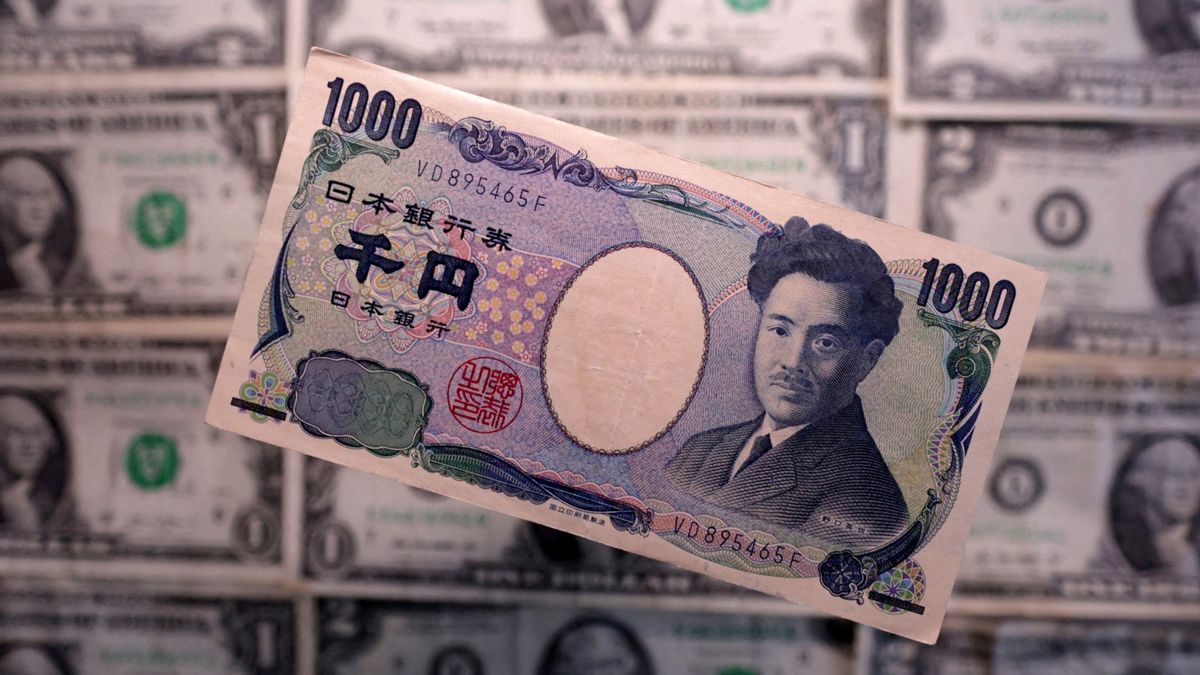
Last week, the United States and Japan undertook a coordinated currency intervention, a rare move designed to halt the rapid depreciation of the Japanese yen. After the yen plummeted to a 40-year low against the US dollar, both the US Treasury and Japanese authorities began selling euros for yen and buying yen, respectively. This action provided immediate, albeit temporary, relief, seeing the yen rebound from 163 to 157 against the dollar within days.
The yen's persistent weakness is not a sudden crisis but the culmination of decades of Japan's economic stagnation and the Bank of Japan's ultra-loose monetary policy, characterized by near-zero or negative interest rates. While a weak yen has boosted tourism and kept exports competitive, it has simultaneously inflated the cost of imported goods for Japanese households. Tokyo has spent billions attempting to defend the currency, but these efforts have been undermined by a domestic policy mix that seeks growth, loose fiscal policy, and a stable yen—an inherently contradictory ambition.
Washington's decision to intervene, though framed as support for a key ally, was primarily driven by its own strategic and economic interests. As the world's third-most-traded currency, a free-falling yen poses a significant risk to global financial stability. More critically for the US, a continued yen slide would incentivize Japan, a major holder of US Treasury securities (over $1.1 trillion), to sell off these assets to raise cash for currency defense. Such a sell-off would drive up interest rates in the US, increasing the cost of servicing America's burgeoning national debt, which now exceeds $39 trillion. For the Trump administration, a weaker dollar is often politically favorable, making the intervention a low-cost, high-leverage move that benefits both US financial markets and its geopolitical standing in Asia.
While policymakers discuss exchange rates and Treasury yields, the tangible impact of the yen's weakness falls squarely on the shoulders of ordinary Japanese citizens. The rising cost of imported energy, food, and other essential goods erodes purchasing power and living standards. For a nation heavily reliant on imports, a depreciating currency means that everyday necessities become more expensive, directly impacting household budgets and economic security. Beyond Japan, the ripple effects of global financial instability, even if mitigated by interventions, can manifest in higher borrowing costs, reduced investment, and increased economic uncertainty for populations worldwide. These are the human costs rarely highlighted in official statements about currency stability.
What governments and financial institutions often downplay is the fundamental, temporary nature of such interventions. While coordinated action can provide short-term stability, it does not address the underlying economic disparities that caused the yen's weakness in the first place. Japan's reluctance to significantly raise its benchmark interest rate, which remains far below other advanced economies, is the core driver of the interest rate differential that makes the yen unattractive. The intervention is, in essence, a band-aid on a deeper wound. Powerful actors prefer to present these actions as decisive solutions, rather than acknowledging they are buying time, hoping for a shift in economic fundamentals that Japan's own leadership has been unwilling or unable to implement.
Readers should closely watch Japan's domestic economic policy. Will Prime Minister Sanae Takaichi's administration finally move towards a more restrictive monetary policy, raising interest rates to genuinely strengthen the yen? Or will it continue to rely on interventions and hope for external factors to shift? The sustainability of the yen's recovery hinges on these decisions. Furthermore, observe how global financial markets react to any future signs of instability, particularly concerning US Treasury holdings. The true test of this intervention will not be the immediate bounce, but whether it creates space for Japan to tackle its long-standing economic challenges, or if it merely postpones an inevitable reckoning for its currency and its citizens.
Source referenced: ALJAZEERA
This brief was synthesized by our Editorial Engine and reviewed by The Ground Narrative team.


