TRENDING

Saturday, 19 September 2026
----------------------
8 Rabi' Al-Thani 1448 AH
A surge of migrants into Spain's Ceuta exclave exposed Europe's reliance on external partners for border control. The incident underscores the fragile balance of power and the human toll of migration management strategies.
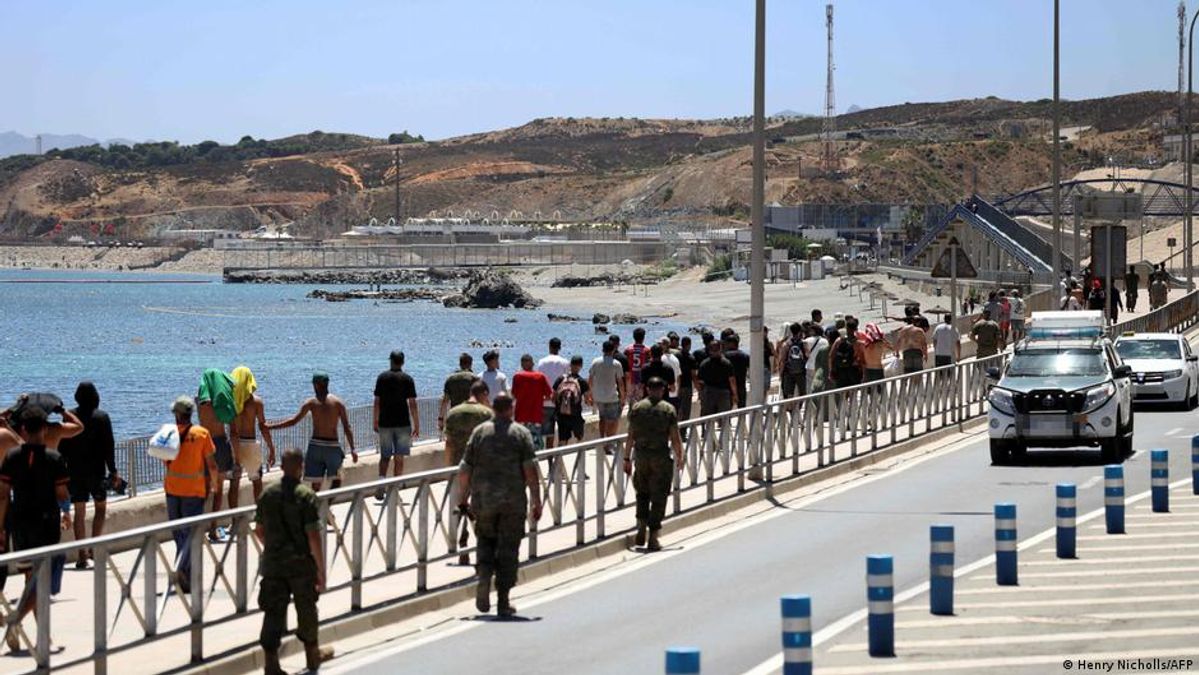
Last week, thousands of people, predominantly young Moroccan men, surged into Spain's North African exclave of Ceuta, many swimming around border defenses. This sudden influx prompted a swift response from Spain, which rapidly returned the majority, and a declaration from European Commission President Ursula von der Leyen that border security is a "shared European responsibility," hinting at increased support for Morocco.
The Ceuta incident is not merely a migration event; it's a stark demonstration of Europe's outsourced border management strategy and the leverage it grants to neighboring states. The European Union, under pressure from internal anti-migration sentiments, has increasingly relied on agreements with countries like Morocco to act as its de facto border guards. This arrangement provides financial and political incentives to Morocco, positioning it as a critical partner in stemming irregular migration flows. However, it also hands Morocco a powerful diplomatic tool. When relations sour, as they reportedly did between Spain and Morocco over Spain's stance on Western Sahara, Morocco can subtly adjust its border enforcement, creating pressure points that ripple across the entire EU. The EU's call for "united action" and "shared responsibility" from von der Leyen, coupled with promises of "technical and financial support" to Morocco, reveals a core dependency. Spain, as the immediate frontline, bears the initial burden, but the political fallout quickly spreads, exposing the fragility of the Schengen area and sparking nationalist reactions from other member states. The power dynamic is clear: Europe needs Morocco more than it publicly admits to maintain its desired border stability, and Morocco knows it.
The immediate human cost falls disproportionately on the individuals attempting to cross into Ceuta. These are often young men seeking economic opportunity or a path to a better life, driven by a complex mix of desperation and misinformation. They face perilous journeys, the risk of injury, and the certainty of rapid return, often without due process for asylum claims. Beyond the immediate physical dangers, there's the psychological toll of repeated attempts and failures, and the exploitation by smugglers who prey on their hopes. For the residents of Ceuta, the sudden influx creates strain on local resources and fosters an atmosphere of uncertainty. But the broader human cost extends to the shifting norms around human rights at borders. When the focus is solely on "strengthening borders" and "return hubs," the individual stories, vulnerabilities, and rights of those seeking entry are often minimized or ignored. The narrative shifts from humanitarian concerns to security imperatives, making it easier to justify rapid expulsions and a hardening of defenses, regardless of the individual circumstances.
What is consistently downplayed by EU and Spanish officials is the extent to which the recent surge was not a spontaneous, organic migration wave, but potentially a calculated diplomatic maneuver by Morocco. While officials cited "false information" online, the timing and scale of the event, following diplomatic tensions between Spain and Morocco, suggest a more deliberate relaxation of Moroccan border controls. By allowing the surge, Morocco sent a clear message to Spain and the wider EU about the consequences of displeasing its "strategic partner." This instrumentalization of human movement for political leverage is a powerful, yet rarely acknowledged, aspect of contemporary border politics. Furthermore, the EU's rhetoric of "shared European responsibility" often masks the reality that the burden of managing external borders falls heaviest on frontline states like Spain, Italy, and Greece, and on the non-EU countries like Morocco that are paid to contain the flows. The idea that "all countries in Europe have an interest in helping the countries in the Mediterranean find a policy" sounds cooperative, but it often translates into funding for externalization, effectively pushing the problem further away from Europe's core. The true cost of this outsourcing—both financial and ethical—is rarely fully disclosed or debated publicly.
Moving forward, observers should watch for several key indicators. Firstly, the nature and scale of the "enhanced technical and financial support" the EU offers Morocco will reveal the true price of its border stability. This will likely be a quiet negotiation, but its impact on Morocco's posture will be evident. Secondly, monitor the diplomatic relationship between Spain and Morocco, particularly regarding the Western Sahara issue. Any shifts here will signal whether the Ceuta incident achieved its desired political effect for Rabat. Thirdly, observe the internal cohesion of the EU. The emergency interior ministers' meeting and the upcoming EU leaders' summit in October will test the bloc's ability to forge a genuinely united, rather than fractured, response to external border pressures. The calls for temporary border controls within Schengen and the "selfish" accusations from Madrid highlight deep divisions that could resurface. Finally, pay attention to the rhetoric surrounding "return hubs" and "safe third countries." The EU's ability to implement these new rules, and the human rights implications of doing so, will shape the future of migration policy and the lives of countless individuals.
Source referenced: DW
This brief was synthesized by our Editorial Engine and reviewed by The Ground Narrative team.


