TRENDING

Friday, 6 November 2026
----------------------
26 Jumada Al-Awwal 1448 AH
Millions of people displaced by Sudan's brutal civil war face losing emergency shelter due to severe funding shortfalls, according to United Nations agencies. The looming crisis threatens 15.4 million people with inadequate housing and basic necessities.
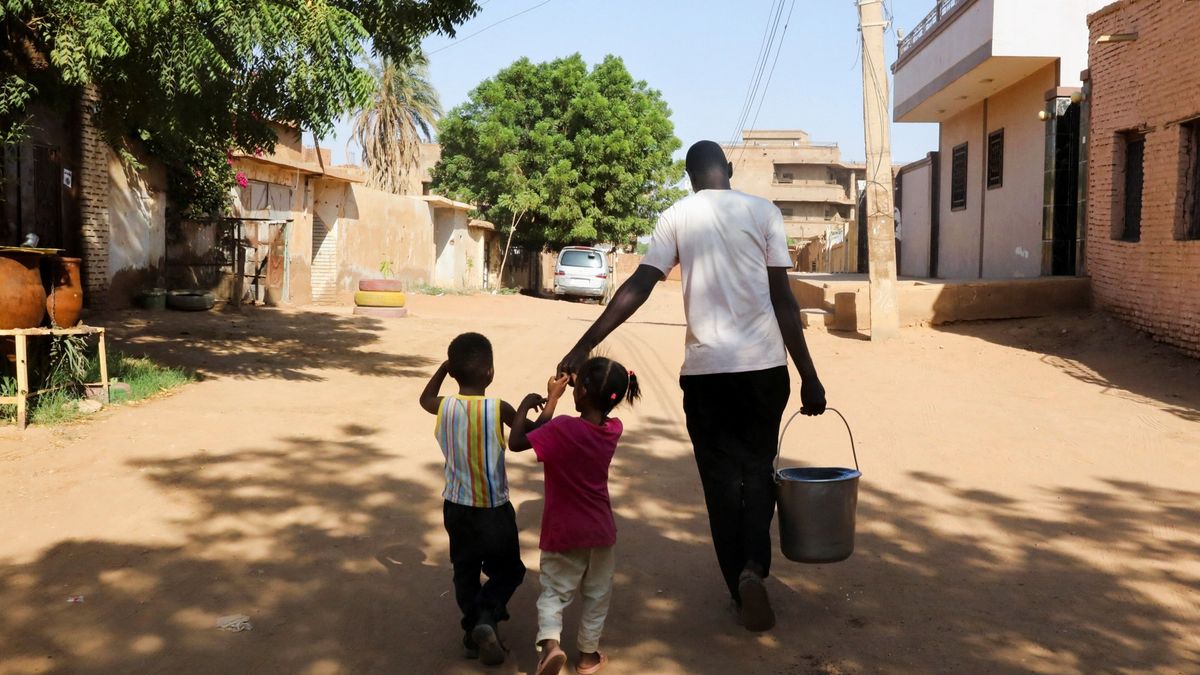
Millions of people uprooted by Sudan's ongoing civil war are on the brink of losing access to emergency shelter and essential household items. The United Nations High Commissioner for Refugees (UNHCR) and the International Organization for Migration (IOM) have issued a stark warning that critical funding shortages mean humanitarian agencies can only prioritize assistance for approximately 10 percent of the estimated 15.4 million people in urgent need. With warehouses depleting and resources dwindling, the agencies are struggling to sustain operations, leaving a massive gap between the dire needs on the ground and available aid.
The crisis in Sudan is not a natural disaster; it is a direct consequence of a brutal power struggle that has torn the country apart. The conflict, which erupted in April 2023, pits the Sudanese Armed Forces (SAF), led by General Abdel Fattah al-Burhan, against the paramilitary Rapid Support Forces (RSF), commanded by General Mohamed Hamdan Dagalo, known as Hemedti. Both factions emerged from the shadow of former dictator Omar al-Bashir's regime, initially collaborating in a coup that derailed Sudan's fragile transition to civilian rule, only to turn on each other in a deadly contest for ultimate control.
The core of this conflict is a fight for economic and political dominance. The SAF seeks to preserve the traditional military's institutional power and its vast economic enterprises, while the RSF, largely built from Darfur's Janjaweed militias, aims to consolidate its newfound wealth from gold mines and expand its influence beyond its paramilitary origins. This internal struggle is not isolated; it is fueled by a complex web of regional interests. Neighboring states like Egypt and the United Arab Emirates have been accused of backing different sides, seeking to secure their own strategic interests in the Red Sea region, access to agricultural land, or prevent the spread of instability. These external influences, often subtle and deniable, prolong the conflict by providing resources, intelligence, or diplomatic cover, effectively making Sudan a proxy battleground.
Globally, the attention given to Sudan has been inconsistent, overshadowed by other geopolitical hotspots. Major powers, while expressing concern, have not exerted the unified, sustained pressure seen in other conflicts. This relative international indifference translates directly into a lack of funding for humanitarian efforts. Without a clear, unified international front demanding accountability and a cessation of hostilities, the warring factions face little external consequence for their actions, allowing them to prioritize military objectives over the welfare of their citizens. The principle of state sovereignty, often invoked by governments, also complicates humanitarian access, as warring parties can obstruct aid delivery under the guise of national security, further exacerbating the crisis for the displaced.
The numbers tell a stark story: approximately 8.6 million people have been displaced *within* Sudan, making it the world's largest internal displacement crisis. Another 4.6 million have fled across borders into neighboring countries like Chad, Egypt, and South Sudan, straining already fragile host communities. These are not mere statistics; they represent families torn apart, children out of school, and lives irrevocably altered by violence.
The most immediate and pressing human cost is the impending shelter crisis. With only 10 percent of the 15.4 million people in need receiving assistance, millions face the prospect of living without adequate protection from the elements, disease, and violence. For those repeatedly displaced, a safe place to sleep is not just a comfort but a fundamental necessity for survival. Without it, the risks of exposure, illness, and gender-based violence skyrocket, particularly for women, children, and other vulnerable groups.
Beyond the immediate physical threat, the conflict has systematically dismantled the social fabric and economic infrastructure of Sudan. Over 5.2 million people have attempted to return to their areas of origin, only to find their homes, schools, hospitals, and basic services destroyed. Rebuilding lives becomes an insurmountable task when the very foundations of society have crumbled. The loss of dignity that comes with displacement, dependence on aid, and the inability to provide for one's family is a profound, often invisible, human cost.
The human cost extends beyond Sudan's borders. Neighboring countries, many of which are already grappling with their own economic and humanitarian challenges, are overwhelmed by the influx of refugees. This creates competition for scarce resources, puts immense pressure on public services, and can ignite tensions within host communities. The instability generated by Sudan's internal conflict thus becomes a regional burden, with ordinary citizens in already vulnerable countries bearing the brunt of the crisis.
What is consistently downplayed or omitted in official statements and international discourse is the selective nature of global concern and the long-term strategic neglect that has allowed Sudan's crisis to fester. While humanitarian agencies bravely highlight the immediate needs, the deeper political and economic calculations of powerful actors remain largely unexamined.
Governments and international bodies often frame Sudan's predicament as a complex internal conflict, implying a degree of helplessness. This narrative conveniently sidesteps the question of why Sudan, despite its immense scale of suffering, does not command the same sustained international outrage, media attention, or financial commitment as other global crises. The truth is that Sudan lacks the immediate, direct strategic threat or the easily digestible geopolitical narrative that might galvanize major powers. There is no single, clear-cut aggressor that fits a convenient geopolitical adversary framework, making it harder to rally a unified response. The absence of a direct impact on global energy markets or a direct challenge to the interests of a major power means the political will to intervene decisively, beyond rhetorical condemnation, remains low.
Another critical untold story is how warring factions in Sudan may be strategically manipulating or obstructing humanitarian aid. Access to populations, control over supply routes, and the ability to distribute or withhold assistance can be powerful tools in a conflict, used to reward allies, punish enemies, or simply assert authority. While aid agencies strive for neutrality, the reality on the ground is often far more complex, with aid sometimes becoming a pawn in the broader power struggle. This manipulation is rarely highlighted by official statements, as it complicates the already difficult task of delivering aid and can be politically sensitive. Furthermore, the lack of robust international mechanisms for holding perpetrators of atrocities accountable in Sudan sends a dangerous message: that the human cost can be inflicted with relative impunity, further emboldening the warring parties.
What powerful actors are also downplaying is the potential for Sudan to become a permanent failed state, a vast ungoverned space that could destabilize the entire Horn of Africa and Sahel regions. This isn't just about refugees; it's about the potential for extremism, illicit trade, and further proxy conflicts to take root in a country already fractured by war. The long-term costs of neglect – in terms of regional security, counter-terrorism efforts, and future humanitarian interventions – far outweigh the immediate investment required to stabilize the country. Yet, short-term political calculations and competing global priorities continue to overshadow this critical long-term risk.
Readers should closely monitor the trajectory of international funding pledges. Will the United Nations and its partners receive the urgent, flexible funding they need to replenish stocks and prevent a full-blown shelter catastrophe? A failure to meet these funding targets will inevitably lead to a worsening of conditions for millions, with increased mortality rates from exposure, disease, and starvation.
Keep an eye on regional spillover effects. As the humanitarian situation deteriorates, expect increased refugee flows into neighboring countries, potentially exacerbating existing tensions and creating new flashpoints. Any significant escalation of proxy involvement by regional powers could further entrench the conflict, making a political solution even more elusive. Finally, observe any renewed diplomatic efforts. While previous mediation attempts have largely failed, sustained pressure from a unified international front, particularly from key regional players, remains the only viable path towards a lasting political settlement that could finally bring an end to the immense human suffering in Sudan.
Source referenced: ALJAZEERA
This brief was synthesized by our Editorial Engine and reviewed by The Ground Narrative team.


