TRENDING

Saturday, 7 November 2026
----------------------
27 Jumada Al-Awwal 1448 AH
The recent US midterm elections have set the stage for a significant recalibration of Washington's approach to Latin America, challenging existing policies and prompting regional leaders to reassess their positions. This shift comes amidst internal political turmoil in countries like Paraguay and new regional security dynamics.
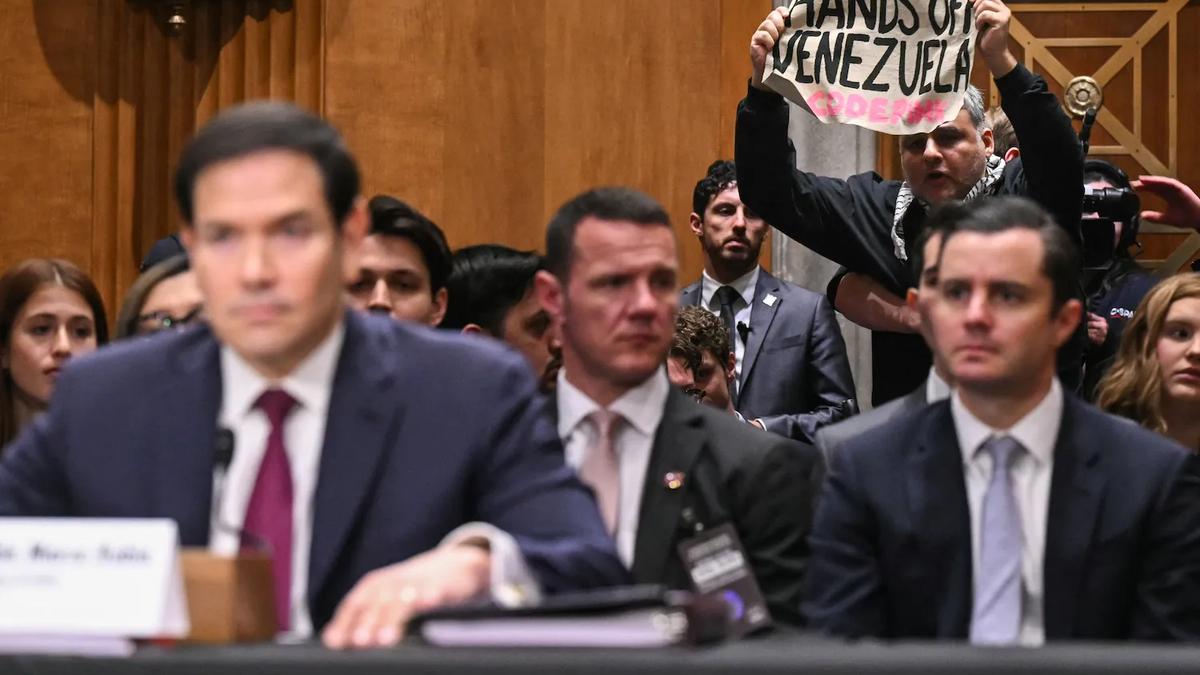
Following a decisive victory in the United States midterm elections, the Democratic Party has secured control of Congress, signaling an imminent shift in Washington's foreign policy approach, particularly towards Latin America. This new legislative landscape is expected to bring increased scrutiny and potential challenges to the Trump administration's existing strategies in the region, often dubbed the "Donroe Doctrine." Key areas targeted for congressional oversight include opaque oil deals in Venezuela, the controversial use of "deadly boat strikes" in the Western Hemisphere, and the conditions surrounding deportee detentions in El Salvador. Simultaneously, Paraguay has been rocked by the abrupt resignation of President Santiago Peña amidst a widening scandal involving a collapsed digital bank, which has left millions without access to their funds. In a separate development, El Salvador has deployed its troops to Haiti, marking a notable expansion of its regional security footprint.
The shift in Washington's power dynamics is primarily a contest between the executive and legislative branches. With control of Congress, Democrats are now positioned to leverage their oversight powers, including the ability to attach funding prohibitions to essential legislation, to rein in the Trump administration's more unilateral foreign policy actions. This mirrors historical precedents, such as Congress's threat to halt bombing in Cambodia in 1973, demonstrating the legislative branch's capacity to constrain presidential authority, especially on military operations. The Defense Secretary, Pete Hegseth, a vocal proponent of the "lethality over legality" doctrine underpinning the boat strikes, faces immediate pressure, including potential impeachment articles, which could shift the metrics for evaluating the success of these operations. Similarly, Secretary of State Marco Rubio, who has been instrumental in shaping US policy towards Venezuela, is reportedly considering a 2028 presidential bid, adding another layer of uncertainty to the administration's regional strategy.
This newfound congressional assertiveness could paradoxically push President Trump to double down on areas where the executive branch retains greater autonomy, particularly in foreign policy. However, it also presents an opportunity for Latin American leaders to assert greater independence. The swift recognition of Brazilian President Luiz Inácio Lula da Silva's re-election by right-wing regional presidents, in contrast to Trump's delayed acknowledgment, highlights a growing willingness among some to act autonomously from Washington's direct influence. The discussion within US policy circles, from think tanks like the Council on Foreign Relations to progressive advisors, already points to a re-evaluation of US-Latin America relations, focusing on expanded trade deals, critical minerals strategies, and new approaches to immigration and democratic transitions in countries like Venezuela. These discussions reflect a recognition that the "Donroe Doctrine," characterized by its transactional and often confrontational approach, may be losing its long-term viability.
In Paraguay, the sudden collapse of Santiago Peña's presidency illustrates the fragility of political power when confronted by public outrage and elite maneuvering. The digital bank scandal, which directly impacted millions of citizens, provided the catalyst for widespread protests. Crucially, the turning point came when Horacio Cartes, the most influential power broker within Peña's own party, withdrew his support and backed impeachment proceedings. This demonstrates that in many Latin American democracies, formal institutions can be swiftly overridden by the withdrawal of support from powerful, often informal, political patrons. Peña's resignation, pre-empting impeachment, was framed as a move for "stability," but it was fundamentally a capitulation to a concentrated power play. Meanwhile, El Salvador's deployment of troops to Haiti signals a strategic move to project its burgeoning security model regionally, potentially seeking international legitimacy or influence beyond its borders.
The US policy of "deadly boat strikes" in the Western Hemisphere, championed by figures like Defense Secretary Pete Hegseth, carries a direct and devastating human cost. While the specific targets and frequency are often obscured, these operations inherently risk civilian lives, particularly those of migrants, fishermen, or individuals caught in maritime transit. The focus on "lethality over legality" suggests a disregard for due process and international humanitarian law, leaving communities vulnerable to extrajudicial actions and escalating regional instability. Similarly, the demand for hearings on deportee detentions in El Salvador highlights severe human rights concerns. Individuals deported from the US often face precarious conditions upon return, including potential violence, lack of resources, and arbitrary detention. These detentions can separate families, traumatize individuals, and overwhelm already strained social services in receiving countries, creating a cycle of vulnerability and despair that extends far beyond the initial act of deportation.
In Paraguay, the collapse of Ueno Bank has had an immediate and profound impact on the lives of millions. For a nation where digital banking was seen as a pathway to financial inclusion, the sudden inability to access savings, wages, and essential funds has plunged countless households into economic uncertainty. Small businesses, reliant on daily transactions, have faced immediate collapse, leading to job losses and a broader chilling effect on the economy. The erosion of trust in financial institutions, particularly when the scandal involves high-level political figures like former President Peña and his appointees, can take years to rebuild. This crisis directly affects the daily lives of ordinary citizens, forcing them to navigate a suddenly unstable financial landscape and confront the consequences of institutional corruption.
The push for transparency regarding Trump's "opaque oil deal in Venezuela" underscores the human cost of resource exploitation without accountability. When national assets like oil are traded in secret, the benefits rarely accrue to the general population. Instead, such deals often enrich a select few, perpetuate corruption, and undermine the long-term economic stability and sovereignty of the nation. For ordinary Venezuelans, who have endured years of economic hardship and political instability, these deals represent a lost opportunity for national recovery and a perpetuation of a system that prioritizes external interests and elite gains over public welfare. The lack of transparency means the human cost – in terms of lost social services, environmental degradation, and continued political disenfranchisement – remains largely unquantified and unaddressed.
What is routinely downplayed or omitted in official US statements regarding the "Donroe Doctrine" is the full, unvarnished reality of the "lethality over legality" approach. The term itself, championed by Defense Secretary Pete Hegseth, suggests a deliberate prioritization of military effectiveness over adherence to international law and ethical considerations. Governments rarely disclose the specific rules of engagement, casualty figures, or the precise legal justifications for operations like the "boat strikes." The public is left to infer the consequences, while the powerful actors involved frame these actions as necessary for national security or regional stability. The untold story here is not just the number of lives lost, but the systemic erosion of legal norms and the precedent it sets for future interventions, often impacting vulnerable populations who lack any recourse or voice in these high-level decisions.
The narrative surrounding President Peña's swift resignation in Paraguay focuses on the digital bank collapse as the immediate trigger. However, this framing downplays the deeper, systemic corruption that likely enabled such a collapse and the subsequent political maneuvering. The fact that Peña was an investor in Ueno Bank's parent company and appointed an executive linked to the bank as central banker points to a profound intertwining of political power and financial interests. The "top power broker" Horacio Cartes's sudden withdrawal of support for Peña suggests that the crisis was not merely a financial oversight but a political earthquake that exposed underlying networks of influence and patronage. The untold story is the extent to which these powerful elites operate outside formal democratic checks, capable of both installing and removing leaders when their interests are threatened, leaving the public to bear the consequences of their opaque dealings.
El Salvador's deployment of troops to Haiti is presented as a contribution to regional stability, but this narrative often omits the domestic context and potential motivations behind such a move. President Nayib Bukele's government has garnered international attention for its controversial, yet domestically popular, crackdown on gangs, which has involved mass detentions and significant human rights concerns. Exporting this "security policy" to Haiti could be a strategic move to legitimize El Salvador's approach on the international stage, deflect criticism of its internal human rights record, or even test the applicability of its model in a different, highly volatile environment. The untold story lies in the potential for El Salvador's intervention to either genuinely assist Haiti or inadvertently introduce a security paradigm that may not be suitable or sustainable, with unforeseen consequences for the Haitian populace and regional stability.
The "opaque oil deal in Venezuela" is framed by US lawmakers as a matter of accountability for the Trump administration. However, this focus often omits the broader, long-standing issue of Venezuela's resource sovereignty and the complex interplay of international actors in its oil sector. The discussion rarely delves into the historical context of foreign exploitation, the impact of sanctions on the Venezuelan people, or the precise mechanisms through which such "opaque" deals circumvent democratic oversight and benefit external entities or specific factions within the Venezuelan elite. The untold story is how these deals, regardless of the US administration in power, often perpetuate a cycle where Venezuela's vast natural resources are leveraged for geopolitical advantage or private gain, rather than serving as a foundation for national development and public welfare, leaving the Venezuelan people as perpetual bystanders to the fate of their own wealth.
The coming months will be critical in observing how the newly empowered US Congress translates its oversight ambitions into concrete policy changes. Watch for specific legislative efforts to attach funding prohibitions to military operations, particularly those related to the "boat strikes." The fate of Defense Secretary Pete Hegseth and Secretary of State Marco Rubio will also be telling indicators of the Trump administration's willingness to adapt or double down. Any resignations or shifts in key personnel could signal a significant recalibration of US foreign policy, or alternatively, a more entrenched executive branch determined to act unilaterally.
In Paraguay, the transition under Vice President Pedro Alliana will be closely watched for signs of stability, as well as the depth and transparency of investigations into the Ueno Bank collapse. The extent to which the new administration genuinely addresses systemic corruption, rather than merely replacing one set of powerful figures with another, will determine the long-term impact on public trust and economic recovery. Meanwhile, El Salvador's deployment to Haiti bears scrutiny for its effectiveness, its adherence to human rights standards, and its broader implications for regional security cooperation and the projection of El Salvador's unique security model.
Finally, the unofficial start of the 2028 US presidential campaign will see a proliferation of policy proposals for Latin America. Pay attention to how candidates articulate strategies around critical minerals, immigration burden-sharing, and the future of Venezuela. These discussions will offer early insights into the potential trajectory of US-Latin America relations beyond the current administration. Simultaneously, the continued assertion of independence by Latin American leaders, particularly on issues of regional recognition and economic partnerships, will indicate whether the region is moving towards greater autonomy or remains largely reactive to Washington's shifting political tides. The Brazilian Port of Santos's ethanol fuel pilot, while small, is also a signal of regional innovation in global supply chains, a development that could quietly reshape economic power dynamics. All these threads weave into a complex tapestry, where the decisions made in distant power centers inevitably ripple through the lives of ordinary citizens across the hemisphere.
Source referenced: FOREIGNPOLICY
This brief was synthesized by our Editorial Engine and reviewed by The Ground Narrative team.