TRENDING

Sunday, 8 November 2026
----------------------
28 Jumada Al-Awwal 1448 AH
After a twelve‑year diplomatic freeze, Egypt has sent diplomats back to Tripoli. The move hints at a new balance of power in a war‑torn country and raises fresh questions about who will feel the effects.
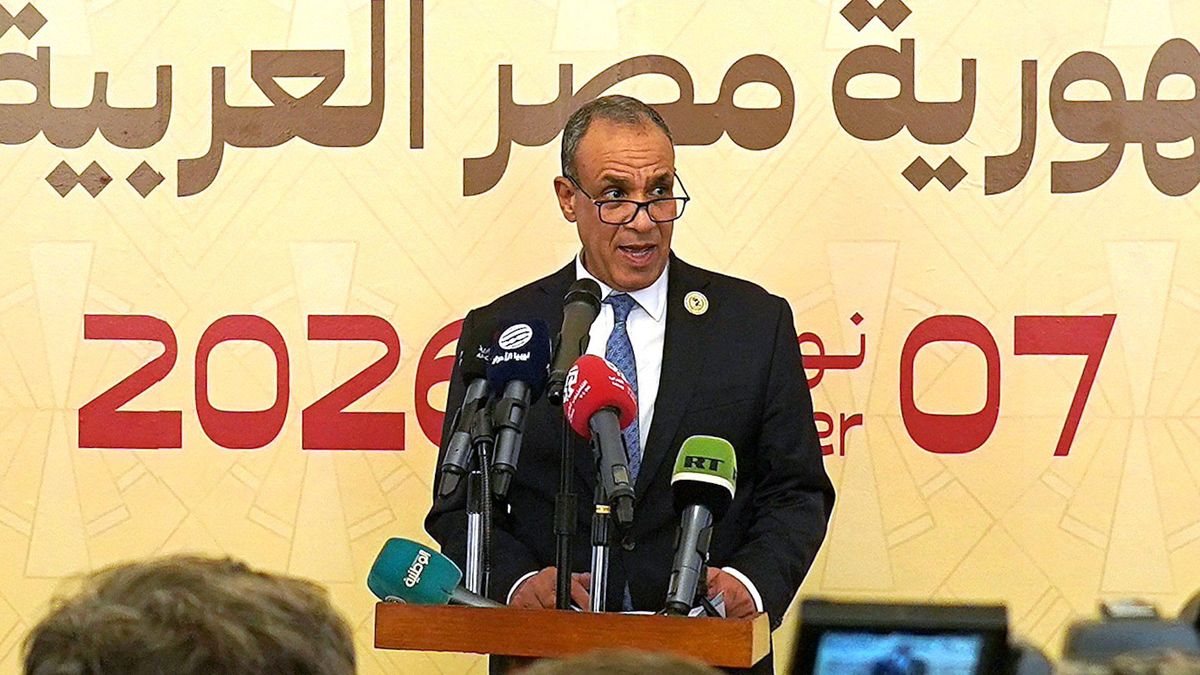
Egypt announced the reopening of its embassy in Tripoli on 8 November 2026, ending a twelve‑year diplomatic hiatus that began after the 2014 coup that split Libya between the UN‑backed Government of National Unity in the west and General Khalifa Haftar's Libyan National Army in the east. The ceremony was low‑key, with a handful of Egyptian diplomats stepping through the doors of a building that had been shuttered since the height of the civil war. Cairo framed the decision as a “step toward national reconciliation” and a “practical necessity” for protecting Egyptian citizens and interests in Libya.
The embassy’s reopening is less about paperwork and more about a recalibration of Egypt’s regional calculus. For over a decade, Cairo poured arms, cash, and political backing into Haftar’s eastern forces, viewing them as a bulwark against Islamist groups and a means to control the porous Libyan‑Egyptian border that funnels migrants toward Europe. With Haftar’s death in 2025 and the gradual consolidation of the Government of National Unity (GNU) under Prime Minister Mohamed al‑Sarraj, the old patron‑client relationship lost its anchor.
While Turkey deepened its ties with the GNU in the west, supplying drones and maritime contracts, Egypt found itself increasingly isolated. The loss of a reliable eastern ally forced Cairo to reconsider its stance, especially as the GNU began to assert control over oil export terminals in the Gulf of Sidra, a revenue stream Egypt has long coveted. Re‑engaging diplomatically offers Cairo a seat at the table where future oil‑sharing agreements will be negotiated.
President Abdel Fattah al‑Sisi faces mounting pressure at home over a stagnant economy and a costly military presence abroad. Reopening the embassy allows the Egyptian foreign ministry to claim a diplomatic win without committing additional troops, satisfying nationalist rhetoric while conserving resources. Moreover, the move signals to the Egyptian public that the government is actively protecting Egyptians who work in Libyan construction, agriculture, and the informal sector.
The Mediterranean power balance is in flux. Italy and France have both pushed for a stable Libya to secure energy supplies and curb illegal migration. By normalising relations with the GNU, Egypt can position itself as a necessary partner in any multilateral framework, potentially extracting concessions on border security and joint patrols. The United States, still wary of Haftar’s legacy, welcomes any diplomatic channel that could curb Iranian influence via Hezbollah proxies in eastern Libya.
While diplomats exchange handshakes, ordinary Libyans bear the brunt of shifting alliances. The prolonged diplomatic vacuum left many Libyan families without consular assistance, especially those with Egyptian spouses or children. Re‑opening the embassy restores a vital lifeline for registration, legal aid, and repatriation services.
The porous Benghazi‑Marsa Matruh crossing has long been a conduit for migrants, smugglers, and informal trade. Egyptian security forces have frequently conducted raids, citing terrorism concerns, but these operations often disrupt local economies that depend on cross‑border commerce. A functional embassy could mediate disputes, but it also opens the door for tighter Egyptian surveillance, potentially curbing the informal livelihoods of thousands.
Libya’s oil sector employs a sizable contingent of Egyptian technicians and laborers. The embassy’s closure forced many to work without proper contracts, leaving them vulnerable to exploitation and wage arrears. With diplomatic channels restored, workers can now seek legal recourse, yet the renewed focus on oil revenue may also prompt the GNU to renegotiate labor terms, risking job losses if foreign firms are sidelined.
The civil war displaced over 1 million Libyans, many of whom fled to Egypt’s western desert camps. The embassy’s absence meant limited coordination for humanitarian aid and family reunification. Its return could streamline UN‑NGO efforts, but the Egyptian government’s emphasis on security may prioritize deportations over protection, leaving the most vulnerable in limbo.
Official statements celebrate “reconciliation” and “mutual benefit,” yet several layers remain concealed.
Cairo repeatedly cites the threat of militant infiltration across the border as justification for its involvement. However, intelligence reports suggest that many of the fighters labeled as “terrorists” are actually local militia groups aligned with rival Libyan factions. By framing the issue as a transnational security threat, Egypt can legitimize a continued military footprint while downplaying its economic motives.
The GNU’s recent control of the Ras Lanuf refinery has sparked speculation that Egypt aims to secure a share of Libya’s oil royalties. Public discourse rarely mentions the potential for joint extraction contracts or pipeline projects that could funnel Libyan crude through Egyptian ports, a lucrative prospect that would reshape regional energy flows.
Western European nations have pressured North African states to stem migrant flows. While Egypt publicly condemns human‑smuggling, it quietly benefits from the ability to intercept and return migrants, reducing the burden on its own asylum system. The embassy’s reopening may serve as a bureaucratic tool to expedite deportations, a detail omitted from diplomatic press releases.
By engaging the GNU, Egypt subtly signals to Turkey that it is willing to share influence in Libya’s western coast, where Turkish firms have secured lucrative maritime contracts. The quiet nature of the embassy’s reopening suggests a back‑channel negotiation rather than an open rivalry, a nuance absent from official rhetoric.
The embassy’s reopening is a catalyst, not a conclusion. Observers should monitor several developments:
- Negotiations over oil revenue sharing between the GNU and Egyptian state oil companies, which could reshape export routes and affect global oil prices.
- Joint border patrol agreements that may increase Egyptian security presence in western Libya, potentially sparking friction with local militias.
- UN‑mediated talks on a permanent political settlement; Egypt’s diplomatic foothold could give it veto power over any agreement that limits its influence.
- Turkey’s response, especially any adjustment of its maritime concessions in the Gulf of Sidra, which could lead to a subtle diplomatic tug‑of‑war.
- Migration trends across the Egypt‑Libya border, as tighter controls may push migrants toward more dangerous routes, raising humanitarian concerns.
Keeping an eye on these threads will reveal whether the embassy’s doors open a path to stability for ordinary Libyans or simply a new arena for great‑power bargaining.
The embassy was shuttered after the 2014 coup that split Libya, as Cairo chose to back General Khalifa Haftar’s eastern forces and withdrew formal diplomatic ties with the western government.
It may pave the way for joint oil‑revenue agreements, giving Egypt a stake in Libya’s export infrastructure and potentially influencing global oil market dynamics.
Editor's Note: Analysis based on publicly available diplomatic statements and regional security assessments.
Source referenced: ALJAZEERA
This brief was synthesized by our Editorial Engine and reviewed by The Ground Narrative team.