TRENDING

Sunday, 20 September 2026
----------------------
9 Rabi' Al-Thani 1448 AH
As Cuba grapples with its worst crisis in decades, the United States appears poised to intensify its long-standing economic pressure. This analysis examines the power dynamics behind Washington's renewed hardline stance and the profound human cost for ordinary Cubans caught between historical animosity and political maneuvering.
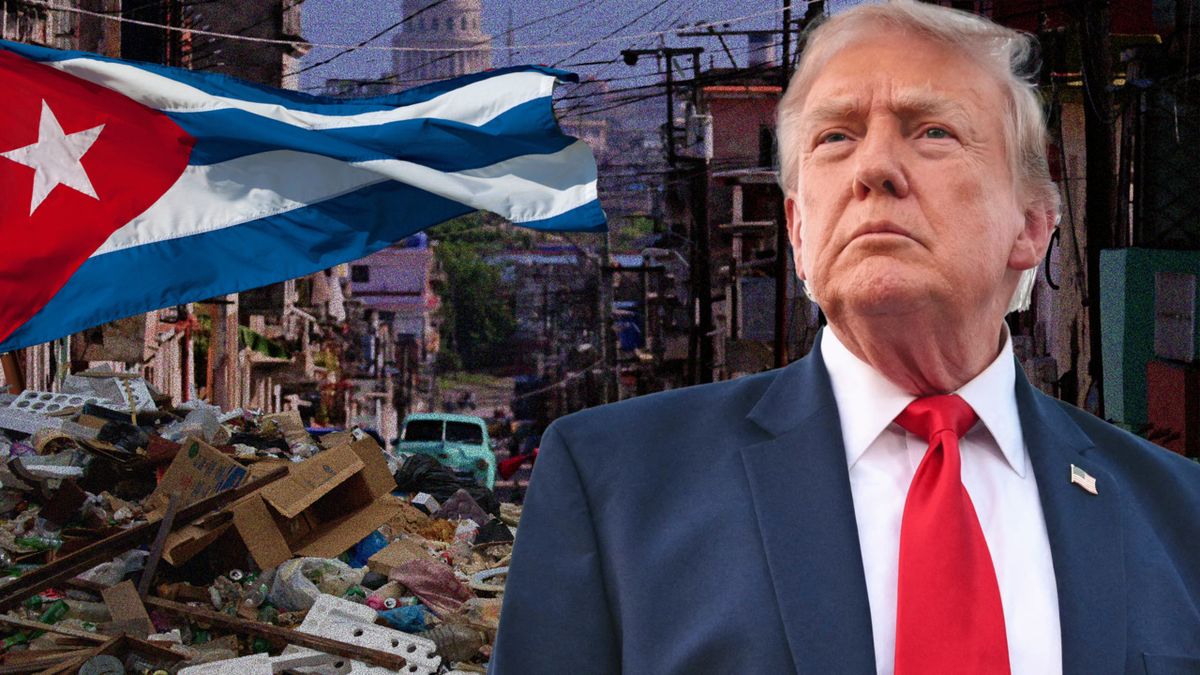
Cuba is currently enduring its most severe economic crisis in decades, characterized by widespread shortages of essential goods, inflation, and a deteriorating standard of living. Against this backdrop, the United States, particularly under the potential return of a Donald Trump administration, is signaling a renewed hardening of its policy towards the island, including the prospect of further economic sanctions.
The United States' policy towards Cuba has been a consistent thread in its foreign relations for over six decades, driven by a complex interplay of Cold War-era ideological opposition, the significant political influence of the Cuban exile community in Florida, and a persistent goal of regime change. Sanctions serve as the primary instrument in this strategy, designed to destabilize the Cuban government by choking its economy and fomenting internal discontent. For a US administration, a hardline stance often resonates with a specific domestic political base, framing the approach as a demonstration of strength against a perceived communist adversary. The underlying objective is to generate sufficient internal pressure to compel concessions or trigger a collapse of the existing government, without resorting to direct military intervention.
From the Cuban government's perspective, the US embargo has historically served as a powerful rallying cry, allowing it to attribute internal economic hardships to external aggression and thereby consolidate its hold on power. The centralized economic model, while ideologically driven, has also relied heavily on external support, most recently from Venezuela in the form of subsidized oil and economic aid. The current crisis, exacerbated by Venezuela's own economic collapse, forces the Cuban leadership into an acute dilemma: maintain ideological purity and state control amidst escalating public suffering, or risk loosening its grip through necessary economic reforms.
The most direct and severe consequences of intensified US pressure fall squarely on the shoulders of ordinary Cuban citizens. Decades of sanctions, compounded by the inherent inefficiencies of a centrally planned economy and the loss of key international support, have created chronic shortages of basic necessities—food, medicine, fuel, and consumer goods. This translates into daily struggles: longer queues, dwindling purchasing power, and a pervasive sense of desperation.
The economic hardship fuels a significant outflow of people, as Cubans undertake increasingly dangerous journeys to seek better opportunities and basic human security elsewhere. Small private businesses, which had begun to emerge during periods of slight economic liberalization, are often the first casualties of tightened restrictions, directly impacting the livelihoods of entrepreneurs and their employees. Critically, access to essential medical supplies is severely hampered, posing a direct threat to public health across the island.
While US officials frequently articulate sanctions as a means to pressure the Cuban government, they consistently downplay or outright omit the direct and disproportionate suffering inflicted upon the Cuban populace. The prevailing narrative often places sole blame for the people's plight on the Cuban government, effectively sidestepping how external economic strangulation exacerbates and entrenches internal systemic issues. This framing also conveniently overlooks the historical reality that the embargo has largely failed to achieve its stated goal of regime change, instead arguably strengthening the government's narrative of external threat.
Furthermore, the discourse rarely acknowledges the significant economic opportunities foregone by American businesses and farmers who could potentially engage with Cuba, nor the potential for a more stable and prosperous Cuba to alleviate migration pressures on US borders. The focus remains predominantly on political leverage and ideological confrontation, rather than on the broader human development or economic potential of the island.
Readers should closely monitor the specific nature and scope of any new US sanctions. Will they be broadly applied, or will they target particular sectors or individuals? Crucially, how will they impact remittances, which represent a vital lifeline for countless Cuban families? Observe the Cuban government's reaction: will it double down on austerity and state control, or will the mounting pressure compel a more significant, albeit politically risky, pivot towards market-oriented economic reforms?
Pay attention to the responses from regional actors, particularly Latin American nations and the European Union, which have historically advocated for engagement over isolation. Their diplomatic efforts could provide a crucial counterweight to US hardline policies. Finally, any significant increase in migration patterns from Cuba will serve as a stark and immediate indicator of escalating human cost and desperation on the island.
Source referenced: FRANCE24
This brief was synthesized by our Editorial Engine and reviewed by The Ground Narrative team.


