TRENDING

Friday, 18 September 2026
----------------------
7 Rabi' Al-Thani 1448 AH
EU leaders floated an associate‑member idea for Canada as both blocs seek to sidestep U.S. tariffs. The proposal reveals power calculations, while ordinary Canadians and Europeans face uncertain benefits.
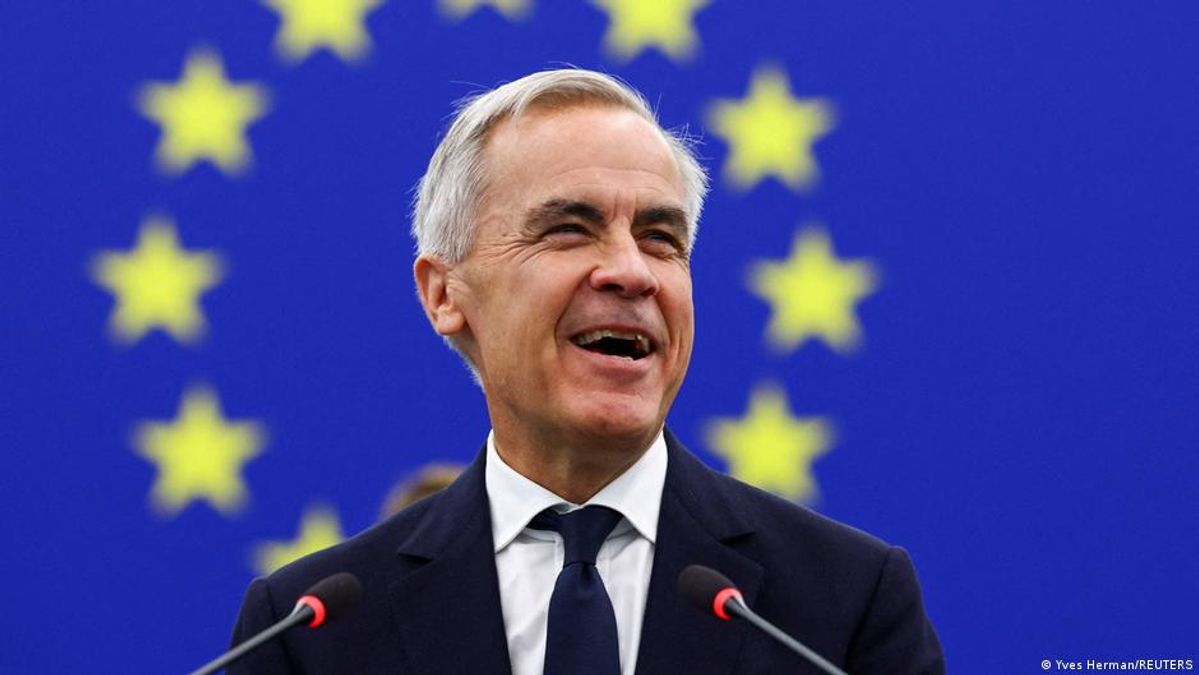
On September 16, 2026, European Commission President Ursula von der Leyen suggested that Canada could become the EU’s first "associate member," a status that does not yet exist. The idea was floated as a joint response to trade friction with the United States under President Donald Trump. Canadian Prime Minister Mark Carney echoed the sentiment, emphasizing shared values of rule of law and democracy.
The proposal serves several overlapping incentives. For the EU, an associate Canada offers a hedge against U.S. protectionism without extending full voting rights or fiscal obligations. It also signals to other potential partners—like the Western Balkans—that the bloc can craft flexible ties beyond classic accession routes. For Canada, aligning with Europe provides leverage in negotiations with Washington, especially on agricultural and automotive tariffs that threaten key export sectors. Both sides benefit from a symbolic partnership that can be marketed domestically as a defense of liberal democratic norms, while sidestepping the deeper political integration that full membership would demand. The arrangement also allows the EU to export its regulatory standards—environmental, digital, and labor—without the political cost of expanding the customs union or the Eurozone.
The headline benefits mask a stark reality for workers and small businesses. Canadian farmers already face higher U.S. duties; an associate status would not guarantee market access to the EU’s 27‑nation single market, leaving them dependent on bilateral deals that can be renegotiated at any time. In Europe, sectors that rely on Canadian raw materials—such as aerospace and mining—may see modest tariff relief, but the gains are uneven and concentrated in regions with existing trade links. Meanwhile, migrants and cross‑border commuters, who currently enjoy freedom of movement under existing agreements, could encounter new bureaucratic hurdles if regulatory alignment deepens without accompanying rights. The political narrative of “shared values” does little to address the everyday cost of compliance, certification, and potential job displacement in both economies.
Official statements downplay the fiscal and legislative burden that an associate framework would impose on the EU. Even without full voting rights, Canada would likely be required to adopt large swaths of EU law—environmental standards, data protection, and competition rules—while contributing financially to EU programs. Those contributions are rarely quantified in public briefings, leaving EU taxpayers to shoulder costs without a clear return. On the Canadian side, the government has not detailed how the arrangement would affect existing trade agreements with the U.S. or the UK, nor how it would impact Indigenous communities whose lands are tied to resource extraction projects that could become subject to stricter EU regulations.
Watch for three concrete developments. First, the EU will commission a legal study to define the scope of "associate membership," which will reveal whether the model is a stepping stone for other non‑EU economies or a one‑off political gesture. Second, Canada’s trade ministry is expected to release a cost‑benefit analysis; any omission of fiscal contributions or regulatory compliance costs will signal how far the government is willing to go. Third, domestic political reactions in both regions—particularly from agricultural unions in Canada and Eurosceptic parties in the EU—will test the durability of the partnership narrative. If the proposal stalls, it may still influence future EU outreach to other partners, reshaping the bloc’s enlargement strategy without expanding its core institutions.
Source referenced: DW
This brief was synthesized by our Editorial Engine and reviewed by The Ground Narrative team.