TRENDING

Saturday, 19 September 2026
----------------------
8 Rabi' Al-Thani 1448 AH
The US has added more Chinese firms to its 'forced labor' entity list, citing human rights concerns in Xinjiang. China condemns the move as economic coercion, signaling escalating tensions in global trade and supply chains.
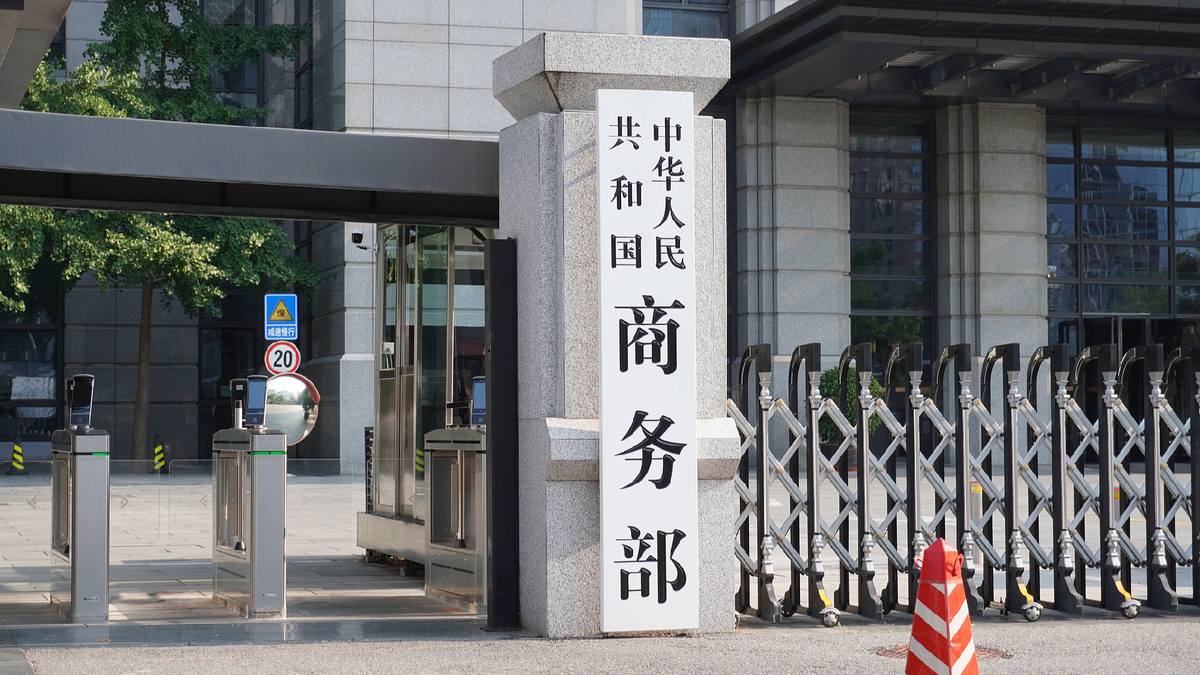
The United States Department of Homeland Security recently announced the addition of over 40 Chinese entities to its "Uyghur Forced Labor Prevention Act" (UFLPA) entity list. This move effectively bans imports from these companies unless importers can definitively prove that their goods were not produced with forced labor. Beijing swiftly condemned the action, with China's Commerce Ministry spokesperson labeling it an act of "economic coercion" that lacks factual basis and abuses domestic laws under the pretext of "human rights" and "forced labor." The Chinese statement further asserted that the US action undermined the legitimate rights of Chinese companies, disrupted global supply chains, and contradicted the consensus reached during a recent video call between trade officials from both nations. China firmly denies the existence of forced labor in the Xinjiang Uygur Autonomous Region, portraying it as a stable, harmonious, and economically thriving area, and vowed to take necessary measures to safeguard its companies' interests.
This latest US action is a clear demonstration of how human rights concerns are increasingly being weaponized as a tool in the broader geopolitical and economic competition between Washington and Beijing. For the United States, the UFLPA represents a potent legislative mechanism to pressure China, shifting the burden of proof onto importers and effectively creating a de facto ban on goods from Xinjiang. This approach allows the US to frame its economic actions in moral terms, appealing to domestic constituencies concerned with human rights while simultaneously pursuing a strategy of "de-risking" or "decoupling" critical supply chains from China. It's a strategic move designed to compel multinational corporations to re-evaluate their presence and sourcing in China, thereby weakening Beijing's economic leverage.
From China's perspective, the US move is not about human rights but about economic containment and interference in its internal affairs. Beijing views these sanctions as unilateral aggression, an attempt to stifle its economic growth and technological advancement under a convenient moral guise. China's strong denial of forced labor in Xinjiang and its emphasis on the region's stability aim to delegitimize the US claims on the international stage, protecting its sovereignty and economic model. The threat of "necessary measures" signals a potential tit-for-tat escalation, where China might impose reciprocal sanctions or restrictions on US companies, further entrenching the economic rivalry. This dynamic forces global businesses into an increasingly precarious position, caught between two economic superpowers leveraging different sets of rules and values.
While the stated intent of the UFLPA is to protect the human rights of the Uyghur population in Xinjiang, the actual impact on their lives remains largely obscured by the geopolitical noise. Their voices are often filtered through state narratives or advocacy groups, making it difficult to discern how these sanctions directly translate into improved conditions on the ground. Beyond Xinjiang, the economic fallout of these sanctions extends to ordinary Chinese factory workers across the country. Companies facing import bans, supply chain disruptions, or increased compliance costs may be forced to reduce orders, cut jobs, or delay expansion plans, impacting livelihoods far removed from the alleged labor practices in Xinjiang.
Globally, the ripple effects are felt by consumers and businesses alike. Multinational corporations, forced to re-route supply chains and invest in new sourcing, will inevitably pass on these increased costs. This translates into higher prices for everyday goods, from clothing to electronics, effectively imposing a hidden tax on ordinary citizens around the world. Small and medium-sized businesses, particularly those with intricate supply chains linked to China, are especially vulnerable. Lacking the resources of larger corporations to absorb compliance costs or rapidly pivot sourcing strategies, many face significant operational challenges, risking their viability and the jobs they provide.
What often gets downplayed in the official rhetoric is the immense and far-reaching economic cost of disentangling global supply chains. While presented as a moral imperative, the process of re-sourcing, re-tooling, and re-locating manufacturing away from Xinjiang – and potentially other parts of China – involves staggering investments. Companies are not just finding alternative suppliers; they are often rebuilding entire segments of their production networks, a process that is costly, time-consuming, and inherently inefficient in the short to medium term. These economic inefficiencies are rarely highlighted by governments, which prefer to focus on the moral high ground, leaving the public to absorb the higher prices and market disruptions.
Furthermore, the selective application of human rights concerns as a primary lever in geopolitical competition sets a complex and potentially dangerous precedent. While the protection of human rights is paramount, its deployment as a strategic economic weapon risks diluting the universal principles it purports to uphold. This approach can lead to accusations of hypocrisy and allows powerful nations to justify punitive economic measures against rivals under a moral banner, potentially undermining genuine human rights advocacy in other contexts where geopolitical interests are less aligned. The inherent difficulty of independent verification of labor practices in Xinjiang, given the restrictions on access, further complicates the narrative, allowing both sides to entrench their positions without conclusive external scrutiny.
The immediate focus will be on China's response. Will Beijing implement targeted countermeasures against US companies operating in China, impose reciprocal sanctions on US officials, or escalate its rhetoric and diplomatic pressure? The nature and scope of China's actions will signal its willingness to endure economic pain for political principle and sovereignty. Simultaneously, global multinational corporations will be scrambling to assess their exposure and adapt their supply chains. Their success or failure in navigating the UFLPA will shape future global manufacturing landscapes and potentially accelerate the trend of supply chain diversification away from China. We should also watch for international reactions: will other nations align more closely with the US position, or will they prioritize maintaining economic ties with China, leading to further fragmentation in global trade policy? Finally, the future of US-China trade dialogue remains critical. Despite recent calls, this latest action suggests a deepening chasm. Any future high-level engagements will be crucial indicators of whether de-escalation is possible or if the two economic giants are settling into a prolonged period of strategic competition.
Source referenced: CGTN
This brief was synthesized by our Editorial Engine and reviewed by The Ground Narrative team.


