TRENDING

Saturday, 19 September 2026
----------------------
8 Rabi' Al-Thani 1448 AH
President Donald Trump will meet interim Venezuelan leader Delcy Rodríguez in New York, a first since the U.S. ousted Nicolás Maduro. The encounter spotlights oil interests, political survival, and a populace left to bear the fallout.
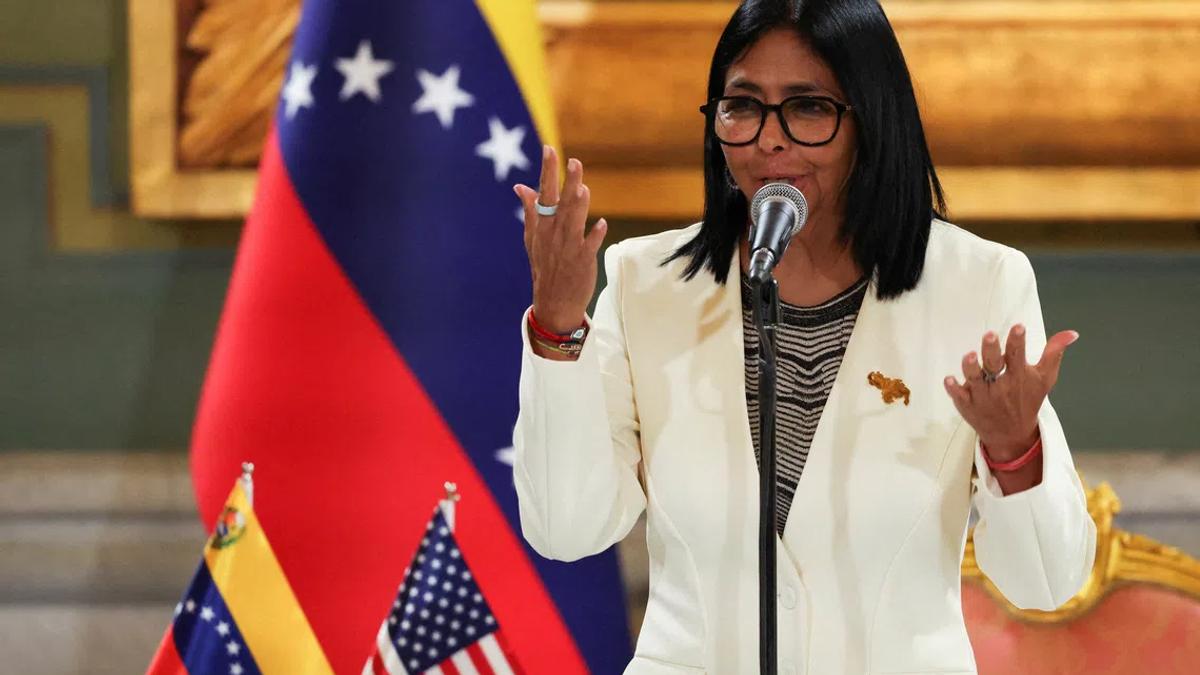
On September 19, 2026 the White House announced that President Donald Trump will sit down with Venezuela’s interim president, Delcy Rodríguez, at a United Nations General Assembly reception in New York. It marks the first face‑to‑face dialogue between the two leaders since Washington declared Nicolás Maduro’s government illegitimate in January.
U.S. domestic calculus. Trump’s re‑election bid hinges on projecting decisive foreign‑policy victories. A high‑profile meeting with a sanctioned regime offers a narrative of “making deals” that can be sold to his base, especially as the 2028 election looms.
Oil as leverage. Last month the United States and Venezuela signed an energy pact granting U.S. firms partial control over the country’s oil fields. By pairing the agreement with a diplomatic overture, Washington signals that commercial access is contingent on political compliance, effectively turning Venezuela’s oil wealth into a bargaining chip.
Rodríguez’s legitimacy gamble. As acting president, Rodríguez inherited a fractured political landscape. Aligning with Trump provides her a veneer of international recognition, but it also ties her to a leader whose populist style can alienate traditional regional partners.
UN platform. Holding the pull‑aside at the UN General Assembly allows both sides to claim multilateral legitimacy while keeping the substantive agenda off the public record. The setting masks the transactional nature of the talks behind diplomatic ceremony.
Venezuelan citizens continue to endure hyperinflation, electricity blackouts, and a crippled health system. The oil sector, once the engine of the economy, now employs a shrinking workforce; any shift in ownership threatens job security for thousands of plant workers and their families. Opposition activists, including Nobel laureate María Corina Machado, face exile and the constant risk of arrest, limiting their ability to mobilise grassroots support. Meanwhile, the Venezuelan diaspora in the United States and Europe watches anxiously, hoping for relief but fearing that elite deals will bypass ordinary needs.
Official statements frame the meeting as a step toward “stability” and “energy security.” What remains hidden is the extent to which the U.S. intends to extract profit from Venezuela’s reserves while keeping sanctions on Maduro’s loyalists in place. The agreement sidesteps the broader humanitarian crisis, treating oil as a commodity rather than a public good. Additionally, the Trump administration’s reluctance to facilitate Machado’s return suggests a calculated decision to keep the opposition fragmented, preserving a diplomatic partner who is more pliable than a potentially confrontational civil‑society leader.
Watch for the content of any joint communiqué released after the UN reception – language about sanctions relief or further oil contracts will indicate how deep the partnership runs. The UN General Assembly will also host votes on resolutions concerning Venezuela’s political status; a U.S.‑backed shift could reshape regional alignments. Domestically, any sign that Trump leverages the meeting for campaign messaging will reveal how foreign policy is being weaponised for electoral gain. Finally, the response of neighboring countries – especially Colombia, Brazil, and the Caribbean bloc – will signal whether the deal will be isolated or become a catalyst for a broader realignment in South America.
Editor's Note: Analysis based on publicly available statements and known geopolitical patterns; details of the meeting agenda remain undisclosed.
Source referenced: STRAITSTIMES
This brief was synthesized by our Editorial Engine and reviewed by The Ground Narrative team.


