TRENDING

Saturday, 19 September 2026
----------------------
8 Rabi' Al-Thani 1448 AH
US President Donald Trump has announced new negotiations with Iran to address the Strait of Hormuz dispute and Iran's denuclearisation, after calling off planned strikes. The move comes as Iran nears a deal with Oman on a new route through the strait, a key waterway for global energy supplies. The conflict, which began six months ago, has led to periods of relative calm and escalation, with the US and its partners seeking to limit Iran's control over the strait.
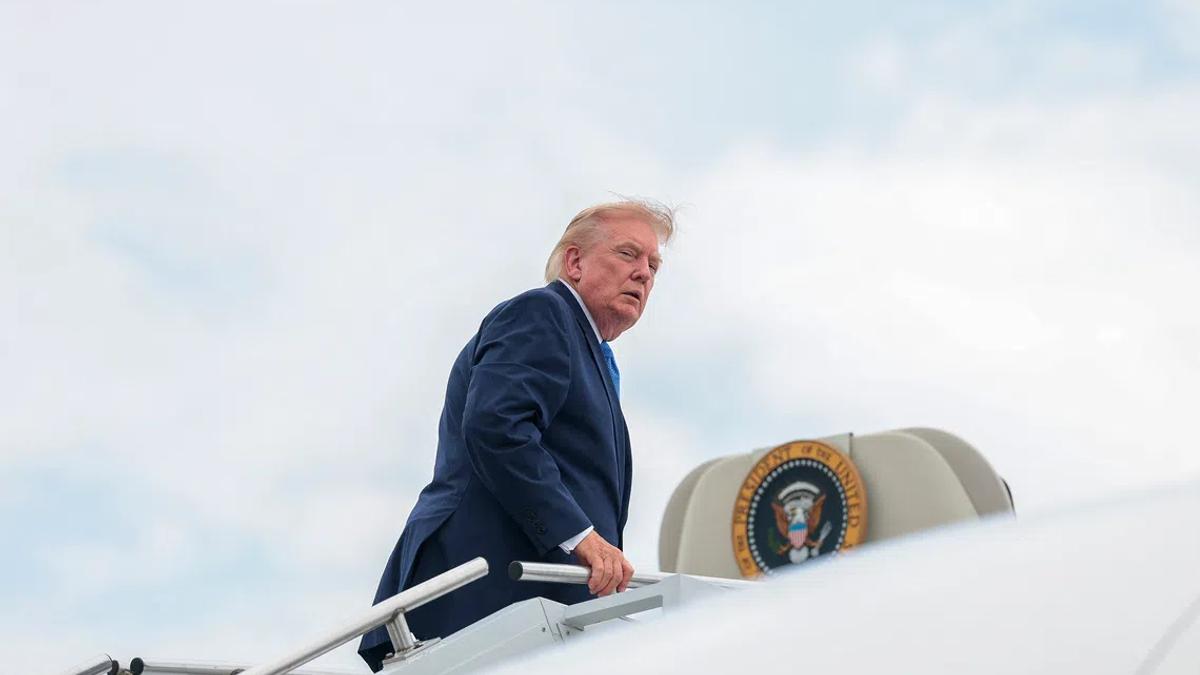
The US and Iran are set to begin new negotiations on August 3, aimed at resolving the dispute over the Strait of Hormuz and Iran's denuclearisation. The talks come after US President Donald Trump called off planned strikes against Iran, which he claimed would have been the largest attack since World War II. The decision to pursue diplomacy was reportedly made after requests from Iran and US partners in the Gulf, including Saudi Arabia, the United Arab Emirates, and Qatar.
The conflict over the Strait of Hormuz is a classic example of a geopolitical chokepoint, where the control of a strategic waterway can have far-reaching implications for global energy supplies and economic stability. The US and its partners have long sought to limit Iran's control over the strait, which Tehran has used as a bargaining chip in its negotiations with the West. The current dispute began six months ago, when the US and Israel launched surprise strikes against Iran, prompting Tehran to close the strait and insist on retaining control and charging tolls. The US has rejected these demands, leading to a cycle of escalation and diplomacy.
The conflict over the Strait of Hormuz has significant human implications, particularly for the people of Iran and the wider region. The closure of the strait has disrupted global energy supplies, leading to increased prices and economic instability. The conflict has also led to a significant humanitarian toll, with reports of civilian casualties and displacement. The people of Iran, in particular, have borne the brunt of the conflict, with the country's economy suffering under the weight of sanctions and military action.
One aspect of the conflict that has received little attention is the role of Oman in mediating the dispute. The Gulf state has been working behind the scenes to broker a deal between Iran and the US, and its efforts may have contributed to the decision to pursue diplomacy. However, the details of Oman's involvement remain unclear, and it is uncertain how the country's mediation efforts will impact the outcome of the negotiations. Additionally, the US and its partners have been downplaying the significance of Iran's nuclear program, which Tehran insists is entirely civilian in nature. The true extent of Iran's nuclear ambitions remains a subject of debate, and the negotiations will likely hinge on the ability of the US and its partners to verify Iran's claims.
As the negotiations between the US and Iran begin, several key factors will determine the outcome. Firstly, the ability of the US and its partners to verify Iran's nuclear program will be crucial in determining the success of the talks. Secondly, the role of Oman and other regional actors in mediating the dispute will be important in shaping the negotiations. Finally, the willingness of the US and Iran to make concessions on the Strait of Hormuz will be a key factor in determining the outcome of the talks. Readers should watch for signs of progress on these issues, as well as any indications of escalation or diplomatic breakdown.
Editor's Note: The outcome of the negotiations is uncertain, and the analysis is based on publicly available information.
Source referenced: STRAITSTIMES
This brief was synthesized by our Editorial Engine and reviewed by The Ground Narrative team.


