TRENDING

Monday, 21 September 2026
----------------------
10 Rabi' Al-Thani 1448 AH
Russia held its first parliamentary election since the Ukraine invasion, with United Russia poised to dominate amid drone attacks and restricted opposition. The vote underscores Kremlin control while ordinary Russians and annexed Ukrainians bear the hidden costs.
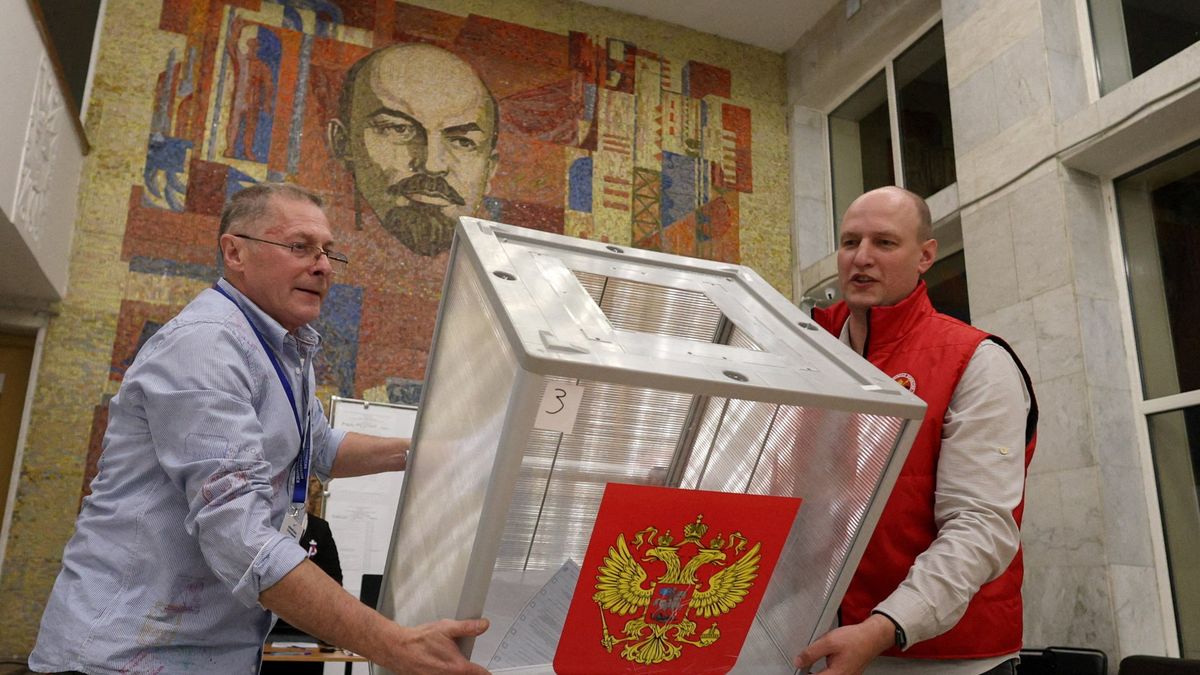
Polls closed on September 20, 2026, marking Russia’s first wartime parliamentary election. The ruling United Russia party is on track to secure a decisive majority, with an official turnout reported at 56.66 %. Voting took place across the Russian Federation, the annexed Ukrainian regions of Donetsk, Luhansk, Zaporizhzhia, Kherson, and Crimea, despite ongoing drone strikes that killed civilians and an election official.
The Kremlin frames the election as a legitimacy test for the war, turning a political ritual into a battlefield of perception. United Russia’s dominance is guaranteed by three intertwined levers:
1. Controlled candidate field – Systemic opposition parties are pre‑approved and echo Putin’s line, while genuine dissenters like the liberal Yabloko were barred by the Supreme Court.
2. Media monopoly – State outlets flood the airwaves with pro‑war narratives, marginalising any anti‑war voice and shaping voter sentiment.
3. Security narrative – Drone attacks on voting infrastructure are portrayed as foreign sabotage, justifying tighter security measures and rallying nationalist fervour.
The inclusion of residents from occupied Ukrainian territories serves a dual purpose: it reinforces the narrative of a “unified” Russia and provides a veneer of democratic participation for foreign audiences, even as the annexed regions remain only partially under Moscow’s control.
Ordinary Russians face a stark calculus. Economic sanctions and war expenditures have eroded living standards, yet the state compels participation in a process that offers no real policy choice. In the annexed Ukrainian areas, residents are forced to vote in a system that does not recognise their Ukrainian citizenship, effectively stripping them of any political agency. Families in the Moscow region mourn three civilians killed by drone strikes, while a local election official in Kherson lost his life. Anti‑war activists have been imprisoned or forced into exile, silencing dissent and leaving communities without advocates. The turnout figure masks regional disparities: urban centres report higher participation, while remote war‑torn zones see depressed voting due to displacement and fear.
Official statements downplay the scale of electronic‑voting disruptions and the intimidation surrounding the ballot boxes. International observers were excluded, and the Russian Foreign Ministry attacks the OSCE for “double standards,” diverting attention from the lack of independent verification. The removal of Yabloko from the ballot is presented as a legal decision rather than a political purge, obscuring the systematic elimination of any platform that could question the war. Moreover, the Kremlin’s narrative of “foreign sabotage” masks its own role in inflating turnout numbers to project domestic cohesion, a tactic used in previous elections to counteract waning public confidence.
Watch for three developments:
1. Post‑election legislative agenda – United Russia’s strengthened majority will likely accelerate war‑funding bills, further entrenching the military‑industrial complex.
2. International response – The EU’s condemnation may translate into additional sanctions targeting election officials or the Duma, testing the Kremlin’s resilience.
3. Domestic dissent signals – Any rise in underground anti‑war activity, protest arrests, or increased emigration from annexed territories will indicate the human cost reaching a tipping point.
Understanding these dynamics helps reveal how a tightly choreographed vote sustains a war effort while ordinary citizens, both within Russia and in occupied Ukraine, shoulder the real consequences.
Source referenced: ALJAZEERA
This brief was synthesized by our Editorial Engine and reviewed by The Ground Narrative team.


