TRENDING

Thursday, 17 September 2026
----------------------
6 Rabi' Al-Thani 1448 AH
A large-scale Israeli raid in the Qalandiya refugee camp injured dozens and demolished livelihoods, revealing the escalating human cost of control in the West Bank. This incident is part of a broader pattern of intensified military and settler actions, reshaping the daily lives of Palestinians.
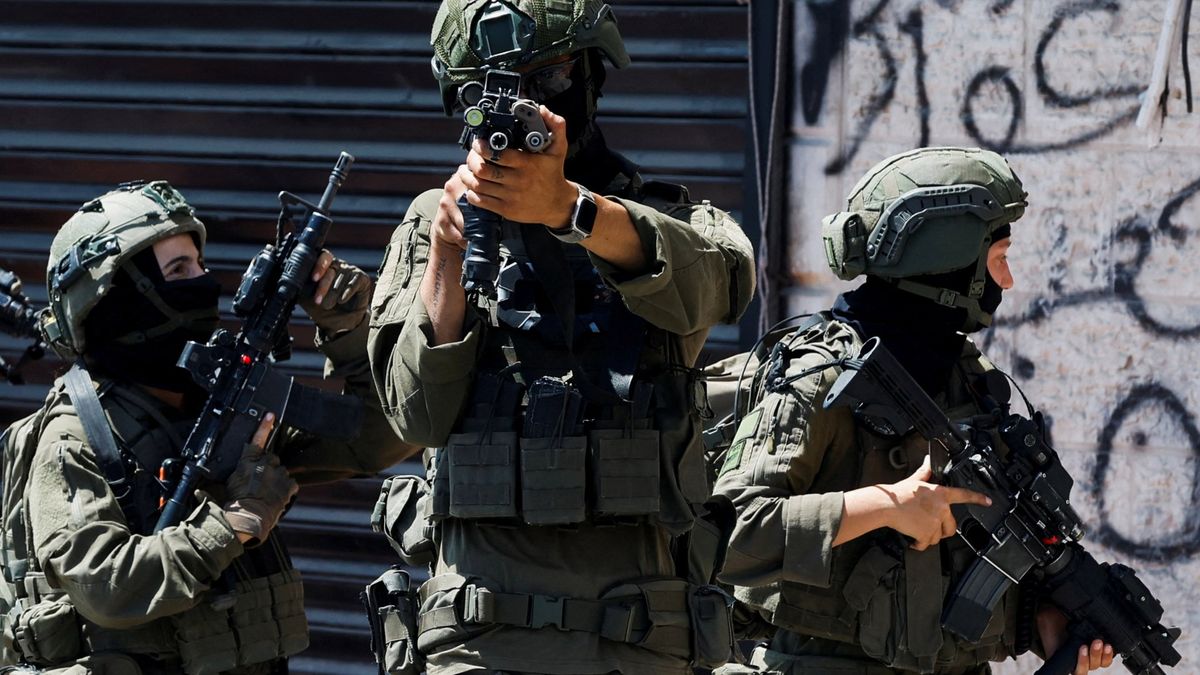
Israeli forces recently conducted a significant raid on the Qalandiya refugee camp in the occupied West Bank, resulting in injuries to at least 51 Palestinians. The operation involved the demolition of commercial shops near the Qalandiya checkpoint, the imposition of a curfew on the neighboring town of Kafr Aqab, and the sealing off of critical roads. During the raid, ambulance crews from the Palestine Red Crescent Society were reportedly blocked from reaching the wounded, and journalists were targeted with stun grenades. Concurrently, Israeli forces also raided Jenin, further highlighting a pattern of intensified military activity across the West Bank.
The actions in Qalandiya are not isolated incidents but rather a visible manifestation of a deeply entrenched power dynamic driven by specific political and strategic incentives. For the Israeli government, particularly its right-wing elements, the expansion of control over the West Bank and the suppression of Palestinian resistance are central to their political survival and ideological objectives. Ministers like Bezalel Smotrich and Itamar Ben-Gvir have actively pursued policies that facilitate settlement expansion—approving, legalizing, or re-establishing over 104 illegal settlements and 160 agricultural outposts—and arming settlers through state-backed programs. These actions create facts on the ground, making a future Palestinian state increasingly untenable, while simultaneously appealing to a domestic political base that prioritizes security and territorial claims. The military operations, often framed as security responses, serve to enforce this expanding control, disrupt Palestinian communities, and maintain a constant state of alert that solidifies the occupation. For Palestinians, these raids underscore their lack of sovereign power and their vulnerability to a military and political apparatus designed to manage and contain their population, often under the guise of counter-terrorism.
The human cost of these operations is borne directly by the Palestinian population, whose daily lives are increasingly defined by insecurity and loss. In Qalandiya, 51 people were injured, with 35 requiring hospitalization for severe beatings. The demolition of commercial shops represents not just property damage but the destruction of livelihoods, pushing families further into economic precarity. Curfews and sealed roads disrupt access to essential services, including medical care, as evidenced by the obstruction of ambulance crews. Beyond the immediate physical injuries, the detentions, field interrogations—including of children and women—and the constant threat of raids inflict profound psychological trauma. This systemic pressure is compounded by broader trends: over 2,300 Palestinians have been forced from their homes in the first half of this year due to settler violence and related restrictions, while critical services, such as those provided by UNRWA, are being curtailed. The cumulative effect is a society under immense strain, where basic human rights and economic stability are consistently undermined.
What often goes unstated or is downplayed by official narratives is the strategic objective underlying these seemingly disparate actions. Governments and official statements frequently frame raids as necessary security measures or responses to specific threats. However, the consistent pattern of settlement expansion, property demolitions, and the arming of settlers, coupled with the systematic fragmentation of Palestinian territory, points to a broader, long-term strategy of de facto annexation and the consolidation of Israeli control over the West Bank. The UN-appointed commission's conclusion that Israeli authorities have repeatedly failed to prevent settler attacks, and in some cases directly enabled them, reveals a deliberate policy, not merely a failure of enforcement. The international community's response, while including some sanctions from Western governments, remains largely fragmented and often overshadowed by the United States' stance, which, under recent administrations, has at times revoked even limited sanctions against settlers. This selective pressure allows the underlying strategy of territorial expansion and demographic shift to continue largely unimpeded, effectively eroding the possibility of a viable, contiguous Palestinian state.
Moving forward, several critical developments warrant close observation. The pace and scale of Israeli settlement expansion and the establishment of new outposts will continue to be a primary indicator of the long-term trajectory for the West Bank, particularly concerning the viability of any future two-state solution. The internal political dynamics within Israel, especially the influence of ultra-nationalist factions, will dictate the intensity of these policies. Watch for how international bodies and key Western powers respond to continued reports of settler violence and military actions; whether sanctions become more widespread or remain largely symbolic will be crucial. Finally, the resilience and organizational capacity of Palestinian communities under increasing pressure, and any shifts in their resistance strategies, will shape the immediate future of the occupation. The human cost will remain the most immediate and tragic barometer of these unfolding power struggles.
Source referenced: ALJAZEERA
This brief was synthesized by our Editorial Engine and reviewed by The Ground Narrative team.


