TRENDING

Thursday, 17 September 2026
----------------------
6 Rabi' Al-Thani 1448 AH
The US Justice Department dropped its case against an Olympian accused of damaging the Lincoln Memorial Reflecting Pool, admitting the damage was due to a botched renovation, not vandalism. This reversal exposes the mechanics of political pressure and the human cost when government narratives override facts.
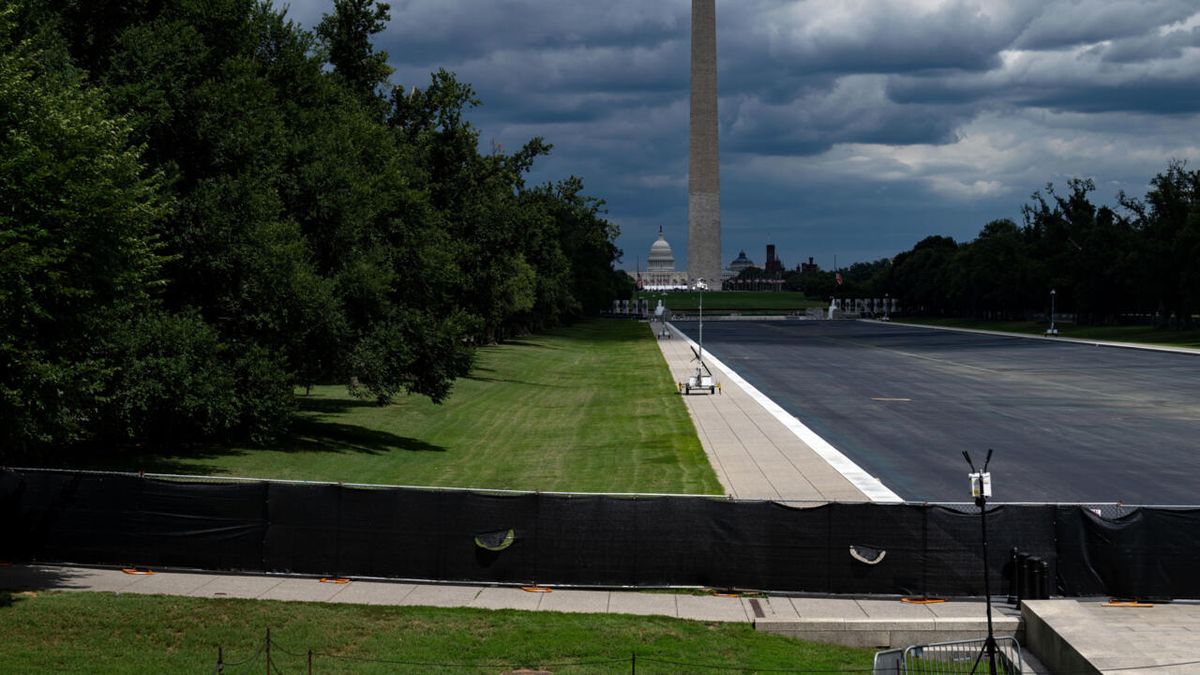
The US Justice Department has formally dropped its felony vandalism case against David Hearn, a former Olympian, who was accused of damaging the Lincoln Memorial Reflecting Pool. The dismissal came with a critical admission: the damage to the iconic landmark was not the result of vandalism, as initially claimed by the Interior Department and amplified by then-President Donald Trump, but rather a consequence of a "botched installation" during a hurried renovation. This reversal brings to light the underlying pressures and misrepresentations that led to a citizen facing a potential 10-year prison sentence for a government's own oversight.
At the heart of this incident lies a clear demonstration of how political optics and executive will can supersede sound planning and honest assessment. The renovation of the Reflecting Pool, including the controversial addition of an "American flag blue" liner, was personally overseen by President Trump. It was one of several "beautification" projects intended to be showcased ahead of America's 250th anniversary celebrations. The project, estimated at $14 million, quickly encountered problems, with the liner peeling and algae blooming. Rather than acknowledge potential flaws in the rushed work, the administration repeatedly blamed "vandals," with President Trump publicly threatening severe prison sentences for anyone damaging his signature projects.
This created an environment where federal agencies, from the Interior Department to the Justice Department and Park Police, were under immense pressure to validate the president's narrative. The swift arrest and high-profile charging of David Hearn, despite his consistent denials, serve as a stark example of how the machinery of government, including law enforcement and the justice system, can be weaponized to protect a political image rather than pursue objective truth. The incentive structure was clear: align with the executive's public statements, or risk political disfavor.
The most immediate and tangible cost of this political maneuvering was borne by David Hearn. A 67-year-old former Olympian, Hearn faced the prospect of a decade in federal prison for simply touching a piece of detached liner in a public pool. His wrongful arrest and the subsequent high-profile prosecution inflicted immense personal and financial strain, despite his eventual exoneration. His legal team rightly pointed out that the case "should never have been brought," highlighting the abuse of government power against a patriotic American who committed no wrong. Beyond Hearn, the incident casts a chilling shadow over the public's interaction with national landmarks, raising questions about who can be targeted when political narratives demand a scapegoat. The $14 million spent on a flawed project further represents a misallocation of public funds, a financial cost borne by taxpayers for a renovation driven more by showmanship than substance.
What remains largely unaddressed in the Justice Department's dismissal is the systemic failure and the accountability gap. While Hearn's case is dropped, the public is left without clear answers regarding who authorized the botched installation, who signed off on the initial false claims of vandalism, and what, if any, consequences will be faced by those who pushed this misleading narrative. The official statements downplay the extent of political pressure exerted on federal agencies to conform to the president's version of events, effectively using the Justice Department's admission as a convenient way to close a politically embarrassing chapter without addressing the root causes. Furthermore, the fate of the "five people arrested for vandalism and five others issued federal citations" mentioned by the National Park Service in June, alongside Hearn, remains unclear. Were their cases also predicated on the same flawed premise? The silence on these broader implications is deafening.
Moving forward, the public should watch for any efforts to ensure accountability for the officials and agencies involved in both the flawed renovation and the subsequent misrepresentation. Will there be internal investigations into the decision-making process that led to the botched installation and the initial false accusations? More broadly, this incident serves as a crucial reminder of the fragility of the rule of law when political power seeks to bend facts to fit a narrative. The long-term impact on public trust in government statements, particularly from law enforcement and federal agencies, will be significant. Citizens should remain vigilant about how public works projects are initiated and overseen, and how official narratives are constructed, especially when they appear to serve political ends rather than verifiable truths.
Source referenced: FRANCE24
This brief was synthesized by our Editorial Engine and reviewed by The Ground Narrative team.


