TRENDING

Wednesday, 4 November 2026
----------------------
24 Jumada Al-Awwal 1448 AH
Brazil’s left‑wing president clinched a surprise fourth term, pushing back against a regional tilt toward Trump‑friendly leaders. The win reshapes Brazil’s domestic balance and tests U.S. influence in Latin America.
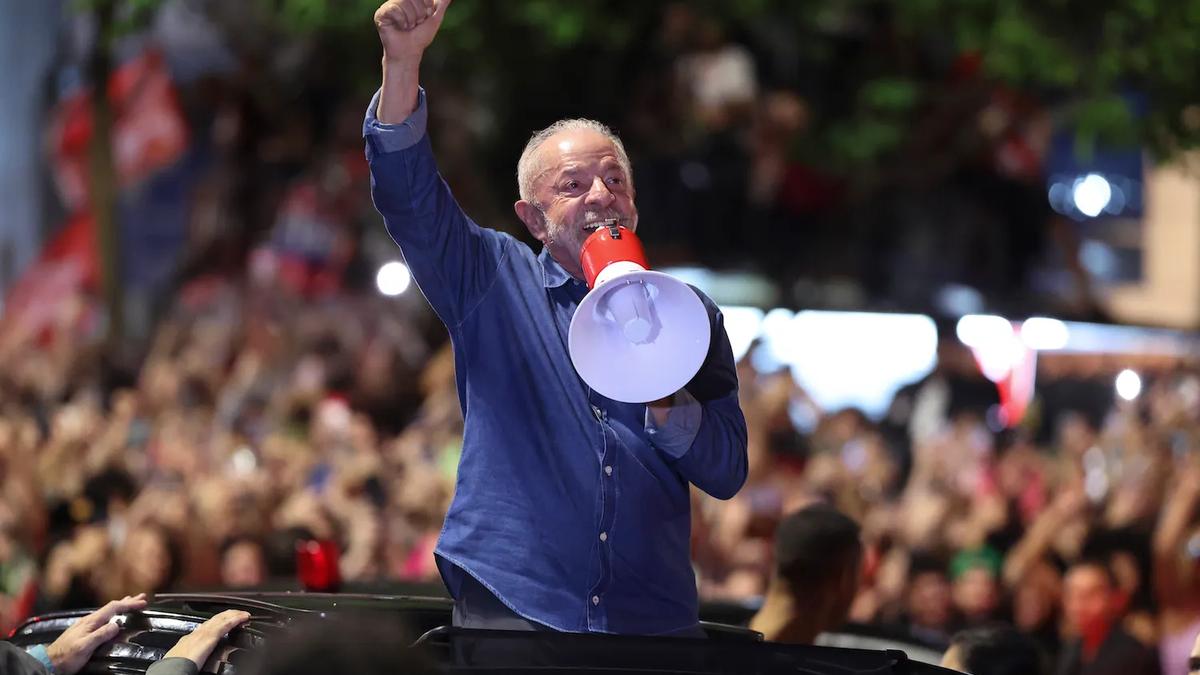
Brazilian President Lula was re‑elected on October 25, 2026, beating right‑wing challenger Flávio Bolsonaro with 51.8% of the vote in a runoff that saw a 3.5‑point margin. The result marked the first time a Brazilian candidate has come from behind after the first round to win the second, and it halted a broader regional swing toward leaders who have aligned themselves with Trump's agenda. While Flávio Bolsonaro has signaled an intention to contest the outcome in court, the electoral authority and most international observers have affirmed the vote’s legitimacy.
The election was a crucible where several structural forces collided. First, United States policy under President Trump has been explicitly aimed at weakening left‑leaning governments in the hemisphere, a strategy that dates back to the “Donroe Doctrine” of using diplomatic pressure to reshape Latin American politics. State Department officials reportedly pressed for measures that would tilt the playing field in favor of the Bolsonaros, from subtle diplomatic signals to covert outreach to business groups.
Second, domestic political survival dictated the tactics of both camps. Lula’s administration faced a steep approval dip after two years of economic strain, high debt, and a fragmented Congress where the Liberal Party (PL) expanded its seat share. To offset this, the campaign mobilized a massive grassroots network, leveraging WhatsApp groups that amassed ten million members—roughly six percent of the electorate. This digital surge was a direct response to the perception that major platforms were amplifying right‑wing content, prompting a formal complaint against Meta.
Third, the judiciary emerged as a decisive arena. The Supreme Court’s decision to extend voting hours by two hours—requested by both campaigns—became a flashpoint. While the court’s move was framed as a fairness adjustment, critics argue that certain justices, notably Justice Kassio Nunes Marques, used the moment to attempt a shutdown of the pro‑Lula WhatsApp channel, citing misinformation concerns. The eventual retreat after public backlash highlighted the court’s dual role as a gatekeeper of electoral integrity and a potential lever for political actors.
Finally, the composition of Congress set the stage for a fraught governing environment. The PL’s gains mean that any impeachment effort would require a coalition of centrist and right‑wing legislators, echoing the 2016 alliance that ousted Dilma Rousseff. Lula now faces the challenge of stitching together a governing majority while navigating a high‑debt fiscal landscape that limits policy flexibility.
In the Amazonian interior and the semi‑arid northeast, voters have long felt the sting of federal neglect. Lula’s promises of land reform and increased credit for family farms resonated deeply, especially after the Bolsonaro era’s environmental rollbacks that jeopardized both livelihoods and ecosystems. The election’s outcome therefore carries the hope of renewed investment in agrarian infrastructure, but also the risk of policy paralysis if Congress blocks reform.
Cities like São Paulo and Rio de Janeiro saw massive turnout among informal workers—street vendors, ride‑share drivers, and domestic helpers—who cited the Bolsonaro family’s handling of the COVID‑19 crisis as a catalyst for change. Their votes translated into a modest swing that helped Lula cross the runoff threshold. Yet these same groups remain vulnerable to inflation, rising food prices, and a fragile social safety net that could be eroded by austerity measures demanded by creditors.
Jair Bolsonaro remains under house arrest for plotting a coup, and his supporters have faced heightened surveillance. The legal battles surrounding Flávio Bolsonaro’s challenge to the vote will likely keep the judiciary occupied, potentially diverting attention from pressing human‑rights cases involving indigenous land defenders and journalists who were targeted during the previous administration.
While official statements celebrate Brazil’s democratic resilience, several layers of the narrative are being downplayed. The State Department’s behind‑the‑scenes lobbying for a Bolsonaro‑friendly outcome is rarely mentioned in diplomatic briefings, yet internal memos reveal a coordinated effort to influence media narratives and fund opposition research. This covert pressure contrasts sharply with the public claim that “the Brazilian people have the right to choose their leaders through free and fair elections.”
Equally obscured is the role of big‑tech platforms. Meta denied any bias, but internal audits leaked after the election showed that algorithmic tweaks had unintentionally amplified right‑leaning posts during the first round, prompting the left‑wing campaign to invest heavily in alternative messaging channels. The subsequent legal complaint against Meta hints at a broader struggle over digital public squares that remains largely invisible to the average voter.
Finally, the Bolsonaro family’s narrative of a “stolen election” is being amplified through a network of sympathetic media outlets funded by offshore accounts linked to Brazilian businessmen with U.S. ties. These outlets frame the extended voting hours as a manipulation, even though both campaigns requested the change. By casting doubt on the legitimacy of the result, they aim to erode public confidence and create a pretext for future legal challenges.
The immediate horizon will be defined by legal challenges filed by Flávio Bolsonaro and the response of the Supreme Court. A decisive ruling could either cement Lula’s mandate or plunge the country into a protracted constitutional crisis. In Congress, the formation of a coalition that includes the PL will be a litmus test for Lula’s ability to pass his agenda on climate cooperation, social spending, and debt restructuring.
On the international stage, the United States’ next move is critical. A soft‑pursuit approach—publicly accepting the result while quietly supporting opposition forces—could signal a continuation of the “Donroe Doctrine.” Conversely, a clear acknowledgment of Lula’s victory might open space for renewed multilateral engagement on Amazon preservation and regional trade.
Observers should also monitor the evolution of Brazil’s digital ecosystem. If Meta and other platforms adjust their content‑amplification policies, the balance of political messaging could shift dramatically in future elections. Finally, the resilience of grassroots networks—especially the WhatsApp channel that proved pivotal—will indicate whether civil society can sustain a counterweight to elite and foreign influence.
In sum, Lula’s fourth term is not just a personal triumph; it is a flashpoint where domestic power structures, external pressures, and the everyday lives of millions intersect. The next months will reveal whether Brazil can translate electoral momentum into tangible policy outcomes or become trapped in a cycle of institutional deadlock.
Lula’s win stemmed from a late‑stage grassroots mobilization, a massive WhatsApp network that reached ten million users, and voter fatigue with the Bolsonaro family’s record on the pandemic and the economy. The extended voting hours and a fragmented right also helped swing undecided voters toward the incumbent.
Source referenced: FOREIGNPOLICY
This brief was synthesized by our Editorial Engine and reviewed by The Ground Narrative team.