TRENDING

Saturday, 19 September 2026
----------------------
8 Rabi' Al-Thani 1448 AH
Japan has centralized its intelligence apparatus, a significant break from its post-WWII decentralized model, sparking regional debate over security and historical memory.
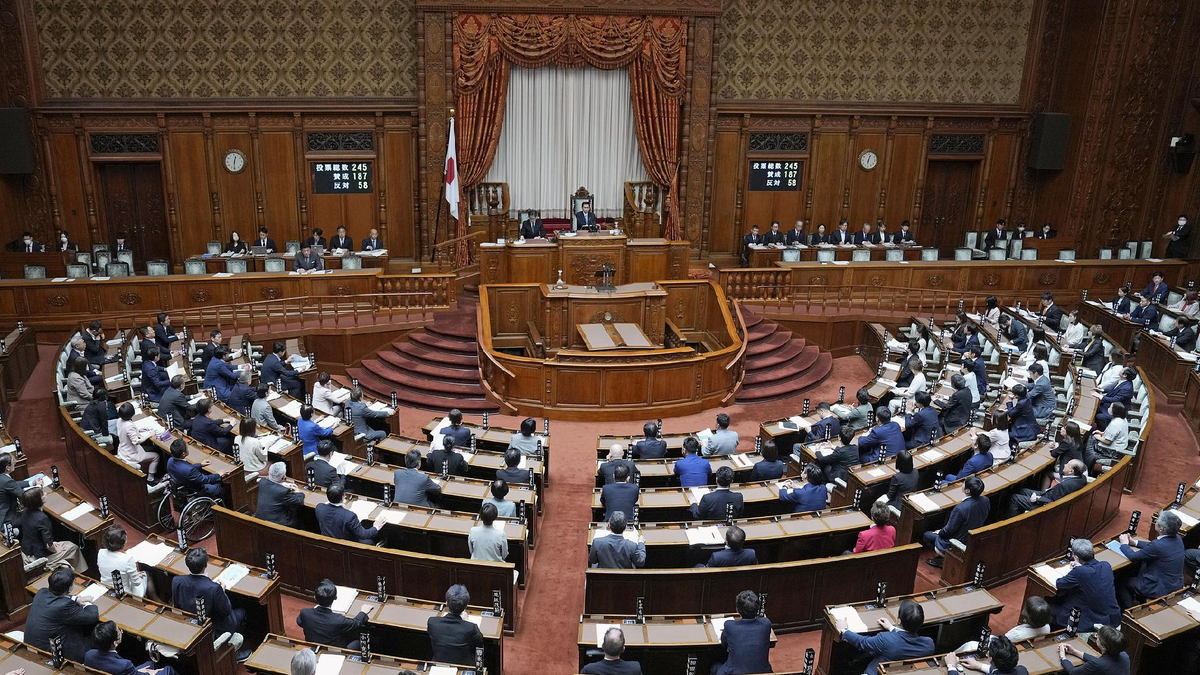
Japan has officially launched its National Intelligence Bureau, a move that consolidates the country's intelligence-gathering capabilities under the direct authority of the Prime Minister. This marks a profound departure from the fragmented intelligence landscape Japan maintained for over 80 years following World War II, bringing together resources from police, foreign affairs, and defense ministries into a single, powerful entity.
This consolidation of intelligence power reflects Japan's evolving security calculus in a region marked by increasing volatility. From Tokyo's perspective, a centralized intelligence body is a necessary modernization to counter perceived threats from an assertive China, a nuclear-armed North Korea, and a resurgent Russia. It aims to enhance Japan's ability to conduct counter-espionage, cyber intelligence, and provide proactive support for its Self-Defense Forces' expanding 'counterstrike capabilities' – a concept that itself represents a significant reinterpretation of Japan's pacifist constitution. This move also aligns with the broader US strategy in the Indo-Pacific, which encourages allies like Japan to take on greater security responsibilities and integrate more deeply into a collective intelligence framework. The argument is one of efficiency and effectiveness in a complex global environment, where rapid information sharing and coordinated responses are deemed critical. However, the shift also concentrates immense authority in the executive, bypassing the checks and balances inherent in the previous decentralized model, which was deliberately designed after the war to prevent the resurgence of unchecked state power.
While Japan frames this as a necessary step for national security, for ordinary citizens across East Asia, particularly in countries like China and South Korea, the establishment of a powerful, centralized Japanese intelligence agency evokes deep-seated historical anxieties. Memories of Japan's wartime intelligence agencies, like the Tokko (Special Higher Police) and the Kwantung Army, which were instrumental in brutal occupations and atrocities, remain vivid. For these populations, the concentration of intelligence power under a single command, even in a democratic Japan, raises concerns about potential abuse and a renewed aggressive posture. Domestically, the consolidation of intelligence under the Prime Minister also carries a potential human cost: a reduction in parliamentary oversight and public accountability. This could lead to a less transparent government, where decisions based on covert intelligence are made with less scrutiny, potentially impacting civil liberties and democratic norms. The financial cost of building and maintaining such an agency, along with the potential for increased regional defense spending due to heightened mistrust, will ultimately be borne by taxpayers.
What is often downplayed or omitted in official statements from Tokyo and its Western allies is the profound historical context that makes this intelligence reform so sensitive in East Asia. The narrative of 'modernization' and 'normalizing' Japan's security role tends to gloss over the specific reasons why Japan adopted a pacifist constitution and a decentralized intelligence structure in the first place – a direct response to its militaristic past. Governments advocating for this change emphasize the defensive nature of the new capabilities, but the historical record of similar structures in Japan and elsewhere suggests that intelligence agencies, once empowered, can expand their mandates. Furthermore, the extent to which the US has quietly encouraged and facilitated this shift, seeing it as a strategic asset in its own regional competition with China, is rarely foregrounded. This external influence, while framed as alliance strengthening, is a significant driver behind Japan's evolving security identity, yet it is often presented as an entirely internal Japanese decision.
Moving forward, several critical aspects bear watching. Firstly, the operational scope and transparency of the new National Intelligence Bureau will be key. Will its mandate remain strictly external and defensive, or will it expand into areas that could impact domestic civil liberties or be perceived as aggressive by neighbors? Secondly, the response from regional powers, particularly China and South Korea, will shape future security dynamics. Will this lead to an intelligence arms race, or will diplomatic efforts manage to mitigate escalating mistrust? Finally, this intelligence reform is widely seen as a precursor to further discussions about revising Japan's pacifist constitution. Any concrete moves on that front would represent an even more significant shift in Japan's post-war identity and could fundamentally alter the balance of power in East Asia. The public must watch for robust parliamentary oversight mechanisms to ensure accountability for this powerful new agency.
Source referenced: CGTN
This brief was synthesized by our Editorial Engine and reviewed by The Ground Narrative team.


