TRENDING

Tuesday, 20 October 2026
----------------------
9 Jumada Al-Awwal 1448 AH
Israel's upcoming legislative election on October 27, 2026, is framed as a referendum on Prime Minister Benjamin Netanyahu, yet the complex electoral system means the true government will be forged in post-vote negotiations, potentially overriding the popular will. The nation's deep internal divisions, exacerbated by constant conflict, are set to collide with a political system designed to produce instability.
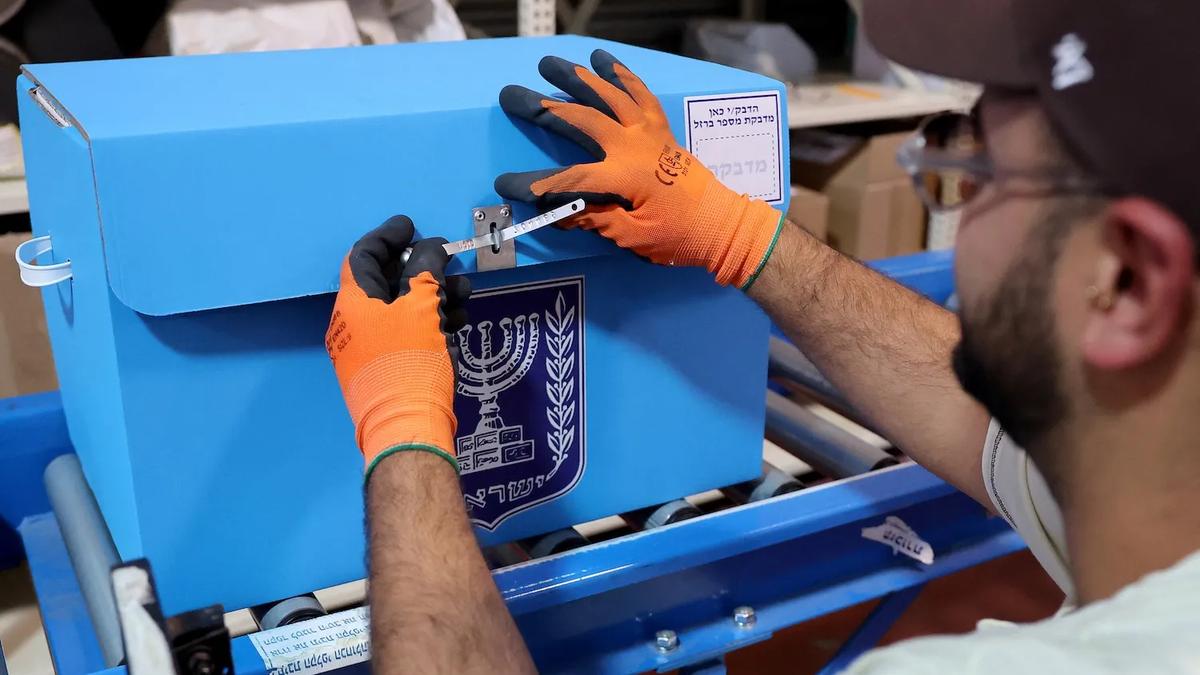
Israel is poised for another legislative election on October 27, 2026, a vote largely seen as a referendum on incumbent Prime Minister Benjamin Netanyahu. After four years marked by continuous conflict on both domestic and foreign fronts, the nation's political landscape remains deeply polarized. While the ballot offers a stark choice between two entrenched blocs—one supporting Netanyahu and another vehemently opposing him—the actual formation of the next government will hinge less on the popular vote and more on the intricate, often opaque, process of coalition building that follows election day. This system, characterized by a multitude of parties and complex rules, frequently leads to outcomes that do not directly reflect the electorate's preferences, setting the stage for continued political instability.
The Israeli political system, a pure proportional representation model, is designed to give voice to a wide spectrum of political views, but it simultaneously guarantees a fragmented parliament and makes stable governance a perpetual challenge. With 38 different slates vying for seats in the Knesset, the immediate post-election period is less about voter mandate and more about the technicalities of seat allocation and the subsequent horse-trading among factions.
The first critical hurdle is the electoral threshold, currently set at 3.25 percent. Any party failing to meet this minimum sees all its votes discarded, effectively erasing the input of its constituents. This mechanism, originally intended to streamline the Knesset by limiting smaller, more disruptive factions, now risks disenfranchising a significant portion of the electorate. In a tightly contested election, the elimination of even a few small parties could dramatically shift the balance of power, not by popular choice, but by a mathematical quirk, potentially allowing a minority to dictate the government's composition.
Beyond the threshold, surplus vote agreements further complicate the picture. These pacts allow allied parties to pool their leftover votes—those that passed the threshold but didn't quite secure a full seat—to gain an additional legislator. While ostensibly designed to maximize representation for like-minded factions, these agreements often reward parties with seats they didn't directly earn, at the expense of those without partners, such as National Security Minister Itamar Ben-Gvir's Otzma Yehudit slate, whose surplus votes are simply discarded. This system incentivizes pre-election alliances based on mathematical advantage rather than broad policy consensus, further distorting the will of the voters.
Once the votes are tallied and seats provisionally assigned, the real power struggle begins. President Isaac Herzog consults with party leaders to determine who has the best chance of forming a government. This phase is dominated by intense negotiations, where campaign promises and ideological
Israel's proportional representation system, combined with a low electoral threshold and surplus vote agreements, makes it difficult for any single party or bloc to secure a clear majority. The real power struggle occurs in post-election coalition negotiations, where smaller parties gain disproportionate influence.
Deep ideological divisions between two rigid blocs, the complex electoral system that can discard votes and distort representation, and a focus on personality-driven politics rather than policy consensus all contribute to frequent government collapses and repeat elections in Israel.
Political instability leads to delayed or abandoned long-term policy reforms in critical areas like healthcare and education. It also fosters voter frustration, exacerbates societal divisions, and diverts national resources and attention away from addressing the human cost of ongoing conflicts.
Source referenced: FOREIGNPOLICY
This brief was synthesized by our Editorial Engine and reviewed by The Ground Narrative team.