TRENDING

Thursday, 30 July 2026
----------------------
16 Safar 1448 AH
Tens of thousands of French citizens return home after devastating wildfires, highlighting the increasing frequency of extreme weather events and the political challenge of adaptation.

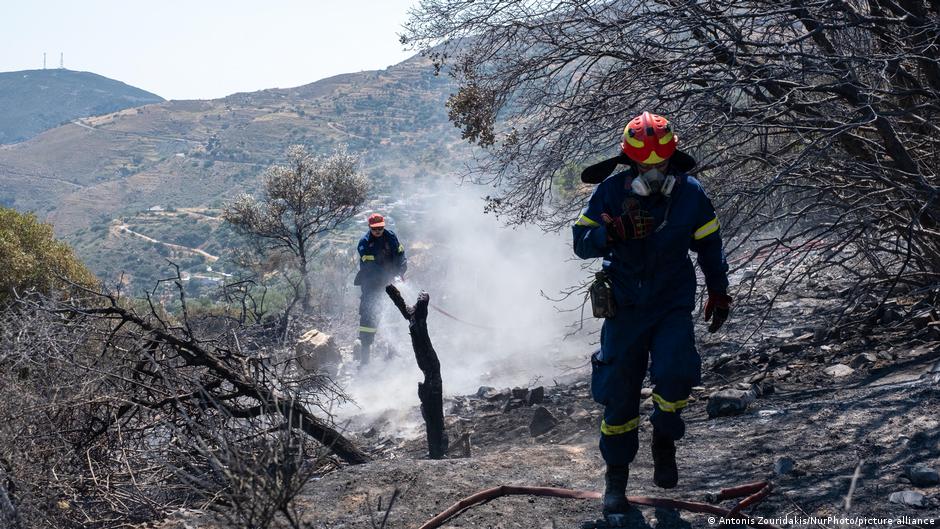
After weeks battling a colossal wildfire that scorched an area four times the size of Paris, French authorities have permitted approximately 84,000 evacuees to return to their homes in the country's southwest. This decision, made possible by cooler weather and the tireless efforts of firefighters, signals a temporary victory against the flames that have ravaged vast swathes of forest and displaced communities. The return offers a moment of relief, but for many, it's a return to uncertainty and the stark reality of a landscape forever altered.
The recurring and intensifying wildfires across southern Europe, from France to Greece, are not isolated incidents but symptoms of a broader systemic challenge. For France, the power mechanics at play involve a delicate balance between immediate disaster response and long-term climate adaptation. Governments face immense pressure to protect citizens and property, pouring resources into firefighting efforts, which are often framed as heroic battles against nature. This immediate response is crucial for political survival and public confidence, yet it often overshadows the deeper structural forces. The economic trade-offs are significant: vast sums are spent on emergency services, property damage, and rebuilding, diverting funds from other public services or proactive climate measures. The underlying driver, climate change, is a force that transcends national borders, demanding coordinated European and global responses that are often hampered by divergent national interests and short-term political cycles. The incentive for politicians is often to address the visible crisis rather than the less immediate, more complex root causes, even as scientific consensus points to a future of more frequent and intense heatwaves and droughts.
The human cost of these fires extends far beyond the immediate threat to life and property. For the 84,000 evacuees, returning home is not an end to their ordeal but often the beginning of a new one. Many will find homes damaged or destroyed, livelihoods disrupted, and a profound sense of loss for their natural environment. Farmers and small business owners in the affected regions, heavily reliant on tourism and agriculture, face significant economic setbacks. The psychological toll of repeated evacuations, the trauma of witnessing one's home threatened by fire, and the anxiety of future events weigh heavily on communities. Vulnerable populations, including the elderly, those with limited mobility, and lower-income families, often bear a disproportionate burden, lacking the resources to quickly rebuild or relocate. These are the people whose voices are rarely heard in the high-level discussions about climate policy or economic recovery, yet they are the ones who live with the direct consequences.
While official statements rightly focus on the bravery of firefighters and the coordinated response, what often remains downplayed or omitted is the systemic failure to adequately prepare for and mitigate the long-term impacts of climate change. Governments tend to emphasize reactive measures—fighting fires—rather than proactive ones, such as comprehensive land management policies, controlled burns, and stricter building codes in fire-prone areas. The narrative often avoids a frank discussion about the escalating cost of inaction on climate change, both financially and socially. Furthermore, the role of specific industries, from fossil fuels to unsustainable land development, in exacerbating these conditions is frequently sidestepped. There's also the unspoken tension between the desire for economic growth, which often involves practices that increase fire risk (e.g., urban sprawl into wildland-urban interfaces), and the necessity of ecological preservation. The true cost of rebuilding, not just in monetary terms but in the erosion of community resilience and environmental health, is a difficult truth that governments are often reluctant to fully articulate.
As the immediate crisis subsides, several critical areas warrant close attention. First, observe the nature of recovery efforts: Will they merely rebuild what was lost, or will they incorporate climate-resilient strategies, such as fire-resistant construction and improved forest management? Second, monitor the political discourse around climate policy: Will these recurring disasters translate into more ambitious and immediate action on emissions reduction and adaptation at both national and EU levels, or will they remain framed as isolated natural events? Third, watch for shifts in insurance markets and property values in fire-prone regions, which could signal a growing recognition of climate risk by financial institutions. Finally, pay attention to the psychological and social resilience of affected communities: How quickly and effectively can they rebuild not just infrastructure, but also their sense of security and belonging in a landscape increasingly defined by environmental volatility. The current calm is merely a pause; the underlying forces are still at work, and the next summer will inevitably bring new challenges.