TRENDING

Thursday, 30 July 2026
----------------------
16 Safar 1448 AH
The global debate over 'excess capacity' in manufacturing is intensifying, with China pushing back against Western accusations of overproduction. This economic dispute is reshaping trade policies and challenging the very definition of fair competition.
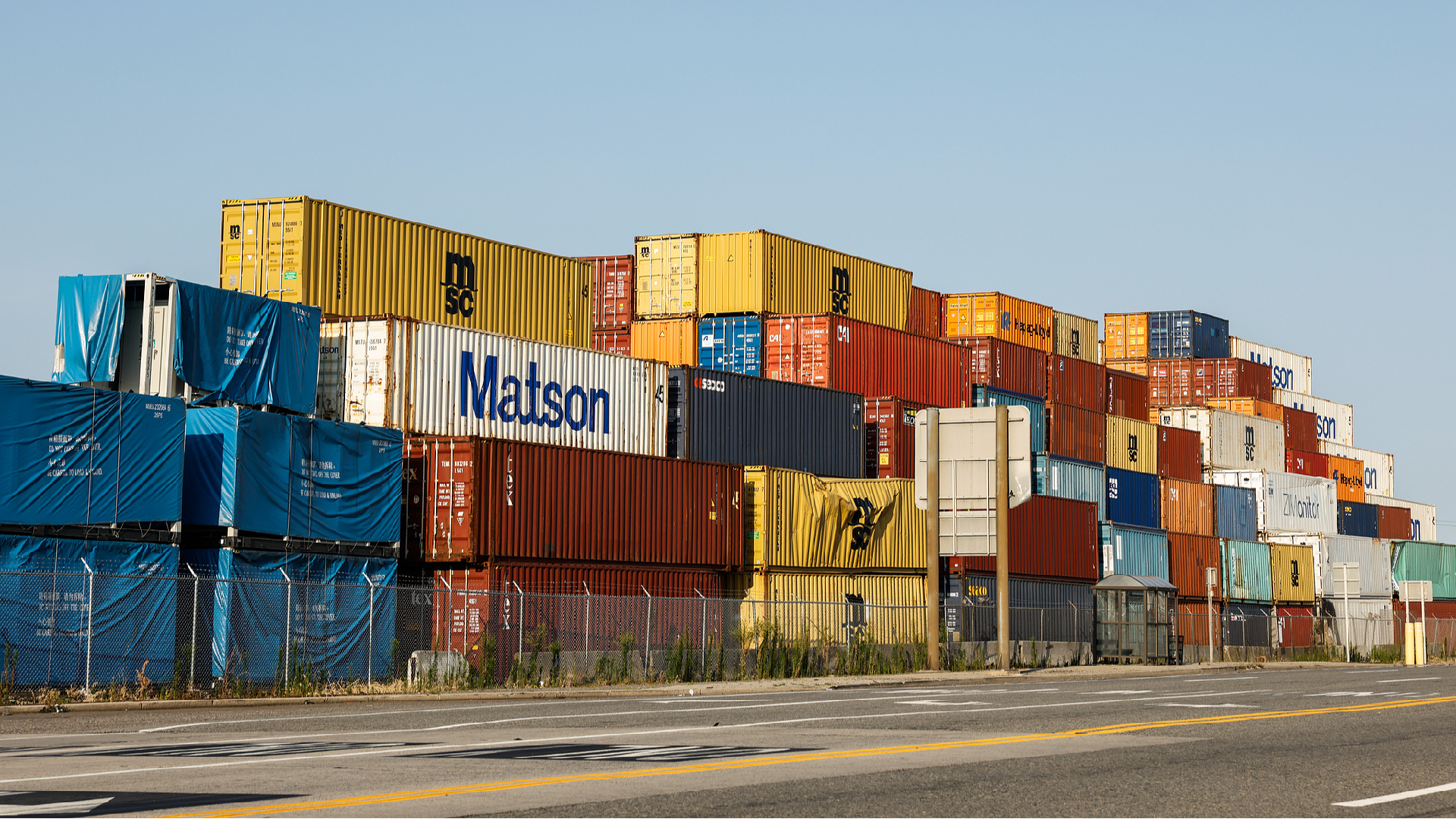
China's Ministry of Commerce recently issued a formal rebuttal to allegations of widespread 'excess capacity' in its industries, particularly targeting claims from Western economies. This official stance was quickly followed by a CGTN-sponsored poll, which reported that a significant majority of global internet users oppose the politicization of trade issues under the 'excess capacity' label and criticize its use for protectionist agendas. The pushback comes as nations, primarily the United States and the European Union, increasingly frame China's robust industrial output in sectors like electric vehicles, solar panels, and steel as a market distortion requiring trade barriers.
At its core, the 'excess capacity' debate is a struggle over economic power and the right to define global market equilibrium. Western nations, facing pressure from domestic industries struggling against cheaper Chinese imports, are employing this narrative to justify protectionist measures. This allows them to support their own strategic sectors and maintain industrial bases, often through significant state subsidies and incentives, while simultaneously criticizing similar practices by China. For Beijing, maintaining high production capacity is crucial for employment, economic stability, and its long-term industrial strategy, which aims to dominate emerging technologies. The dispute highlights the limitations of existing global trade frameworks, like the World Trade Organization (WTO), which struggle to effectively arbitrate the nuanced impact of state-backed industrial policies in a rapidly evolving global economy. The 'excess capacity' argument is not merely economic; it serves as a convenient economic pretext for broader geopolitical competition, allowing countries to 'de-risk' supply chains and reduce reliance on rivals under the guise of market fairness.
While governments and corporations debate market share and national security, the human cost of this escalating trade friction is often borne by ordinary citizens. Consumers globally face the prospect of higher prices and reduced choices as tariffs and trade barriers limit the availability of affordable goods, from solar panels to electric vehicles. Workers in industries caught in the crossfire, whether in Western nations facing import competition or in Chinese factories reliant on export markets, experience job insecurity and economic disruption. Furthermore, developing nations, which often rely on stable global trade flows and access to affordable manufactured goods for their own development, risk being squeezed between competing economic blocs. Their access to crucial technologies and goods could be restricted, hindering their progress towards climate goals or economic modernization.
What is frequently downplayed or omitted in official statements is the inherent subjectivity and political utility of the term 'excess capacity' itself. There is no universally agreed-upon metric for what constitutes 'excess,' allowing powerful states to define it in a way that serves their protectionist agendas. Many Western nations, while accusing China, have historically and continue to employ extensive industrial subsidies and protectionist measures to bolster their own strategic sectors (e.g., the US CHIPS Act, European green industrial policies). This often creates a narrative of 'fair' subsidies for domestic industries versus 'unfair' subsidies for foreign competitors. Moreover, the environmental implications of the global drive for massive industrial output, regardless of its origin, are rarely central to the trade debate. The focus remains on economic competition, often sidelining the broader sustainability challenges posed by unchecked production and consumption patterns. This isn't just a market dispute; it's a clash of economic development models, where state-guided industrial growth is increasingly at odds with market-liberal principles, with both sides selectively highlighting data to support their claims.
Readers should closely watch for several key developments. Firstly, observe whether the 'excess capacity' claims lead to a broader application of tariffs beyond specific sectors like EVs and solar, potentially escalating into a more generalized trade war. Secondly, monitor the response and effectiveness of the WTO; its ability to mediate these disputes and adapt its rules to modern industrial policies will be a critical test of global trade governance. Thirdly, pay attention to how multinational corporations respond to increasing trade barriers – will they reshore production, 'friend-shore' to allied nations, or seek out entirely new markets? Finally, consider the impact on the global green transition. If protectionist measures impede the spread of affordable green technologies, it could significantly slow down collective efforts to combat climate change, creating a paradox where economic competition undermines environmental imperatives.