TRENDING

Sunday, 2 August 2026
----------------------
19 Safar 1448 AH
A scientific expedition in Greenland is investigating the rapid melting of ice sheets and its potential to disrupt a major Atlantic Ocean current, threatening to dramatically alter Europe's climate patterns and impact millions.
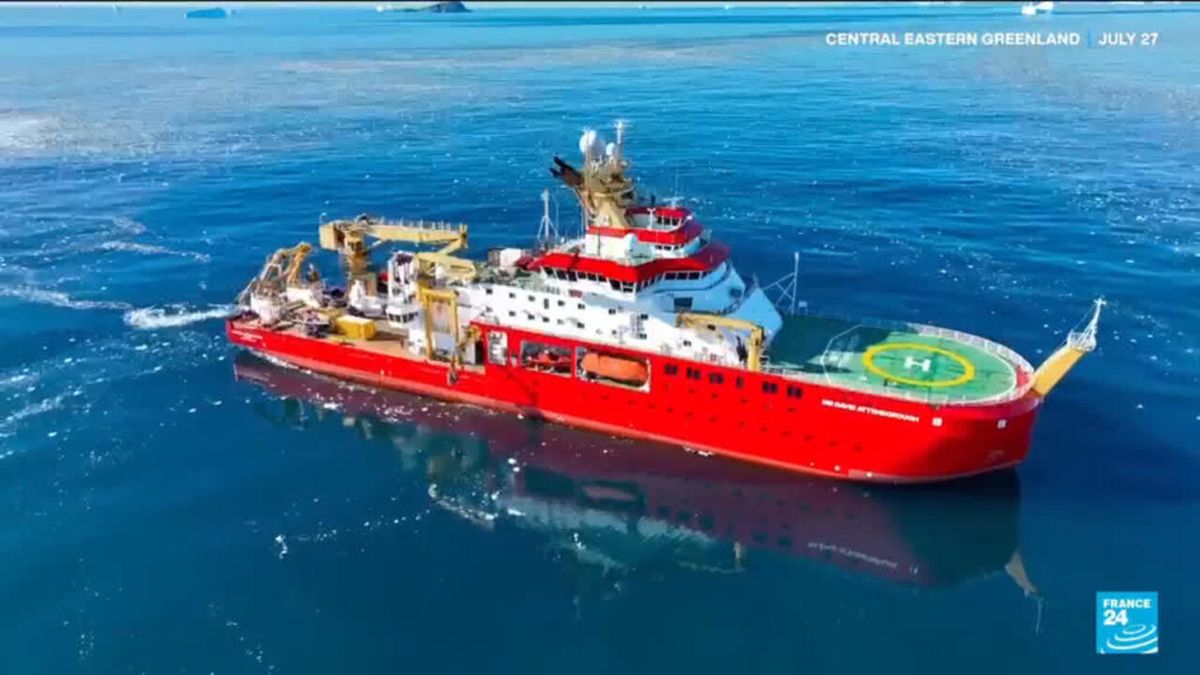
A scientific expedition is currently underway in Greenland, where researchers are meticulously studying the island's rapidly melting ice sheets. The core objective is to determine the extent to which this unprecedented loss of glacial ice could disrupt the Atlantic Meridional Overturning Circulation (AMOC) – a vast system of ocean currents that acts as a crucial global heat conveyor belt. The findings of this six-week investigation could have profound implications, particularly for Europe's climate stability and the livelihoods of millions.
The power dynamics at play here are less about nations and more about the fundamental forces of the planet clashing with human activity. The AMOC is a natural engine, driven by the sinking of cold, salty water in the North Atlantic, which pulls warm water from the tropics northward, moderating temperatures across Europe. This system has historically provided Europe with a milder climate than its latitude would suggest. The influx of fresh meltwater from Greenland, however, is diluting the North Atlantic's salinity and reducing the density of its surface waters, potentially weakening or even shutting down this critical circulation. The power here lies with the global industrial complex and consumption patterns that have driven greenhouse gas emissions, fundamentally altering the planet's delicate balance. While scientists provide the data, the power to act on this knowledge rests with governments and corporations, often incentivized by short-term economic gains over long-term planetary stability.
The human cost of a disrupted AMOC would be immediate and widespread, particularly across Europe. A weakened AMOC could lead to more extreme winters in Northern Europe, hotter summers in Southern Europe, and significant shifts in rainfall patterns, impacting agricultural yields and food security. Coastal communities, already grappling with rising sea levels from global ice melt, would face increased storm surges and erosion. Beyond Europe, a slowdown of the AMOC could also affect monsoon patterns in Africa and Asia, disrupting rainfall vital for millions. The economic fallout would be staggering, from damaged infrastructure and increased energy demands to mass migration driven by climate instability. It is the ordinary citizens – farmers, coastal residents, urban dwellers – who would bear the brunt of these changes, forced to adapt to a world where their familiar climate has been fundamentally altered, often with little say in the policies that led to it.
What powerful actors, particularly those invested in fossil fuel economies, often downplay or omit is the true, long-term economic and social cost of climate inaction. While the immediate economic impacts of transitioning away from fossil fuels are often highlighted, the far greater and potentially irreversible costs of a destabilized climate system are rarely fully accounted for in public discourse or corporate balance sheets. The concept of "tipping points," where changes become self-perpetuating and irreversible, like a potential AMOC shutdown, is often relegated to scientific papers rather than being central to political decision-making. Governments also tend to frame climate change as a distant threat, rather than an immediate and accelerating crisis that demands a fundamental re-evaluation of economic models and international cooperation. The narrative often focuses on incremental adjustments, rather than the systemic transformation required to avert the worst-case scenarios, effectively kicking the can down the road for future generations to pay.
The coming months and years will be critical for understanding the trajectory of the AMOC and the broader climate system. Readers should closely watch for further scientific data emerging from expeditions like the one in Greenland, particularly any updates on the observed weakening rate of the AMOC. Pay attention to how European governments and the European Union respond to these findings – whether with robust policy shifts towards decarbonization and adaptation, or with continued incrementalism. Also, observe the discourse at international climate forums: will the urgency of potential tipping points translate into more ambitious global commitments and financial mechanisms for climate resilience? The interplay between scientific warnings, political will, and the collective human response will determine whether the world can mitigate the most severe consequences of a changing ocean.
Source referenced: FRANCE24
This brief was synthesized by our Editorial Engine and reviewed by The Ground Narrative team.


