TRENDING

Tuesday, 20 October 2026
----------------------
9 Jumada Al-Awwal 1448 AH
Mass protests and curfews have turned French cities into flashpoints. The analysis uncovers who wields power, who bears the cost, and what lies ahead.
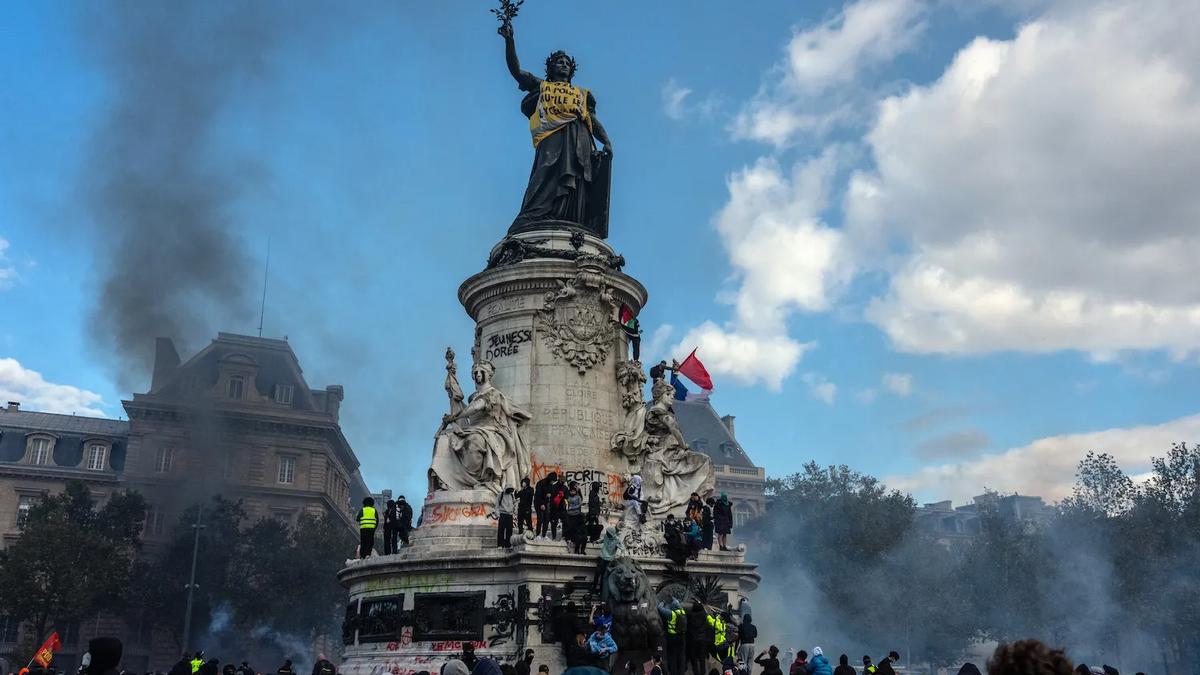
Over the weekend, an estimated half a million demonstrators flooded streets across France, sparking riots, looting, and arson. In response, Prime Minister Sébastien Lecornu imposed partial protest bans in Paris and curfews in several districts, while Interior Minister Laurent Nuñez offered his resignation after police were overwhelmed.
The ruling coalition, led by President Emmanuel Macron, faces an election in April 2027. Demonstrations over education reform, soaring fuel prices, and a contested 2027 budget threaten to erode the centrist bloc’s legitimacy. By framing the unrest as a far‑left plot, the government seeks to rally moderate voters and marginalize France Unbowed.
France’s public finances have been squeezed by post‑pandemic debt and EU fiscal rules. Cuts to education and social services have amplified youth discontent, while the government’s reliance on private security firms for crowd control creates a profit motive for maintaining a state of emergency.
The Interior Ministry’s under‑investment in riot‑control equipment left officers ill‑equipped, prompting the use of water cannons and tear‑gas despite rising civilian casualties. The subsequent injuries to nearly 1,000 officers have become a bargaining chip for hard‑line factions within the police unions, who demand tougher legislation and expanded surveillance powers.
The far‑right National Rally seizes on the chaos to portray Macron as weak, while Jean‑Luc Mélenchon of France Unbowed positions himself as the voice of the aggrieved, condemning police brutality and promising a “new social contract.” Both sides stand to gain electoral mileage, turning a socioeconomic protest into a partisan battlefield.
The majority of arrested protesters are under 25, many from suburbs with high unemployment. Curfews restrict their ability to work night‑shifts, attend school, or care for families, deepening economic precarity.
Over 3,000 shops reported damage, with many owners unable to recover losses due to insufficient insurance coverage. Neighborhoods that rely on daily commerce face prolonged downturns, threatening livelihoods beyond the immediate unrest.
Injuries to 1,000 security personnel have strained already stretched medical services. The psychological toll on officers, coupled with public hostility, fuels a cycle of mistrust that hampers community policing.
Despite rhetoric from foreign leaders linking migrants to the riots, police data shows no correlation. Nonetheless, migrant neighborhoods experience heightened surveillance and profiling, exacerbating social exclusion.
Companies that supply riot gear and surveillance drones have lobbied for relaxed procurement rules, positioning the crisis as a market opportunity. Their influence remains largely invisible in official statements that focus on “public safety.”
Mainstream outlets have amplified the narrative of a binary clash—far‑left agitators versus a law‑and‑order state—while downplaying grassroots demands for affordable education and public transport. Independent journalists reporting on peaceful assemblies face legal pressure, narrowing the public’s view of the protest spectrum.
Foreign powers, notably the United States, have used the unrest to push anti‑immigration rhetoric, diverting attention from domestic policy failures. European Union officials, meanwhile, tread carefully to avoid appearing to intervene in France’s internal affairs, even as they monitor the situation for potential breaches of EU fundamental rights.
The government’s decision to impose curfews rather than invest in social programs reflects a short‑term cost‑benefit analysis: immediate containment of disorder versus long‑term investment in youth services. This trade‑off is rarely disclosed, yet it shapes the trajectory of the crisis.
Watch for shifts in party alliances as the April 2027 presidential race approaches. A surge in support for France Unbowed or National Rally could force Macron to renegotiate his coalition, potentially altering policy priorities.
Parliament is expected to debate emergency powers extensions and the legal framework governing curfews. The outcome will indicate whether security concerns will outweigh civil‑liberties safeguards.
European courts may receive cases alleging excessive force and curfew violations. Monitoring rulings will reveal how far EU institutions are willing to intervene in member‑state policing.
Budget proposals for 2027 will be scrutinized for allocations to education, housing, and transport. Any substantive shift could either quell the unrest or reignite it, depending on implementation speed.
Foreign media and diplomatic statements will continue to frame the unrest in ways that serve external agendas. Tracking these narratives will help readers discern propaganda from genuine concern.
By mapping the intersecting incentives of politicians, security firms, and foreign actors, we can see that the curfews are less about restoring order than about preserving a fragile power balance. The real story lies in the streets where young people, shop owners, and officers each bear a different slice of the cost, while the broader stage remains dominated by calculations far removed from their daily lives.
Mass protests over education reform, fuel prices, and a contested budget led to riots and looting, prompting the government to impose curfews and partial protest bans.
Both far‑left and far‑right parties are using the crisis to gain visibility, which could reshape voter alliances and force the centrist coalition to adjust its platform before the April 2027 election.
Source referenced: FOREIGNPOLICY
This brief was synthesized by our Editorial Engine and reviewed by The Ground Narrative team.

