TRENDING

Wednesday, 5 August 2026
----------------------
22 Safar 1448 AH
A devastating Ebola outbreak in the Democratic Republic of Congo, driven by a less common strain, is spreading at an unprecedented rate, exposing critical failures in global health preparedness and the profound human cost of ongoing conflict and aid shortfalls.
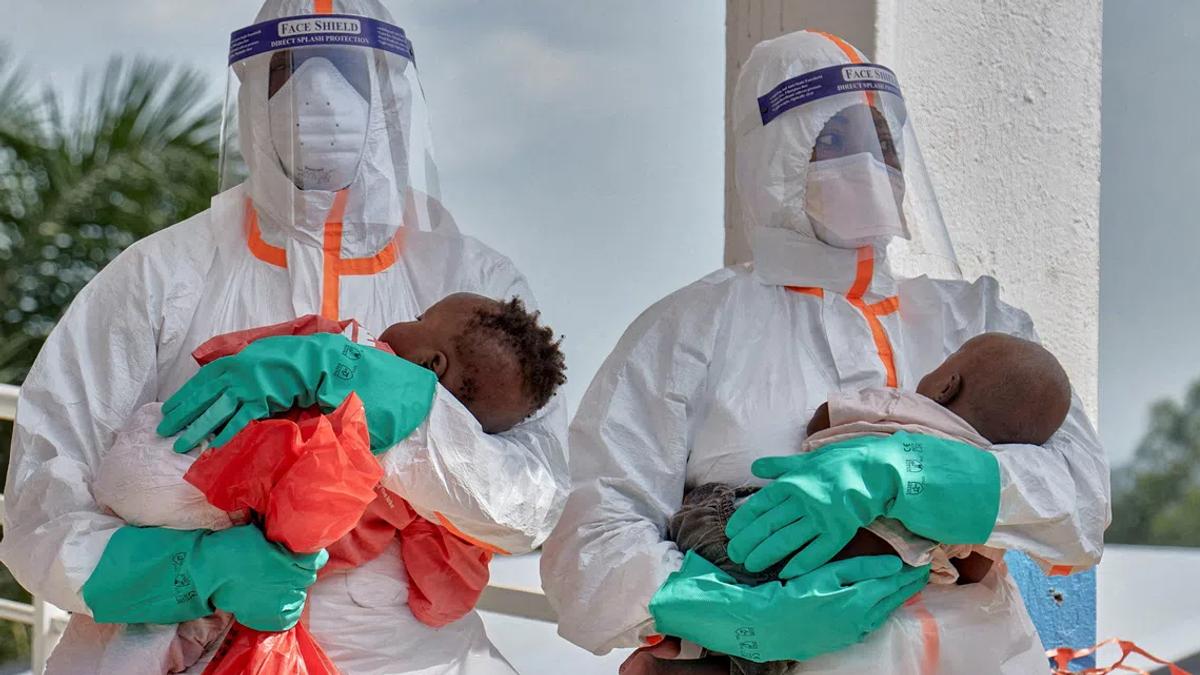
TheDemocratic Republic of Congo (DRC) is grappling with an Ebola epidemic that has rapidly surpassed 4,000 cases, marking it as the fastest-spreading outbreak on record since its declaration in May. This current crisis, involving the rare Bundibugyo species of the virus, has already become the country's largest, eclipsing previous outbreaks in both speed and scale. Initial detection failures, overwhelmed surveillance teams, and a critical lack of specific vaccines and treatments have allowed the disease to establish a devastating foothold, spreading five times faster than earlier epidemics at this stage and leaving health authorities struggling to catch up.
The rapid escalation of this Ebola outbreak is not merely a biological phenomenon; it is a direct consequence of intersecting power dynamics and systemic failures. Globally, the focus of vaccine and treatment development has overwhelmingly centered on the more common Zaire species of Ebola, leaving the Bundibugyo strain critically under-resourced. This prioritization reflects a broader pattern in global health where less frequent, though equally deadly, pathogens receive less attention and funding, creating dangerous blind spots. Simultaneously, the response has been crippled by significant aid cuts. The abrupt shuttering of USAID's health surveillance contract in Congo and the World Health Organization (WHO) receiving less than half the necessary funding underscore a critical flaw in international commitment. These cuts are not just financial; they represent a political decision to de-prioritize proactive health security, leaving local health systems vulnerable. Internally, eastern Congo's decades-long conflict environment is a primary accelerant. Persistent violence, attacks on health facilities, and the constant movement of displaced populations create an impossible terrain for containment, effectively weaponizing instability against public health efforts. The inability of the state to secure its territory and protect health workers directly undermines any response, turning a health crisis into a humanitarian catastrophe.
The human cost of this unchecked epidemic is borne disproportionately by the most vulnerable. In the remote mining town of Mongbwalu and surrounding areas, communities are caught between a deadly virus and relentless conflict. Families face the agonizing reality of delayed diagnoses and a lack of specific treatments for the Bundibugyo strain, watching loved ones succumb to a disease for which the world largely lacks a defense. Health workers, the frontline heroes, are not only confronting the virus but also working under immense pressure, often unpaid and facing direct threats to their lives. Their protests over unpaid salaries highlight a profound betrayal of those risking everything. Beyond the immediate disease, broader cuts to humanitarian assistance, including vital water and sanitation programs, mean that communities are simultaneously battling Ebola in environments made more precarious by a lack of basic services. Displaced populations, crammed into camps and constantly moving along trade and migration routes, become unwitting vectors, their mobility a tragic consequence of conflict that further complicates tracing and containment efforts. Their lives, already uprooted, are now defined by a dual threat: violence and disease.
What powerful actors are downplaying or omitting in their public statements is the systemic nature of this failure. Governments and international bodies often frame outbreaks as isolated incidents, yet this crisis exposes a critical vulnerability in global health governance: the selective investment in pathogen research and preparedness. The fact that most vaccines and treatments focused on the Zaire species, leaving Bundibugyo neglected, is not an oversight but a reflection of strategic choices made by pharmaceutical companies and funding bodies. Furthermore, the long-term consequences of aid cuts are consistently understated. These aren't just budget adjustments; they dismantle crucial infrastructure for surveillance and response, effectively disarming local health systems before a crisis even begins. The intertwined relationship between chronic conflict, governance failures, and public health is also frequently sidelined. Official narratives often separate security concerns from health initiatives, when in reality, the decades of violence in eastern Congo are not merely complicating factors but fundamental drivers of the epidemic's spread, creating an environment where a virus can thrive unchecked. The immense burden placed on local health workers, often without adequate pay or protection, is another uncomfortable truth, revealing a reliance on their sacrifice without commensurate support.
Moving forward, several critical indicators will reveal the true trajectory of this crisis and the global response. The immediate focus will be on the accelerated development and deployment of effective vaccines and treatments specifically targeting the Bundibugyo species. The speed and scale of this effort will be a litmus test for global health equity and preparedness. Watch for any shifts in international funding priorities, particularly whether aid cuts are reversed and if long-term, sustainable investments are made in global health security, especially for less common pathogen strains. The political will to address the root causes of instability in eastern Congo—through diplomatic efforts, security sector reform, and humanitarian access negotiations—will directly impact containment efforts. Any sustained reduction in conflict and attacks on health workers would significantly improve the response. Finally, monitor regional spread; given the high population mobility, the risk of the Bundibugyo strain crossing borders remains a significant concern, potentially escalating this local crisis into a broader regional threat. The choices made now will determine not only the fate of this outbreak but also the resilience of global health systems against future, inevitable pandemics.
Source referenced: STRAITSTIMES
This brief was synthesized by our Editorial Engine and reviewed by The Ground Narrative team.