TRENDING

Wednesday, 4 November 2026
----------------------
24 Jumada Al-Awwal 1448 AH
Luiz Inacio Lula da Silva has secured a fourth term as Brazil's President, defeating right-wing Senator Flavio Bolsonaro in a runoff election. The outcome has elicited starkly different reactions from world leaders, highlighting the deep international divisions over Brazil's future trajectory.
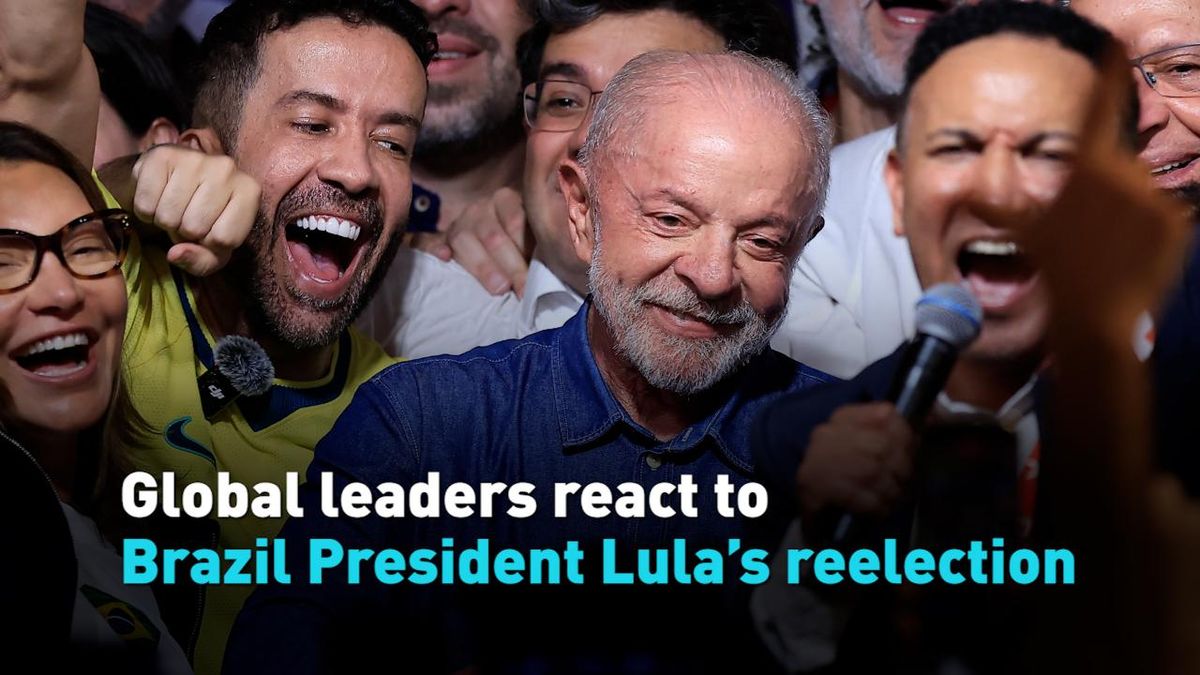
Luiz Inacio Lula da Silva has been reelected as Brazil's President for a fourth term, securing victory over right-wing Senator Flavio Bolsonaro in a closely contested runoff election. The win marks a significant return to power for the veteran left-wing leader. International reactions were swift and divided: leaders from Beijing to Mexico City quickly extended congratulations, while U.S. President Trump publicly questioned the legitimacy of the election outcome, signaling a deepening ideological rift on the global stage regarding Brazil's political direction.
Lula's return to the presidency is not merely a personal triumph but a complex interplay of internal political forces and shifting global power dynamics. Internally, his enduring appeal stems from a legacy of social programs that lifted millions out of poverty during his previous terms, creating a powerful emotional connection with a significant portion of the electorate. This base, often the most vulnerable, sees his presidency as a promise of renewed social investment and a more equitable distribution of Brazil's vast wealth. His campaign successfully leveraged this nostalgia, contrasting it with the economic anxieties and perceived social regressions under the previous right-wing administration. The election also highlighted the deep polarization within Brazilian society, where political identity often trumps nuanced policy debates, cementing a binary choice between two distinct visions for the nation's future.
Externally, Lula's victory reverberates across the global geopolitical landscape. For China and a growing number of nations in the Global South, his reelection represents a strengthening of the BRICS bloc and a push towards a more multipolar world order. Lula has consistently advocated for greater South-South cooperation, challenging the traditional dominance of Western institutions. His emphasis on multilateralism aligns with Beijing's strategic interests in expanding its influence through economic partnerships and alternative governance structures. China, already Brazil's largest trading partner, stands to benefit from renewed cooperation on infrastructure projects, commodity trade, and potentially, a more aligned stance on international forums. The swift congratulations from Mexico City underscore a regional trend, with several Latin American nations now led by left-leaning governments, creating a potential bloc that could collectively push back against traditional U.S. hegemony in the region.
Conversely, the reaction from the United States, particularly President Trump's questioning of the election results, reveals a deep-seated apprehension. Historically, the U.S. has viewed Latin America as its backyard, often wary of governments perceived as hostile to its interests or too closely aligned with rivals. Lula's past emphasis on national sovereignty, his critical stance on certain U.S. foreign policies, and his embrace of China and Russia within BRICS are likely seen as challenges to Washington's influence. The questioning of election integrity, a tactic often employed to delegitimize unfavorable outcomes, serves to sow doubt and potentially weaken the incoming administration's mandate, making it harder for Lula to consolidate power and pursue an independent foreign policy. This move highlights the ongoing struggle for influence in a region rich in resources and strategic importance, where Washington is increasingly competing with Beijing for economic and political leverage.
Economically, Brazil's role as a global commodities powerhouse means its political direction has tangible impacts on international markets. Lula's promises often involve increased state intervention, social spending, and potentially more protectionist trade policies, which could be viewed with skepticism by international investors seeking fiscal conservatism. However, his commitment to environmental protection, particularly regarding the Amazon rainforest, offers a stark contrast to his predecessor and could unlock new avenues for international cooperation and investment from environmentally conscious nations and funds. The balance between economic development, social welfare, and environmental stewardship will define the practical power mechanics of his fourth term.
The immediate human cost of Lula's reelection, and indeed the entire election cycle, is the deepening of Brazil's already profound societal polarization. The country remains sharply divided, with millions feeling either triumphant or profoundly disenfranchised by the outcome. This division manifests not just in political discourse but in daily life, straining social cohesion and trust in institutions. The questioning of election results by powerful figures further erodes faith in democratic processes, leaving a significant portion of the population feeling unheard or cheated, a dangerous precedent for any democracy.
For Brazil's most vulnerable populations, Lula's return brings a renewed hope for the expansion of social safety nets and poverty reduction programs. His previous administrations were lauded for initiatives that significantly reduced extreme poverty and hunger. However, the economic realities of 2026 are far more challenging than in his previous terms, with higher inflation and greater fiscal constraints. The promise of increased social spending, while vital for millions, could also strain public finances, potentially leading to difficult trade-offs that impact other sectors or fuel inflationary pressures, ultimately affecting the purchasing power of the very people these programs aim to help.
The fate of the Amazon rainforest and its indigenous communities represents another critical human cost. Lula has pledged to reverse deforestation and strengthen environmental protections, a stark departure from the previous administration's policies that saw significant increases in illegal logging, mining, and land grabbing. For indigenous peoples, whose livelihoods and cultural heritage are intrinsically linked to the forest, this shift offers a glimmer of hope for the protection of their ancestral lands and rights. However, powerful agribusiness and mining lobbies continue to exert immense pressure for expansion into the Amazon, often leading to violent conflicts and displacement. The human cost here is measured in lost lives, destroyed ecosystems, and the erosion of unique cultures if these protections are not robustly enforced.
The shift in economic policy under Lula could also bring uncertainty for various sectors. While some industries might benefit from increased state investment and domestic demand, others, particularly those reliant on export-oriented agriculture or mining that previously operated with fewer environmental regulations, may face tighter controls and higher costs. This could lead to job losses in specific regions or sectors, impacting the livelihoods of workers and their families. The broader economic stability, including inflation and interest rates, directly affects the cost of living for every Brazilian, from urban workers to rural farmers, making the government's economic management a direct determinant of daily human well-being.
Behind the headlines of Lula's victory and the immediate reactions, several critical narratives are often downplayed or omitted by powerful actors, shaping a less complete understanding of the situation.
U.S. President Trump's public questioning of the election results is only the most visible tip of a much larger, often unspoken, story of U.S. influence in Latin American politics. While official statements focus on democratic principles, the historical record reveals a long pattern of U.S. intervention, both overt and covert, in the region's electoral processes and governance. The U.S. has a vested interest in Brazil's alignment, particularly regarding economic policies, access to resources, and its stance on international rivals like China. What is often downplayed is the extent to which Washington might leverage its diplomatic, economic, and intelligence apparatus to shape Brazil's internal political landscape, especially when a government is perceived as less favorable to U.S. interests. The questioning of results could be seen not just as a statement, but as a strategic move to destabilize, delegitimize, or at least complicate Lula's ability to govern independently, setting the stage for future interventions or pressures.
While China publicly congratulates Lula, the deeper story is its quiet, yet relentless, consolidation of economic and political influence across Latin America, including Brazil. Unlike the often-loud political pronouncements from Washington, Beijing's approach is primarily economic, focusing on massive investments in infrastructure, resource extraction, and trade. This strategy often bypasses direct political interference, instead creating deep economic dependencies and partnerships that naturally align countries with China's global vision. What is omitted in public discourse is the long-term strategic implications of this economic entanglement: as Brazil becomes increasingly reliant on China for trade and investment, its foreign policy options and alignments may subtly shift, giving Beijing a powerful, albeit indirect, leverage that is rarely acknowledged by either side in official statements.
The narrative of an election victory often focuses on the winner, implying a mandate for unity. However, the untold story in Brazil is the profound and persistent internal fractures that the election merely highlighted, rather than healed. Lula's victory, while decisive, does not erase the deep ideological divides, cultural clashes, and economic grievances that fueled Flavio Bolsonaro's significant support. Governments and media often downplay the intensity of these divisions, preferring to emphasize democratic process. Yet, the reality is a society where trust between political factions is low, and the potential for social unrest or political obstruction remains high. Lula will face immense challenges in governing a nation where a substantial portion of the population views his presidency with suspicion or outright opposition, making consensus-building an arduous task and potentially limiting his ability to implement transformative policies.
Despite Lula's strong rhetoric on environmental protection, the battle for the Amazon is far from over and its complexities are often oversimplified in global narratives. Beyond the political promises, powerful domestic lobbies—agribusiness, illegal miners, and land speculators—continue to exert immense pressure on the forest. These groups have deeply entrenched economic and political interests, often operating with impunity in remote regions. What is downplayed is the sheer difficulty of enforcing environmental laws in such a vast and challenging territory, where corruption can be rampant and state presence often weak. The Amazon's future is not solely dependent on presidential decrees but on a continuous, often violent, struggle on the ground, a struggle whose human and ecological costs are largely borne by indigenous communities and environmental defenders, far from the glare of international media.
As Luiz Inacio Lula da Silva embarks on his fourth presidential term, several key indicators will reveal the true trajectory of Brazil and its role in the world.
First, observe Lula's cabinet appointments and his initial policy priorities. Will he opt for a broad, conciliatory government aiming to bridge Brazil's deep political divides, or will he prioritize loyalists and a more ideologically aligned agenda? The composition of his economic team will be particularly critical, signaling his approach to fiscal responsibility, inflation control, and attracting foreign investment. Any significant shifts in these areas will directly impact Brazilian citizens' daily lives and international market confidence.
Second, pay close attention to concrete actions regarding the Amazon rainforest. While rhetoric on environmental protection is strong, the challenge lies in implementation. Watch for specific measures to combat illegal deforestation, mining, and land grabbing, as well as the empowerment of environmental agencies and indigenous rights groups. The global community, particularly European nations and environmental organizations, will be scrutinizing Brazil's commitment to these pledges, which could influence trade agreements and international funding for conservation efforts.
Third, monitor Brazil's international alignment and its engagement with major global powers. Will Lula lean more heavily into the BRICS framework, strengthening ties with China and Russia, or will he seek a more balanced approach, attempting to mend fences with the United States and European Union? His foreign policy choices will not only define Brazil's standing but also contribute to the ongoing reshaping of the global order, particularly in Latin America.
Finally, observe the response of the Bolsonaro-aligned opposition. Will they accept the election results and transition into a constructive opposition, or will they continue to challenge the legitimacy of Lula's presidency, potentially fueling further social unrest and political instability? The strength and actions of the opposition will significantly influence Lula's ability to govern effectively and implement his agenda, shaping the political landscape for years to come.
Source referenced: CGTN
This brief was synthesized by our Editorial Engine and reviewed by The Ground Narrative team.


