TRENDING

Sunday, 20 September 2026
----------------------
9 Rabi' Al-Thani 1448 AH
Wildfires in Greece and a suicide bombing in Pakistan highlight the devastating consequences of climate change and insurgency, while thousands of Moroccans attempt to cross into Spanish territory, revealing the intricate web of global power dynamics and human migration. The recent events underscore the need for a nuanced understanding of the complex relationships between environmental disasters, conflict, and human movement.
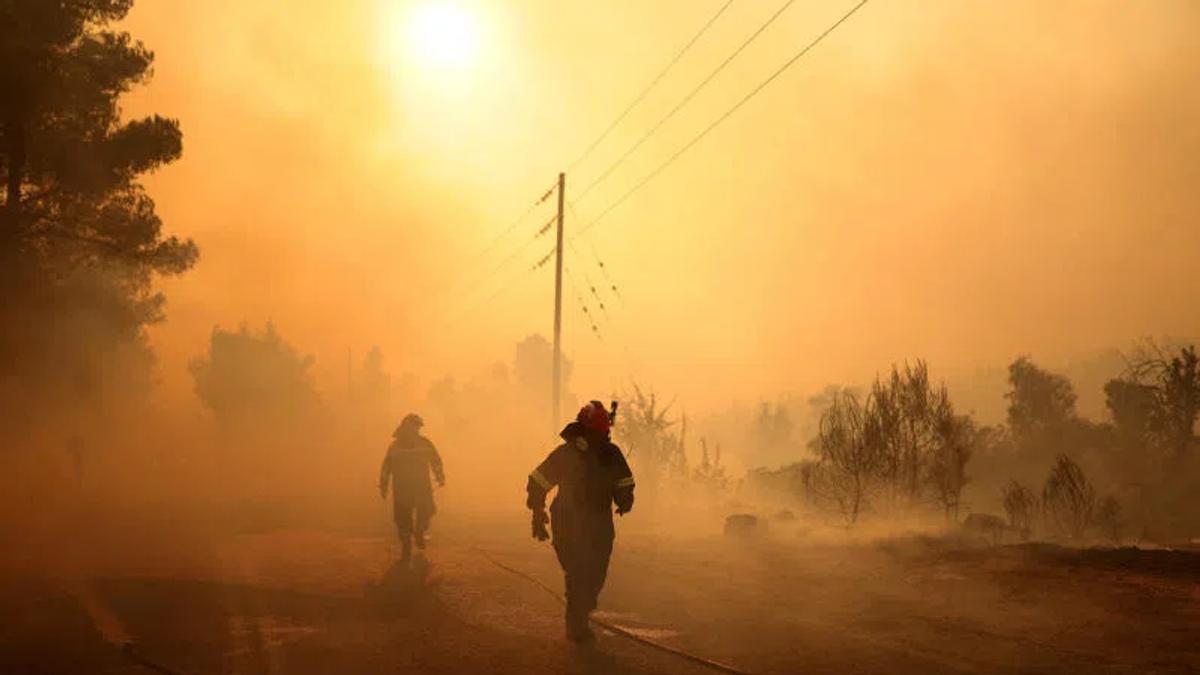
A series of devastating events unfolded across the globe, including wildfires in Greece, a suicide bombing in Pakistan, and a massive attempt by Moroccans to cross into Spanish territory. The wildfires in Greece resulted in the collision of two firefighting helicopters, killing two people, while the bombing in Pakistan claimed at least 14 lives. Meanwhile, over 60,000 Moroccans attempted to swim across the border to the Spanish territory of Ceuta, with the majority being turned back.
The recent events are intricately linked to the broader dynamics of global power and migration. Climate change, exacerbated by human activities, has led to record-breaking heatwaves and wildfires, forcing people to flee their homes in search of safety. The insurgency in Pakistan and the attempts by Moroccans to cross into Spanish territory are also driven by complex factors, including economic inequality, political instability, and the desire for a better life. The involvement of pharmaceutical companies, such as AstraZeneca and Bristol Myers Squibb, in potential megadeals highlights the significant role of corporate interests in shaping global events.
The human cost of these events is staggering. The wildfires in Greece have destroyed over 100 homes, leaving families without shelter or livelihoods. The bombing in Pakistan has claimed innocent lives, causing irreparable harm to families and communities. The attempts by Moroccans to cross into Spanish territory have resulted in uncertainty and fear, as people risk their lives in search of a better future. The consequences of these events will be felt for generations to come, underscoring the need for a more nuanced understanding of the complex relationships between environmental disasters, conflict, and human migration.
What is often downplayed or omitted in official statements is the role of climate change and economic inequality in driving human migration. The powerful actors involved in these events, including governments and corporations, often prioritize their own interests over the needs and well-being of ordinary people. The potential megadeal between AstraZeneca and Bristol Myers Squibb, for example, may lead to significant profits for the companies involved, but it may also exacerbate existing health disparities and limit access to essential medicines for marginalized communities.
As the situation continues to unfold, readers should watch for the following developments: the response of governments and international organizations to the wildfires and bombing, the outcome of the potential megadeal between AstraZeneca and Bristol Myers Squibb, and the long-term consequences of the attempts by Moroccans to cross into Spanish territory. The ability of governments and corporations to address the root causes of these events, including climate change and economic inequality, will be crucial in determining the course of human migration and the well-being of affected communities.
Editor's Note: The analysis is based on publicly available information and may not reflect the full complexity of the events. Further research and investigation are necessary to fully understand the underlying dynamics and consequences.
Source referenced: STRAITSTIMES
This brief was synthesized by our Editorial Engine and reviewed by The Ground Narrative team.


