TRENDING

Thursday, 17 September 2026
----------------------
6 Rabi' Al-Thani 1448 AH
A US$14.7 million renovation of the Lincoln Memorial Reflecting Pool failed, prompting a dispute between former President Trump and his own Justice Department over the cause. While prosecutors cited flawed installation and dropped a vandalism case, Trump insists sabotage was to blame, revealing a deeper battle over narrative control and accountability.
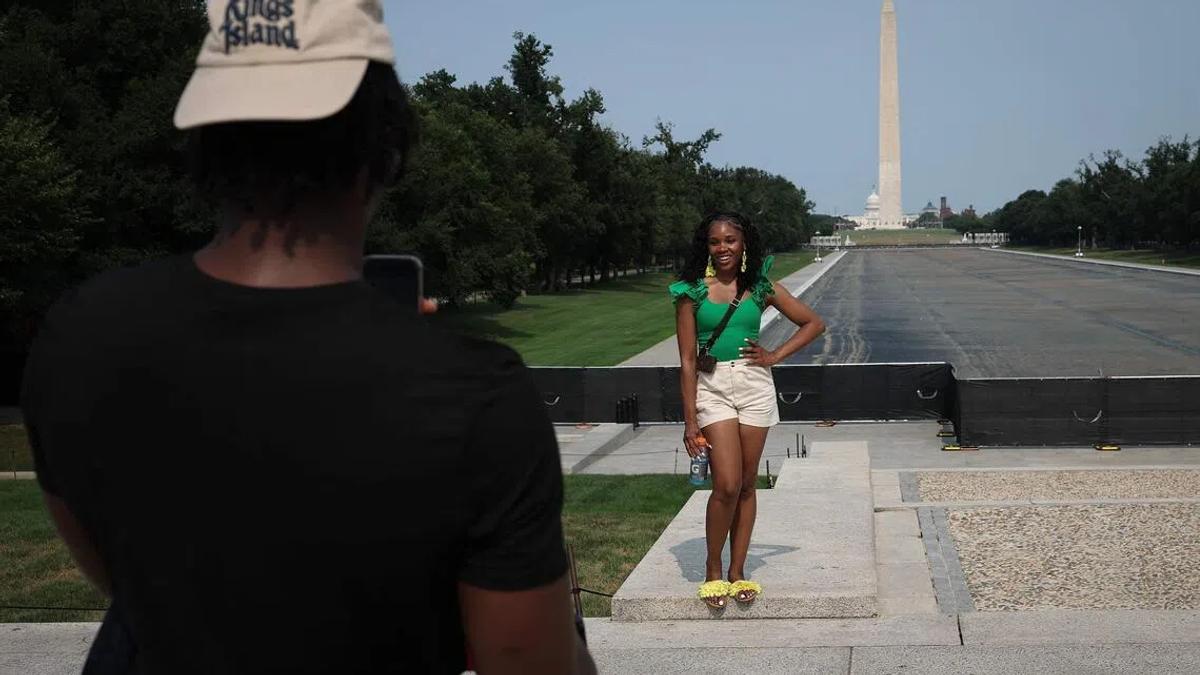
Former US President Donald Trump publicly disputed his own Justice Department's findings regarding the failed renovation of the Lincoln Memorial Reflecting Pool. Federal prosecutors, led by US Attorney Jeanine Pirro, dropped a vandalism case against David Hearn, concluding that a "rushed and flawed installation process" was responsible for the pool's lining peeling. Trump, however, maintained that "VANDALISM" was the primary cause, sharing a video he claimed supported his assertion.
This seemingly minor dispute over a public monument reveals significant power dynamics at play within the US political system. For a former President, controlling the narrative around projects undertaken during his administration is crucial for political survival and maintaining public image. Blaming "vandals" for the pool's disrepair effectively deflects responsibility from any potential oversight failures or poor contractor selection by his administration. It allows for the creation of an external enemy, a common tactic to rally support and shift blame.
On the other side stands the Justice Department, an institution theoretically committed to evidence-based conclusions. The decision by federal prosecutors to drop the vandalism case, despite the President's public insistence, underscores the tension between political pressure and the institutional imperative for factual integrity. Even with a prosecutor appointed during the Trump administration, the weight of evidence—documents from the Department of the Interior detailing "repeated failures of the lining during the installation process"—ultimately prevailed. This dynamic highlights the fragile balance between executive influence and the independence of legal and investigative bodies, a balance critical to the functioning of a democratic state. The US$14.7 million price tag for the renovation also brings into focus the accountability of public funds, where a failed project becomes a political liability.
While the headlines focus on the clash between a former President and his Justice Department, the human cost is borne by several often-overlooked groups. David Hearn, a former Olympian, found himself caught in the crosshairs of a political narrative, accused of vandalism and facing legal proceedings simply because a powerful figure needed a scapegoat. The emotional and financial toll of such an accusation, even if eventually dropped, can be substantial, damaging reputation and causing immense stress.
Beyond individuals, the US taxpayer is the ultimate bearer of the financial cost. The US$14.7 million spent on a renovation that quickly failed means public funds were mismanaged or poorly invested. This money could have been allocated to other public services, infrastructure, or social programs. The eventual cost of re-repairing or replacing the faulty lining will further burden taxpayers, highlighting a systemic failure in public project oversight. Moreover, the public's trust in government statements and official processes can erode when a President openly contradicts his own Justice Department, fostering cynicism and making it harder for citizens to discern truth from political spin.
What remains largely unaddressed in the public discourse is the deeper scrutiny of the "rushed and flawed installation process" itself. While the Justice Department cited it as the cause, there has been little public accounting for *how* such a significant public project, costing millions, could proceed with such fundamental flaws. Who were the contractors? What was the bidding process like? Were there adequate checks and balances in place during the installation? Governments and official statements often downplay or omit the internal systemic failures that lead to such outcomes, preferring to focus on external factors or, in this case, a convenient "vandalism" narrative.
The focus on the presidential dispute overshadows the need for a thorough investigation into the procurement and execution of the renovation. This omission allows potential negligence, lack of oversight, or even corruption to go unexamined, perpetuating a cycle where public funds are wasted without clear accountability. The video shared by Trump, meant to prove vandalism, also subtly frames the public's interaction with the peeling pool as destructive, rather than a symptom of a deeper, internal failure.
Moving forward, several points bear watching. Firstly, will there be any independent investigation into the contractor responsible for the flawed installation, or into the government's oversight of the US$14.7 million project? Accountability for public spending, beyond just identifying the cause of failure, is crucial. Secondly, observe how the public and media continue to weigh presidential claims against official government findings. This incident serves as a micro-example of a broader struggle over truth and narrative in the digital age. Finally, the resilience of institutional checks, particularly the Justice Department's ability to uphold its mandate against political pressure, will be a critical indicator of the health of democratic governance. The Reflecting Pool, a symbol of American ideals, now reflects a deeper struggle over facts, power, and public trust.
Source referenced: STRAITSTIMES
This brief was synthesized by our Editorial Engine and reviewed by The Ground Narrative team.


