TRENDING

Thursday, 17 September 2026
----------------------
6 Rabi' Al-Thani 1448 AH
Uganda has publicly criticized air travel restrictions imposed by several nations, including the United States, over an Ebola outbreak, arguing they are "unfair" and undermine transparent reporting. This diplomatic friction underscores broader challenges in balancing global public health security with national economic interests and international cooperation during epidemics.
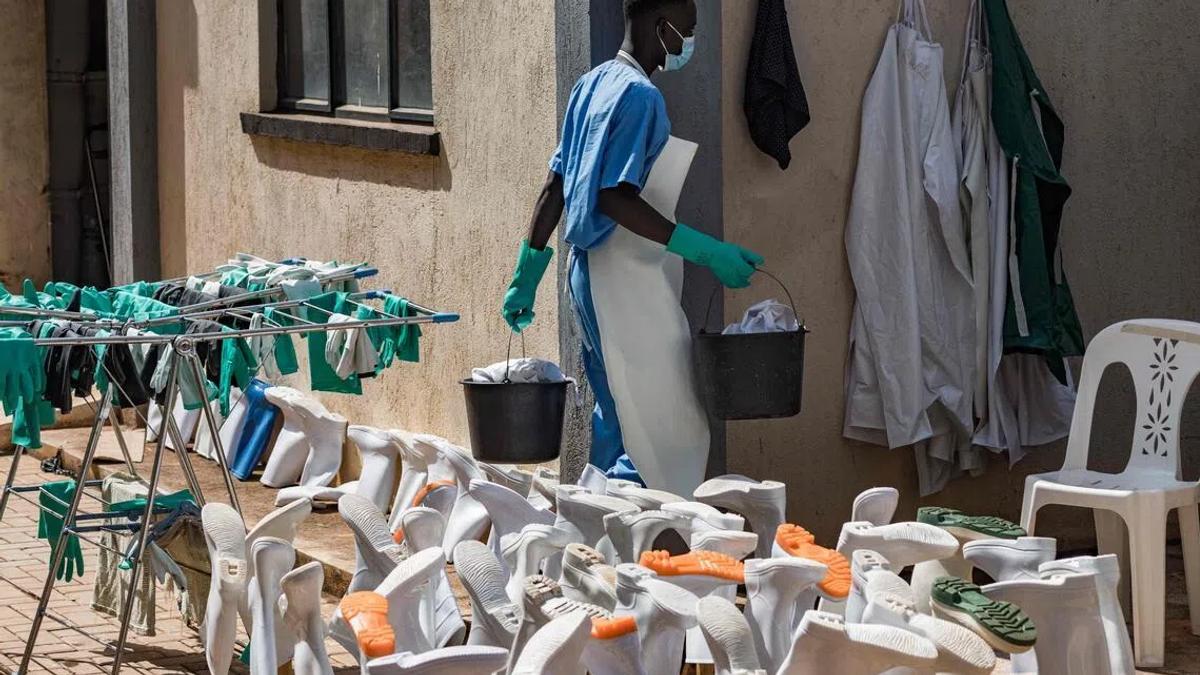
Uganda's Health Ministry and Civil Aviation Authority, alongside ambassadors and airline operators serving the country, convened on June 12, 2026, to address what they termed "unfair" air travel restrictions. These measures have been imposed by several nations, including the United States, Canada, and the United Arab Emirates, in response to an Ebola outbreak that originated in the neighboring Democratic Republic of Congo (DRC) and subsequently spilled over into Uganda.
Diana Atwine, permanent secretary for Uganda's Health Ministry, articulated the nation's stance on social media, emphasizing that while vigilance is appreciated, "blanket restrictions undermine confidence in countries that report outbreaks openly, and are not commensurate with the actual risk." This statement highlights a significant diplomatic and public health concern, suggesting that such broad measures could inadvertently hinder global efforts to contain future epidemics by disincentivizing transparency.
The current Ebola outbreak, caused by the Bundibugyo strain for which no vaccine or specific treatment currently exists, began in the DRC in mid-May 2026. The situation in the DRC remains severe, with more than 676 confirmed cases and 136 deaths reported since the alarm was sounded. The World Health Organization (WHO) warned on June 12 that the outbreak was spreading to new areas within the DRC, indicating ongoing challenges in containment within its borders.
In contrast, Uganda's response to the spillover has garnered significant international praise. Public health officials, including the WHO chief Tedros Adhanom Ghebreyesus during a visit on June 8, commended Kampala's robust containment strategy. Uganda has reported only 19 confirmed cases and two deaths, with almost all cases involving Congolese nationals who had crossed the border from their home country. This stark contrast in outcomes between the DRC and Uganda forms the crux of Kampala's argument against the travel bans, asserting that the restrictions are disproportionate to the actual risk posed by travelers from Uganda.
Diplomatic Friction and International Relations: Uganda's public condemnation of the travel restrictions highlights a recurring tension in international relations during health crises. While nations imposing restrictions cite public safety and the imperative to prevent disease spread, affected countries often perceive such measures as punitive, discriminatory, and economically damaging, particularly when their containment efforts are demonstrably effective. This creates diplomatic friction and can strain bilateral relations, potentially undermining broader cooperation on other geopolitical issues.
Economic Impact: Travel restrictions have immediate and severe economic consequences. They disrupt tourism, trade, and investment flows, disproportionately affecting developing economies like Uganda. Airlines face reduced passenger numbers, and businesses reliant on international travel suffer significant losses. This economic pressure can exacerbate existing vulnerabilities, hinder development efforts, and complicate post-crisis recovery, making the long-term costs of such bans substantial.
Global Health Governance and Transparency: The incident raises critical questions about the efficacy and equity of global health governance frameworks. The WHO's praise for Uganda's response, juxtaposed with travel bans from other nations, suggests a lack of harmonized international policy. It underscores the challenge of achieving a coordinated global response that balances public health imperatives with economic stability and avoids stigmatization. Furthermore, Uganda's argument that blanket restrictions discourage open reporting is a significant concern for global health security. If countries fear economic or diplomatic repercussions for transparently reporting outbreaks, they might be less inclined to do so, potentially delaying critical international responses and allowing diseases to spread further undetected.
The persistent nature of Ebola outbreaks in the Democratic Republic of Congo, with this being its 17th, underscores the profound public health challenges facing the region. The porous borders in Central Africa mean that health crises in one nation inevitably impact its neighbors, necessitating robust regional cooperation and sustained international support for health infrastructure in vulnerable areas. The current situation highlights the interconnectedness of regional health security and the need for comprehensive, long-term strategies that address root causes and strengthen local capacities.
Ultimately, the dispute between Uganda and countries imposing travel restrictions exemplifies the complex interplay between national security, economic interests, and global public health during epidemics. It calls for a more nuanced and evidence-based approach to international travel policies during outbreaks, one that recognizes and rewards effective national containment efforts rather than imposing blanket measures. Fostering trust and cooperation, alongside robust public health measures, remains paramount for effective global disease control and mitigating the broader geopolitical and economic fallout of health crises.
Source referenced: STRAITSTIMES
This brief was synthesized by our Editorial Engine and reviewed by The Ground Narrative team.


