TRENDING

Thursday, 17 September 2026
----------------------
6 Rabi' Al-Thani 1448 AH
As billions celebrated the 2026 FIFA World Cup, a rapidly accelerating Ebola outbreak ravaged the Democratic Republic of Congo, largely out of global sight. This stark contrast exposes the limits of current international health governance, revealing how major events capture attention while critical crises struggle for resources and recognition.
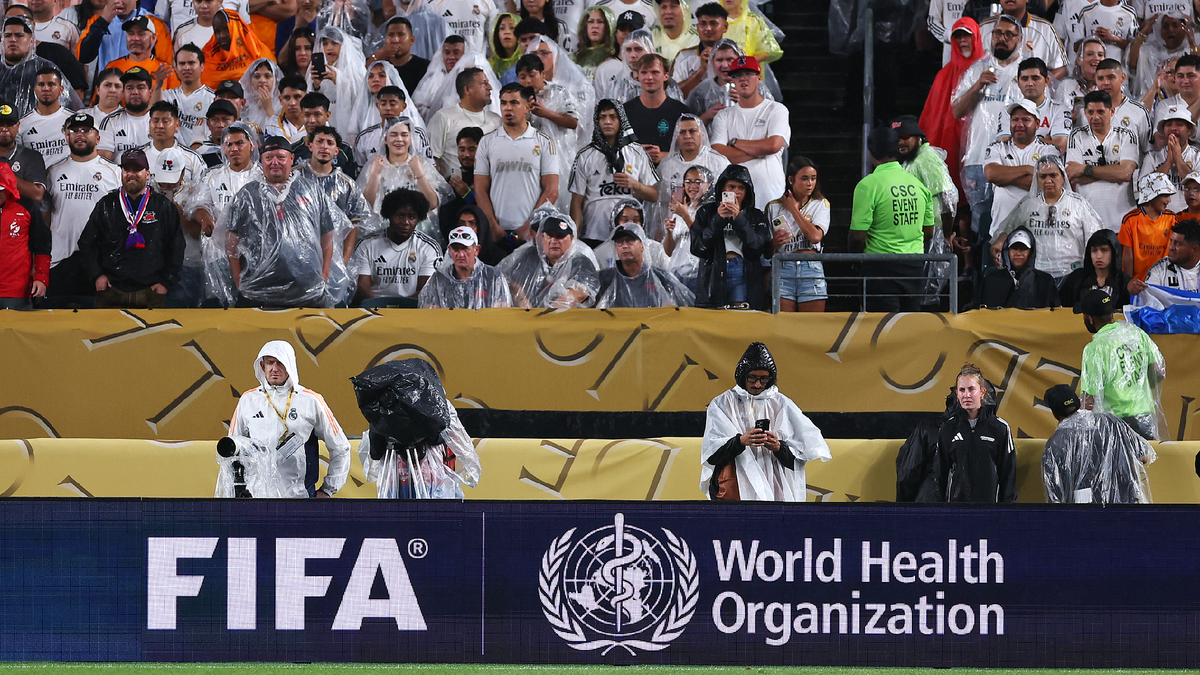
While Spain lifted their second FIFA World Cup trophy in New Jersey, captivating billions worldwide across 39 days of global spectacle, another, far grimmer reality unfolded. On the same day, the World Health Organization reported that the Bundibugyo Ebola outbreak in the Democratic Republic of Congo (DRC) had surged to over 2,300 confirmed cases and 930 deaths, marking the fastest-spreading outbreak on record. The confirmed presence of a case in France, carried by a physician returning from the DRC, underscored the potential for wider international reach.
The power dynamics at play reveal a clear hierarchy of global attention. The FIFA World Cup represents an apex of soft power and economic opportunity for host nations, drawing immense media coverage, advertising revenue, and political capital. Host governments, like the United States, Canada, and Mexico for the 2026 tournament, prioritize the event's seamless execution, security, and the projected economic benefits from tourism and infrastructure development. Public health considerations are often framed within the narrow scope of event continuity and participant safety, rather than as an opportunity for broader global health equity.
While institutional partnerships like the renewed FIFA-WHO Memorandum of Understanding (MOU) exist for health advocacy and technical advice, their inherent limitations are structural. The MOU is explicitly non-binding, its implementation contingent on the 'availability of resources' from both parties. The much-lauded 'Sport for Health' model demonstrated by Qatar for the 2022 World Cup, which deeply integrated public health into tournament operations, was a choice by the host government to invest significantly. This model was not replicated for the 2026 tournament, where the US federal government allocated hundreds of millions for host cities via FEMA, yet provided no dedicated federal funding for public health, leaving city health officials to operate within existing, often strained, budgets. This demonstrates where true priorities lie: the spectacle itself, not necessarily the systemic public health infrastructure that could leverage such a platform for greater global good.
The most profound human cost is borne by the communities in the Democratic Republic of Congo. As global attention fixated on football fields, families in the DRC grappled with the terrifying reality of a rapidly spreading, deadly disease. The thousands of confirmed cases and hundreds of deaths represent not just statistics, but individual lives cut short, families shattered, and communities plunged into fear and uncertainty. The overwhelming demand on already fragile health systems means essential services are diverted, and the long-term economic and social fabric of these regions is severely impacted, exacerbating cycles of poverty and instability.
Beyond the immediate crisis, the lack of sustained, dedicated international attention means that the global health community struggles to mobilize resources and implement robust, long-term solutions. The confirmed case in France, while contained, serves as a stark reminder that diseases do not respect borders, and the human cost of neglect in one region can eventually ripple across the globe, affecting populations far removed from the initial outbreak.
What powerful actors—from international sporting bodies to host governments—consistently downplay or omit is the fundamental structural inequity in global attention and resource allocation. The narrative often highlights the 'successes' of health advocacy within the confines of major events, such as anti-tobacco messaging or mental health campaigns. However, this framing sidesteps the critical question of why such powerful global platforms, capable of reaching billions, are not leveraged with binding commitments and dedicated resources to address acute, ongoing global health crises that unfold simultaneously but outside the event's immediate geography.
The 'low institutional cost' approach to health advocacy through sports implicitly acknowledges that addressing global health crises is a secondary, often optional, benefit rather than a core responsibility. There is little public discourse on the *why* behind the non-binding nature of these agreements, or the lack of political will to evolve them into enforceable standards that could genuinely transform mass media platforms into sustainable mechanisms for global health security. The focus remains on the visible triumph of the spectacle, obscuring the invisible struggle against disease.
Going forward, observers should scrutinize whether future major global sporting events, including the 2030 World Cup, will see any substantive evolution in their health governance frameworks. Will the 'Qatar model' of deep operational integration become a mandatory requirement for hosts, or will it remain an aspirational benchmark dependent on the host's discretion? The true test will be if international bodies and powerful nations push for a multilateral instrument, akin to the WHO Framework Convention on Tobacco Control, that establishes binding obligations for major events to contribute meaningfully to global health security beyond their immediate scope. This would necessitate a significant shift in political will and a re-evaluation of the balance between commercial interests and public welfare. The ability of global health organizations to secure enforceable commitments from these powerful platforms will determine if the 'unfinished game' of global health can ever truly reach a final whistle.
Source referenced: CGTN
This brief was synthesized by our Editorial Engine and reviewed by The Ground Narrative team.


