TRENDING
Thursday, 17 September 2026
----------------------
6 Rabi' Al-Thani 1448 AH
The Trump administration has dramatically expanded its economic intervention, taking equity stakes in dozens of companies and using tariffs to reshape industries. This marks a profound shift from traditional free-market principles, raising questions about who benefits and who bears the cost of this new state capitalism.
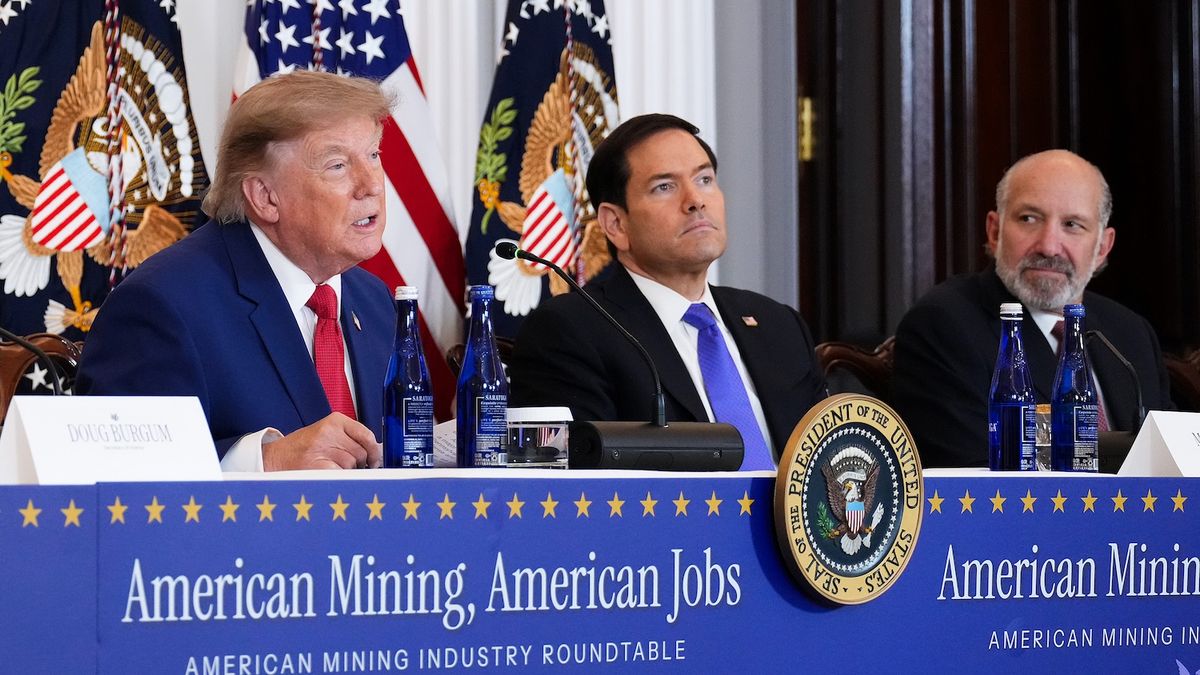
Under the second Trump administration, the United States government has embarked on an unprecedented path of economic intervention, fundamentally altering its relationship with private industry. What began with a symbolic “golden share” in U.S. Steel has rapidly expanded, with the government now holding equity stakes in as many as 30 companies across a diverse range of sectors. This aggressive move also includes direct pressure on major corporations like ExxonMobil and Chevron over refining margins, alongside the continued use of tariffs, effectively taxing U.S. consumers, all while the administration simultaneously warns against the threat of 'communism.'
This dramatic pivot towards state capitalism reveals a complex interplay of power mechanics. At its core, the administration's actions appear driven by a desire for direct control over key economic sectors, rather than a coherent, long-term industrial strategy. While some argue for state intervention in critical industries like semiconductors or shipbuilding for national security or supply chain resilience, the current approach lacks the systematic planning seen in other nations. Instead, it seems to be a more reactive and personalized exercise of executive power, with decisions often changing by the day. The use of tariffs, traditionally a congressional power, has been arrogated by the executive, serving as both a revenue stream and a tool for political leverage. The browbeating of oil companies, for instance, directly responds to public discontent over high gasoline prices, a politically sensitive issue exacerbated by the economic fallout of the Iran war. This model prioritizes immediate, visible control and political expediency over predictable market mechanisms, representing a stark ideological departure for a party historically aligned with free-market principles.
While the stated goal might be to bolster American industry or secure critical supply chains, the human cost of this ad-hoc state capitalism is significant and often diffuse. Tariffs, for example, are ultimately taxes paid by U.S. consumers, leading to higher prices for imported goods and components. The arbitrary nature of government intervention, with some companies receiving special treatment or exemptions, creates an uneven playing field. This uncertainty deters investment, as businesses struggle to predict regulatory environments or the next target of executive pressure. For workers, while some favored sectors might see temporary boosts, the broader economy faces instability. The lack of a clear, consistent strategy means industries not deemed 'critical' or politically favorable could languish, and the long-term competitiveness of the entire economic ecosystem risks erosion as political dictates override market efficiency. The ordinary citizen, far removed from the boardrooms and policy discussions, ultimately pays for these experiments through higher costs, reduced choices, and a less predictable economic future.
What remains largely unaddressed by official statements is the profound irony and the systemic implications of these actions. An administration that vocally decries 'communism' is simultaneously taking over significant 'means of production' – a concept historically associated with socialist and communist economic models. This ideological contradiction is rarely acknowledged, instead framed as patriotic necessity or economic pragmatism. Furthermore, the lack of a sophisticated, transparent plan is consistently downplayed. Unlike countries that develop state-backed industries with clear, long-term goals and public investment strategies, the U.S. administration's approach is characterized by its fluidity and personalistic nature. This opacity extends to the criteria for government equity stakes, exemptions, and special treatment, raising questions about fairness and potential favoritism. The broader, unspoken experiment is whether a major global economy can thrive under such an unpredictable, politically driven model of state capitalism without stifling innovation, distorting markets, and ultimately undermining its own economic foundations.
Looking ahead, several critical areas warrant close observation. The sustainability of this ad-hoc state capitalism will be tested by economic realities and potential legal challenges to executive overreach. Watch for how these government equity stakes perform, and whether they genuinely foster long-term industrial strength or become liabilities. The impact on inflation and consumer prices, particularly from continued tariffs and interventions in energy markets, will be a key indicator of public tolerance and economic health. Furthermore, observe the global reaction: will allies and adversaries adapt their own economic policies in response to a more state-controlled U.S. economy? Finally, the political landscape will be crucial. Will future administrations continue, modify, or dismantle this model? The long-term consequences for America's economic identity and global standing hinge on these unfolding dynamics.
Source referenced: FOREIGNPOLICY
This brief was synthesized by our Editorial Engine and reviewed by The Ground Narrative team.


