TRENDING

Saturday, 19 September 2026
----------------------
8 Rabi' Al-Thani 1448 AH
A swift Syrian government offensive, enabled by a change in U.S. support, has dismantled the decade-old Kurdish-led autonomous administration in northeastern Syria. This reassertion of central control forces the region's diverse populations into an uncertain future.
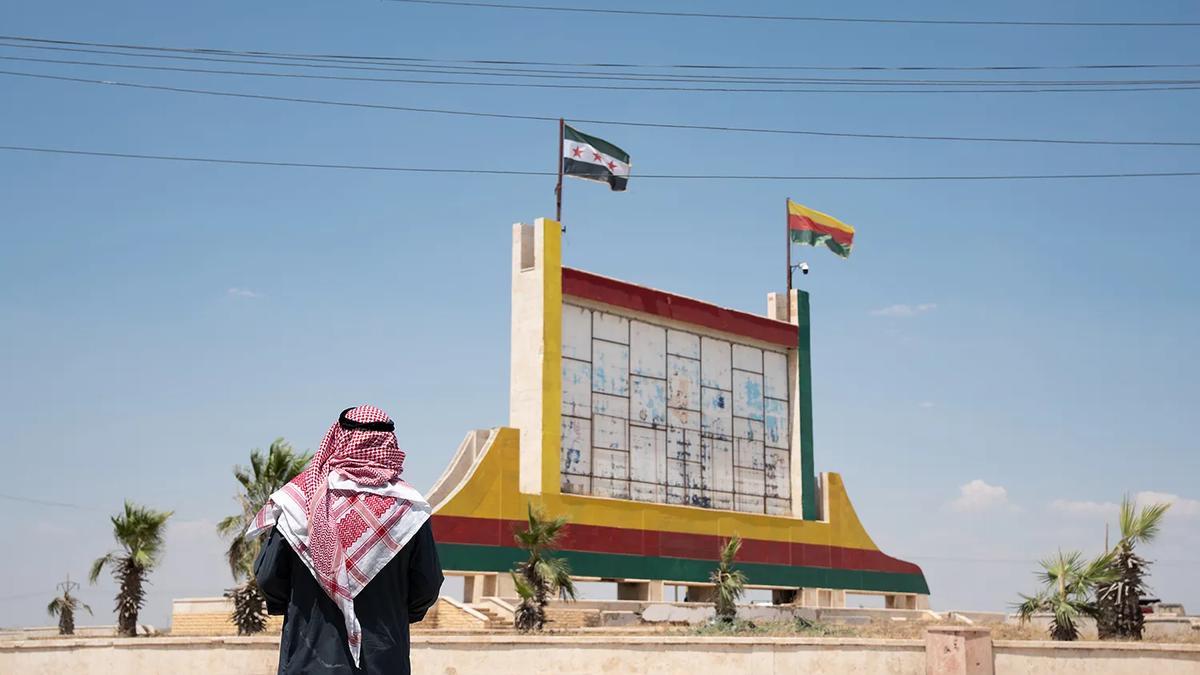
In a swift military operation in January, Syrian government forces, backed by a decisive shift in U.S. support, defeated the Kurdish-led Syrian Democratic Forces (SDF) and reclaimed approximately 80 percent of the territory previously held by the autonomous administration in northeastern Syria, often referred to as Rojava. This rapid takeover followed 10 months of stalled negotiations between Damascus and the Kurdish leadership. A subsequent agreement outlined a phased integration of the region's security, military, and administrative institutions into the Syrian state, marking a significant reassertion of central government control after a decade of fragmented authority. Notably, a former senior SDF commander, Samir Asso (Sipan Hamo), has now assumed the role of Syria’s deputy defense minister for the eastern region, signifying the new reality on the ground.
The unraveling of Rojava's autonomy is a stark illustration of shifting geopolitical priorities and the transactional nature of international alliances. For years, the U.S. leveraged the SDF as its primary ground partner in the fight against ISIS, providing crucial military and logistical support. However, Washington's "decisive shift" in support from the Kurds to the Syrian government signals a recalibration of its strategic interests in the region. This move likely reflects a desire to consolidate stability under a recognized state actor, even one previously adversarial, and potentially to extricate itself from a complex entanglement with a non-state actor whose aspirations for autonomy were a source of regional friction, particularly with NATO ally Turkey.
For Damascus, this represents a significant victory in its long-term goal of reasserting sovereignty over all Syrian territory. The Syrian government, led by President Ahmed al-Sharaa, capitalized on the U.S. withdrawal of support to swiftly dismantle a decade-old autonomous administration. The appointment of a former SDF commander to a senior government post is a classic tactic of co-option, designed to legitimize the integration and project an image of national unity, even if achieved under duress. The Kurds, caught between the Syrian government's resurgent power and the withdrawal of their key international patron, were left with little leverage, forced to accept integration as "the only solution possible to achieve peace."
The human cost of this power realignment is borne primarily by the Kurdish population of northeastern Syria, who now face an uncertain future under a centralized government that historically suppressed their language and identity. The loss of Rojava's autonomous administration means the erosion of a governance model built on ideals of multi-ethnic, gender-equal democratic rule, however imperfectly realized. The rapid clashes in January led to casualties, with new graves filling martyrs' cemeteries, a poignant reminder of the lives sacrificed in the fight against ISIS and for a vision of self-determination. The desecration of Kurdish graves in Manbij further underscores the deep-seated ethnic and political tensions that resurface with the reassertion of central control.
Beyond the Kurds, the population of former Rojava, including Arab-majority areas like Raqqa, also faces a new reality. While some in these areas may have celebrated the arrival of government forces, having reportedly experienced arbitrary arrests and abuses under the DAANES administration, the transition was not without its own violence, including a massacre of Arab civilians by an SDF fighter and thefts in Kurdish villages. The initial period of integration saw internet blackouts and restrictions on movement and fuel, disrupting daily life and creating widespread anxiety for all residents, regardless of ethnicity.
What remains largely unstated by powerful actors is the full calculus behind the U.S. "decisive shift." While the immediate outcome was the Syrian government's victory, the underlying factors likely involve a complex interplay of regional pressures, particularly from Turkey. Turkey has consistently viewed the YPG/SDF as an extension of the Kurdistan Workers' Party (PKK), a designated terrorist organization, and has long opposed any form of Kurdish autonomy near its border. The U.S. decision to withdraw support from the SDF, its long-time anti-ISIS partner, effectively removed a major obstacle to Turkey's regional security concerns and allowed Damascus to reassert control, potentially as part of a broader, unstated understanding aimed at de-escalating tensions or realigning alliances in the wider Levant.
Furthermore, while the Syrian government has issued decrees recognizing Kurdish as a national language and restoring citizenship rights, these are currently revocable and not enshrined in the constitution. Damascus is downplaying the provisional nature of these concessions and its historical record of suppressing Kurdish identity. The long-term intent of the central government is likely assimilation, not genuine federalism, despite the "many colors" rhetoric from local Kurdish officials. The narrative of "integration" masks a process that was largely imposed, not negotiated, and the fragility of these new promises is a critical, underreported aspect.
Readers should closely watch the practical implementation of the integration agreement. Key indicators will be whether the Syrian government's decrees on Kurdish language and citizenship are formalized into the constitution, providing genuine legal protection, or if they remain tactical concessions. The degree of autonomy allowed to local administrations in former Rojava, such as Kobani, will reveal the true extent of Damascus's willingness to accommodate regional differences. Any resurgence of Kurdish political or armed resistance, should the promises of rights and representation prove hollow, will signal further instability. Finally, the long-term implications for the broader regional balance of power, particularly regarding Turkey's influence and the fate of remaining U.S. forces in Syria, will be critical to observe as Damascus solidifies its control.
Source referenced: FOREIGNPOLICY
This brief was synthesized by our Editorial Engine and reviewed by The Ground Narrative team.


