TRENDING

Thursday, 17 September 2026
----------------------
6 Rabi' Al-Thani 1448 AH
Recent Russian missile and drone attacks have devastated Ukrainian cities, killing civilians and striking infrastructure, while Ukraine retaliates with its own strikes deep into Russian territory. This escalating air campaign reveals the grinding nature of the conflict and the severe strain on civilian populations.
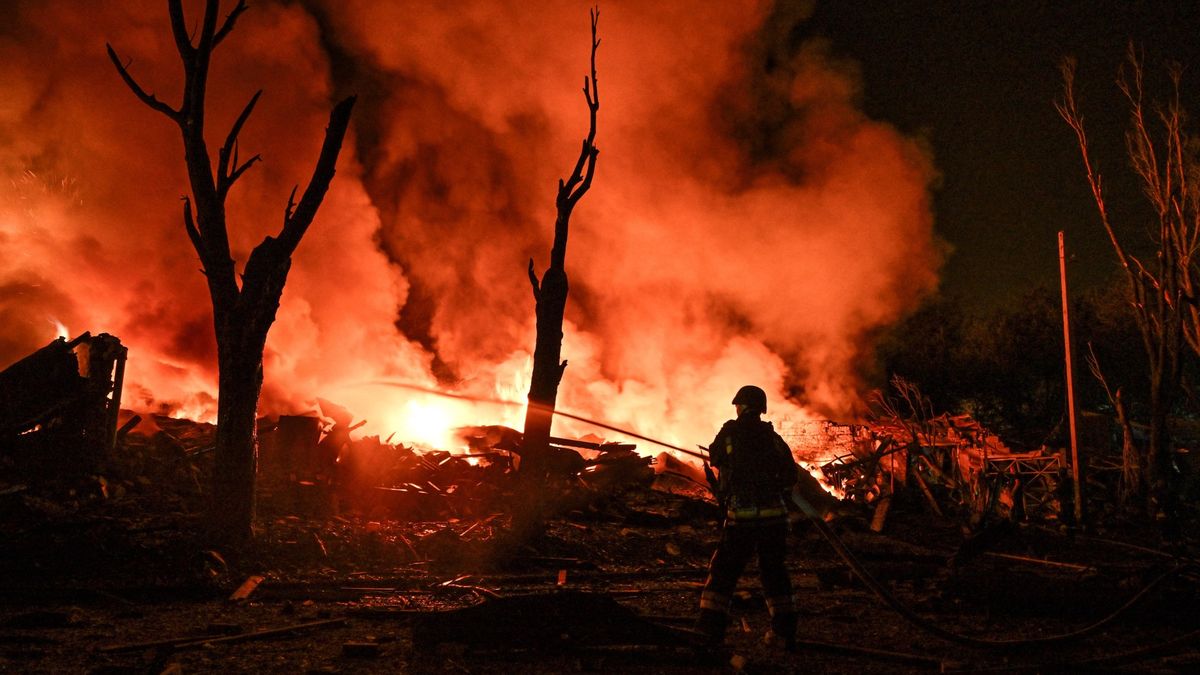
Overnight, Russian forces unleashed a barrage of missile and aerial bomb attacks across southeastern Ukraine, resulting in six civilian deaths and 19 injuries in the Zaporizhzhia region, alongside widespread power outages. Kyiv also faced a ballistic missile strike, damaging a children's hospital and a warehouse, injuring one. In the southern city of Mykolaiv, an elderly woman was wounded by a drone. Simultaneously, a Ukrainian drone attack on Russia's Voronezh region killed one person, injured two, and caused fires at warehouse facilities. Both sides claim to be targeting military and logistical infrastructure, but the pattern of civilian casualties and damage to non-military sites persists.
These escalating air assaults are not random; they represent a calculated power play. Russia's strategy appears twofold: first, to degrade Ukraine's critical infrastructure and defense industry, and second, to overwhelm and exhaust Ukraine's air defense capabilities. The reported shortage of Patriot interceptors in Ukraine highlights a significant vulnerability that Russia is actively exploiting, forcing Ukraine to make difficult choices about protecting population centers versus military assets. Ukraine, in turn, uses its long-range drone capabilities to strike deep into Russian territory, aiming to disrupt logistics, create domestic pressure, and demonstrate its capacity to retaliate. This tit-for-tat air war is a brutal contest of attrition, where the ability to project force from the sky is seen as a key to gaining leverage, both militarily and psychologically. The availability of advanced air defense systems from Western allies remains a critical determinant of Ukraine's ability to withstand this pressure.
The most immediate and devastating cost of this air war is borne by ordinary citizens. The six lives lost in Zaporizhzhia, the elderly woman injured in Mykolaiv, and the person killed in Voronezh are not statistics but individuals whose lives were abruptly ended or irrevocably altered. Beyond the immediate casualties, millions live under the constant threat of air raids, enduring the psychological trauma of sirens, explosions, and the destruction of their homes and communities. The damage to a children's hospital in Kyiv, regardless of intent, underscores how deeply civilian life is impacted. Power outages disrupt essential services, while damaged warehouses and logistics centers affect supply chains, livelihoods, and the basic functioning of society. This is a war fought over cities, and its human cost is measured not just in lives, but in the erosion of normalcy and the pervasive fear that defines daily existence for those caught beneath the flight paths of missiles and drones.
What powerful actors are downplaying or omitting? Russia consistently frames its attacks as precision strikes against military targets, minimizing or ignoring civilian casualties and the broader terrorizing effect on the population. This narrative seeks to legitimize actions that often result in widespread civilian harm. On the Ukrainian side, while highlighting Russian aggression, there's less public discourse on the inherent risks and potential civilian impact of its own retaliatory strikes deep inside Russia. For Western allies, the slow or insufficient provision of critical air defense systems and interceptors, despite pledges, is a crucial omission. The political and logistical complexities behind these delays directly contribute to Ukraine's vulnerability but are rarely discussed with full transparency. Beneath these official narratives, there's a growing normalization of urban warfare, where the regular bombardment of cities becomes a grim background hum, allowing the world to become desensitized to the profound human suffering it entails.
Moving forward, several critical elements will shape the trajectory of this air war. First, watch for the pace and scale of Western military aid, particularly air defense systems and interceptors. Ukraine's ability to protect its skies is paramount. Second, observe Russia's targeting strategy: will it continue to prioritize overwhelming air defenses and civilian infrastructure, or will it shift towards other objectives? Third, monitor Ukraine's capacity and willingness to escalate its deep strikes into Russian territory, and the domestic and international reactions these actions provoke. Finally, the resilience of civilian populations on both sides will be a crucial, if often overlooked, factor. How long can they endure this grinding attrition, and what will be the social and political consequences of sustained urban warfare? The answers to these questions will not only determine the immediate future of the conflict but also shape the long-term geopolitical landscape.
Source referenced: ALJAZEERA
This brief was synthesized by our Editorial Engine and reviewed by The Ground Narrative team.


