TRENDING

Saturday, 19 September 2026
----------------------
8 Rabi' Al-Thani 1448 AH
In southern Lebanon, artist Lina Jouni repurposes Israeli missile debris into striking artworks, turning symbols of destruction into statements of dignity. Her work spotlights the human toll of the cross‑border conflict and the power games that keep the violence invisible.
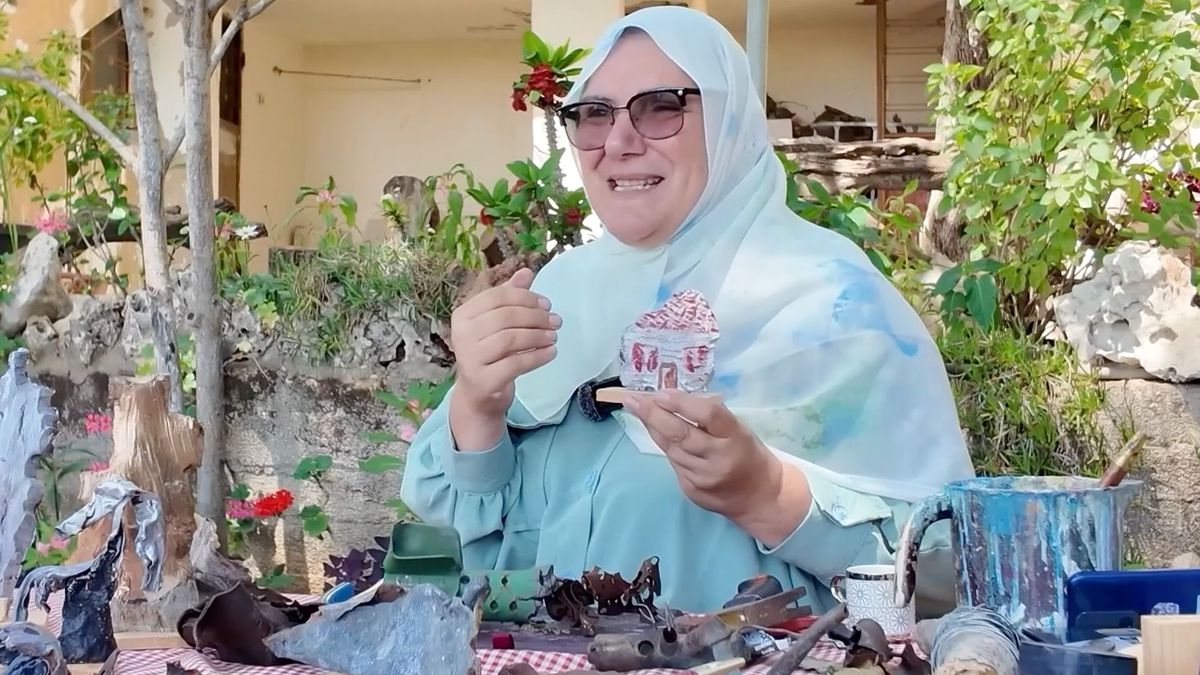
In the weeks following a series of Israeli missile strikes on southern Lebanon, visual artist Lina Jouni began collecting fragments of unexploded ordnance and shrapnel. She welds, molds, and displays the metal as sculptures and installations, describing the pieces as “symbols of life and dignity” that confront the trauma of war.
The Israeli‑Lebanese border has been a flashpoint since the 2006 war, with Israel maintaining a policy of punitive strikes aimed at Hezbollah’s infrastructure and, increasingly, civilian‑adjacent targets. The strikes serve multiple strategic purposes: they pressure Hezbollah’s logistics, signal Israeli deterrence to regional rivals, and reinforce domestic narratives of security.
For Israel, the military calculus is tied to political survival; successive governments have leveraged external threats to consolidate support at home. The United States, a key supplier of Israeli weaponry, benefits from the perpetuation of a security dilemma that justifies continued arms sales and aid packages.
Lebanon, meanwhile, grapples with a fragile state apparatus, a weakened economy, and a sectarian political system that often channels public anger into symbolic resistance rather than coordinated policy. Artists like Jouni operate in a space where civil society can voice dissent without directly confronting the armed factions that dominate the political arena. Their work becomes a low‑cost, high‑visibility conduit for critique, sidestepping the censorship that would silence overt political opposition.
The civilian population of the south—farmers, shop owners, schoolchildren—bears the brunt of the bombardments. Homes are reduced to rubble, agricultural fields lie fallow, and daily life is punctuated by sirens and evacuations. The economic fallout extends beyond immediate damage: disrupted supply chains depress local markets, while reconstruction funds are often siphoned through patronage networks linked to political elites.
Health impacts are equally stark. Exposure to metal fragments and unexploded ordnance leads to injuries, while the constant stress contributes to mental‑health crises that remain under‑reported. Women, who traditionally manage household resilience, shoulder the added burden of caring for injured relatives and navigating aid systems that are fragmented and politicized.
Jouni’s art, displayed in community centers and shared online, gives a visual voice to these invisible sufferers. By turning debris into objects of contemplation, she forces observers—both local and international—to confront the material reality of a conflict that is often reduced to abstract headlines.
Official statements from Israeli officials frame the strikes as “targeted operations against terrorist infrastructure,” deliberately omitting the civilian collateral. Media coverage, especially in Western outlets, frequently mirrors this language, emphasizing Hezbollah’s role while downplaying the proportionality of force.
Conversely, Lebanese authorities, constrained by sectarian balances and the influence of armed groups, rarely acknowledge the strategic intent behind the attacks, instead labeling them as “unprovoked aggression.” This rhetorical gap allows both sides to avoid accountability for civilian harm.
Corporate interests also stay in the shadows. Defense contractors profit from the sustained demand for precision‑guided munitions, while reconstruction firms—often linked to political patronage—benefit from the cyclical destruction‑rebuild pattern. Neither the procurement pipelines nor the post‑conflict contracts receive public scrutiny, keeping a substantial flow of public money out of democratic oversight.
The trajectory of this low‑intensity conflict hinges on three observable trends. First, the visual documentation of war‑damage—through art, citizen journalism, and satellite imagery—could pressure international bodies to demand clearer rules of engagement. Second, the economic strain on Lebanon’s already fragile infrastructure may catalyze broader civil unrest, potentially reshaping the balance of power between the state and non‑state actors. Finally, the regional arms market remains a feedback loop: as Israel upgrades its arsenal, neighboring states may seek counter‑capabilities, risking an escalation that pushes the border beyond its current tactical scope.
Monitoring how artists like Jouni leverage global platforms, how aid agencies respond to civilian needs, and how diplomatic channels address proportionality will be essential for understanding whether the conflict remains a series of isolated strikes or evolves into a more entrenched confrontation.
Source referenced: ALJAZEERA
This brief was synthesized by our Editorial Engine and reviewed by The Ground Narrative team.