TRENDING

Saturday, 19 September 2026
----------------------
8 Rabi' Al-Thani 1448 AH
Russia warns that Japan's new missile deployments near its Far Eastern border threaten national security, reviving old disputes over the Kuril Islands. The standoff pits Tokyo's security shift against Moscow's push to keep diplomatic and economic levers in hand.
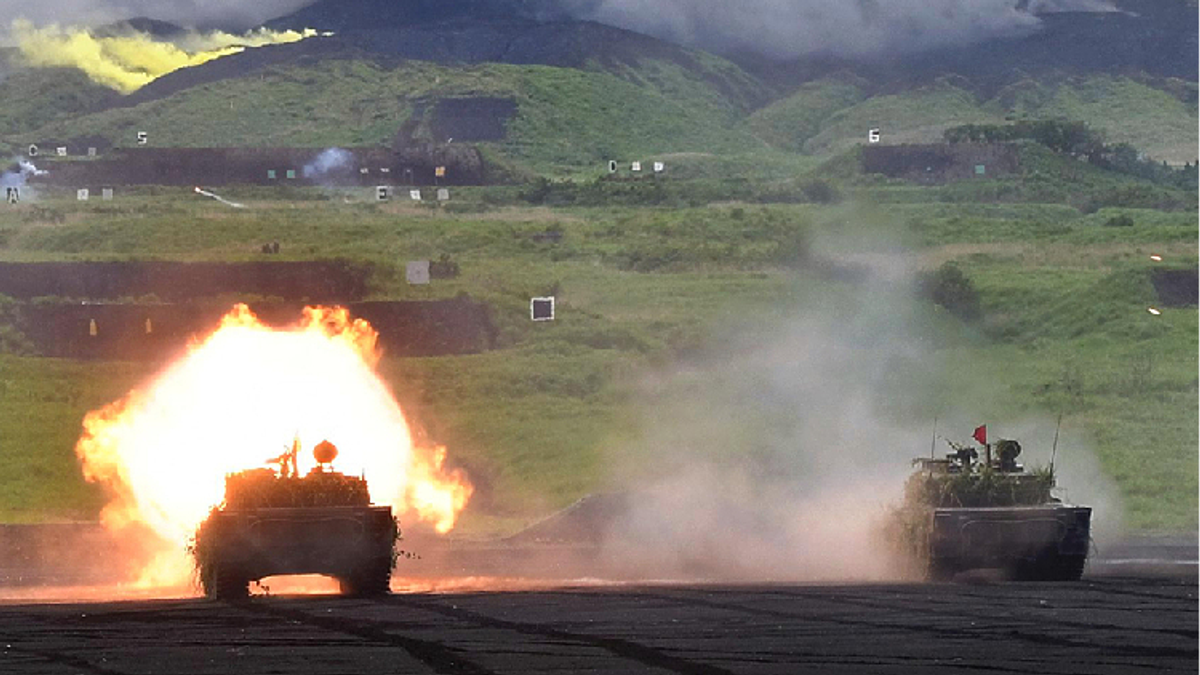
Russia’s foreign ministry declared on September 17 that Japan’s recent remilitarization – highlighted by the deployment of medium‑range missile systems in Shizuoka and live‑fire drills near the Russian Far East – constitutes a direct threat to Russian national security. Deputy Foreign Minister Andrey Rudenko warned of “necessary compensatory measures” if the activities continue, while spokeswoman Maria Zakharova urged Japan to prioritize diplomacy over visa‑free travel talks for the Southern Kuril Islands. The statement follows Tokyo’s alignment with U.S. and Western allies, its expanded aid to Kyiv, and Moscow’s suspension of bilateral peace‑treaty talks after Japan joined sanctions in 2022.
Strategic incentives drive both capitals. Japan, constrained by a pacifist constitution, has gradually broadened its Self‑Defense Forces to counter perceived threats from China’s maritime buildup and a more assertive Russia in the north. Deploying medium‑range missiles close to the Russian border serves two purposes: it signals to Washington that Tokyo can shoulder a greater share of regional deterrence, and it reassures domestic constituencies demanding a stronger defense posture after years of North Korean missile tests.
Russian calculations are equally layered. Moscow faces a two‑front pressure: a revitalized U.S.–Japan security umbrella and a deteriorating economic relationship with the West. By framing Japan’s missile moves as a “national security threat,” Russia seeks to legitimize a potential arms buildup in its own Far Eastern districts, preserve leverage in the long‑stalled Kuril Islands dispute, and rally nationalist sentiment ahead of any domestic political challenges. The reference to “compensatory measures” hints at possible reciprocal deployments or heightened air‑patrol activity, a classic tit‑for‑tat move that keeps the strategic balance ambiguous.
Alliance math also matters. The United States benefits from Japan’s expanded capabilities without committing additional troops, while China watches the development closely, ready to exploit any friction between Moscow and Tokyo to its own advantage. For Russia, maintaining a credible deterrent on its eastern flank helps offset the strategic vacuum left by its reduced presence in the Pacific after sanctions curtailed naval operations.
The rhetoric masks real human stakes. In Shizuoka’s East Fuji training area, local farmers and small‑business owners live under the shadow of live‑fire exercises, facing noise, restricted land use, and the specter of becoming collateral in a larger power play. Across the Sea of Japan, residents of Russia’s Primorsky Krai worry about the prospect of missile sites and increased military traffic disrupting fishing zones that sustain their livelihoods. The suspension of visa‑free visits to the Southern Kurils has already dented tourism revenue for both Japanese and Russian coastal towns, tightening economic pressure on communities that rely on cross‑border exchange. Moreover, the heightened alert status raises the risk of accidental incidents that could draw ordinary soldiers and civilians into a conflict none of them voted for.
Both governments are downplaying internal drivers. In Moscow, the threat narrative dovetails with President Putin’s broader effort to consolidate support by portraying the West as an existential adversary, a stance that justifies increased defense spending despite a stagnant economy. Tokyo, meanwhile, is navigating a delicate domestic debate over constitutional reinterpretation; the missile deployment is presented as a defensive necessity, yet it sidesteps public scrutiny of the long‑term costs of abandoning the post‑World‑II pacifist ethos. Western statements, especially from the United States, often omit the fact that the missile systems are being integrated into a broader network that includes U.S. early‑warning radars, effectively extending American reach into the Russian sphere without overtly acknowledging it. Finally, the Kuril Islands dispute is framed as a bilateral issue, but Beijing’s quiet support for Russia in the background adds a third layer that is rarely highlighted in official briefings.
Watch for the next round of joint U.S.–Japan drills scheduled for late 2026, which could trigger a reciprocal Russian exercise in the Far East or the deployment of comparable missile assets in the Sakhalin region. Diplomatic channels on the Southern Kurils may reopen if either side seeks economic relief, but any progress will be contingent on broader sanctions negotiations involving the EU and the United States. Domestic political cycles in Japan – with a general election slated for early 2027 – could either accelerate the remilitarization agenda or force a pause if public opposition to constitutional changes gains traction. Finally, monitor Chinese statements on the matter; a shift in Beijing’s stance could either embolden Russia to take a harder line or push Moscow toward a diplomatic compromise to avoid a three‑way confrontation.
Editor's Note: Analysis based on publicly available statements and known strategic patterns; exact Russian military responses remain uncertain.
Source referenced: CGTN
This brief was synthesized by our Editorial Engine and reviewed by The Ground Narrative team.


