TRENDING

Monday, 14 September 2026
----------------------
3 Rabi' Al-Thani 1448 AH
Hamas has agreed to disarm under a US-backed ceasefire deal, but the road to peace in Gaza remains fraught with challenges. As Israel and Hamas navigate the terms of the agreement, the people of Gaza are left to wonder if this deal will bring them the security and stability they so desperately need. The deal marks a significant shift in the region's power dynamics, with the US, Israel, and Hamas all jockeying for position.
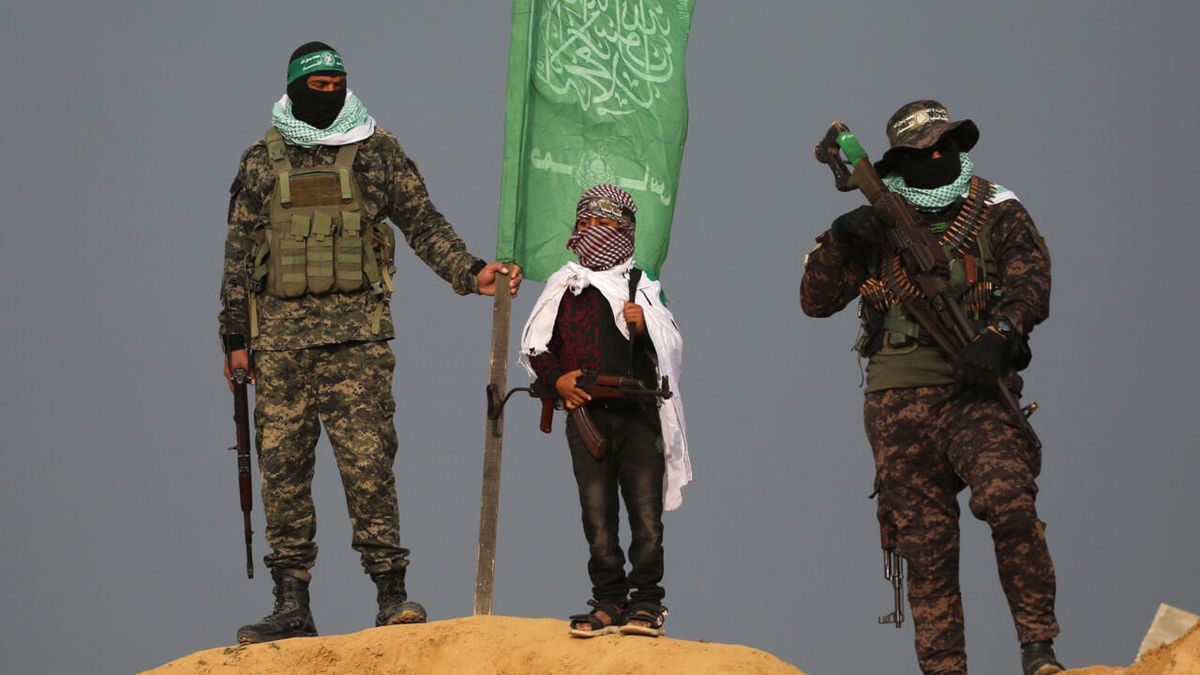
Hamas, the Palestinian Islamist group, has agreed to a ceasefire deal that includes handing over its weapons to a Palestinian governing committee and the gradual withdrawal of Israeli forces from the Gaza Strip. The deal, brokered by US President Donald Trump, aims to implement the long-stalled second phase of the Gaza ceasefire plan. While Israel has yet to officially comment on the announcement, a political source told AFP that there will be no withdrawal whatsoever from Israeli forces' current lines unless Hamas undergoes a genuine disarmament.
The deal is a significant development in the region's power dynamics, with the US, Israel, and Hamas all jockeying for position. The US has been keen to secure a ceasefire deal in Gaza, seeing it as a key component of its broader Middle East strategy. Israel, on the other hand, has long insisted on Hamas's full disarmament before its forces pull back. Hamas, meanwhile, has agreed to make concessions in the hopes of securing a better future for the people of Gaza. The deal also highlights the role of other regional players, including Egypt, Qatar, and Turkey, which have all been involved in mediating the ceasefire.
The people of Gaza have borne the brunt of the conflict, with thousands killed and injured in recent years. The deal offers a glimmer of hope for a more peaceful future, but it is unclear whether it will be enough to address the deep-seated issues that have driven the conflict. The deal's focus on disarmament and security may do little to address the economic and humanitarian challenges facing Gaza, where poverty and unemployment are rampant. As Ghazi Hamad, a member of Hamas's negotiating team, noted, the movement is making concessions for the sake of its people in the Gaza Strip.
One of the key aspects of the deal that has been downplayed is the role of the US in brokering the agreement. While Trump has hailed the deal as a major milestone, it is unclear what concessions the US has made to secure Hamas's agreement. Additionally, the deal's focus on disarmament and security may obscure the deeper issues driving the conflict, including the Israeli-Palestinian dispute over territory and the right of return. The deal may also have significant implications for the broader region, including the role of other regional players and the potential for further conflict.
As the deal moves forward, there are several key developments to watch. The first is whether Israel will follow through on its commitment to withdraw its forces from Gaza, and whether Hamas will be able to maintain control over its militant factions. The second is how the international community will respond to the deal, including the role of the US, EU, and other regional players. Finally, it will be important to monitor the humanitarian situation in Gaza, where the deal's success will ultimately be judged on its ability to improve the lives of the people living there.
Editor's Note: The success of the deal is uncertain and will depend on the ability of all parties to follow through on their commitments.
Source referenced: FRANCE24
This brief was synthesized by our Editorial Engine and reviewed by The Ground Narrative team.


