TRENDING

Monday, 19 October 2026
----------------------
8 Jumada Al-Awwal 1448 AH
China's Premier Li Qiang has called for global cooperation in traditional medicine, framing it as a path to health equity and a model for global governance. This initiative extends far beyond healthcare, serving as a key pillar of China's expanding global influence.
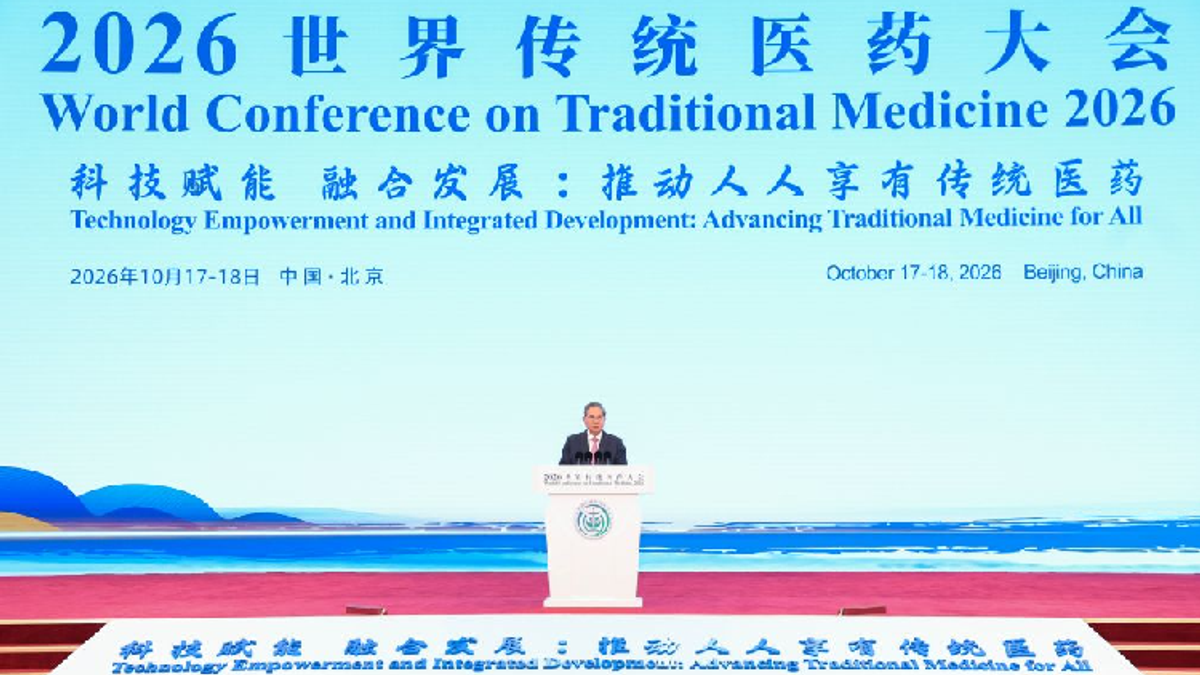
Chinese Premier Li Qiang recently addressed the World Conference on Traditional Medicine 2026 in Beijing, urging the international community to deepen cooperation in medicine and make greater use of traditional healing resources. Speaking to an audience of approximately 1,200 participants, Li framed Traditional Chinese Medicine (TCM) as a unique force for human health and civilizational advancement. He emphasized the need to integrate science and technology for innovative development, promote digital transformation of TCM, and expand global exchanges, explicitly linking these efforts to the Belt and Road medicinal resources conservation center and a broader vision of global health equity.
This call for global cooperation in traditional medicine is not merely a health initiative; it is a sophisticated maneuver in China's long-term strategy to project soft power, reshape global governance narratives, and expand its economic influence. The emphasis on traditional medicine, particularly TCM, serves multiple strategic objectives.
First, it is a powerful tool for soft power projection. By offering health solutions, especially to nations in the Global South, China positions itself as a benevolent partner, distinct from what it often portrays as the transactional or interventionist approaches of Western powers. Health diplomacy builds goodwill and creates a non-confrontational avenue for influence, often preceding deeper economic or political ties. This strategy allows China to gain a foothold in healthcare systems globally, fostering dependency and alignment without direct military or overt political pressure.
Second, it represents a deliberate effort to challenge Western-centric norms in science and health. For decades, Western biomedicine has dominated global health discourse, research, and practice. By promoting TCM as a valid, unique, and globally applicable system, China subtly seeks to democratize or even de-Westernize global health standards. Premier Li's analogy of TCM's holistic approach to economic governance – emphasizing harmony over
Source referenced: CGTN
This brief was synthesized by our Editorial Engine and reviewed by The Ground Narrative team.