TRENDING

Thursday, 17 September 2026
----------------------
6 Rabi' Al-Thani 1448 AH
President Milei's plan to open Argentina's rural land to foreign buyers sparks protests, with indigenous communities warning of threats to ancestral territories. The government argues for investment, but critics fear a deepening of economic inequality and environmental degradation.
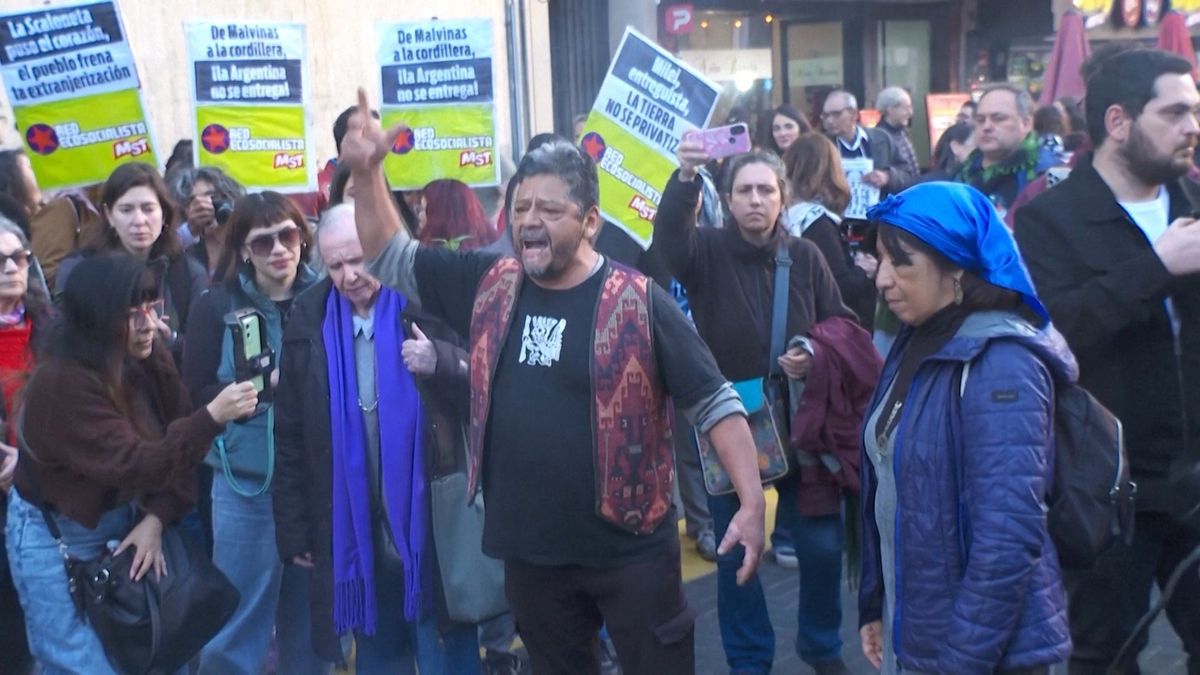
President Javier Milei's government in Argentina has introduced a bill aimed at eliminating existing limits on foreign ownership of the country's rural land. This legislative push has triggered significant public opposition, with hundreds protesting in Buenos Aires, led primarily by indigenous groups who assert the bill directly threatens their ancestral territories and way of life. The government frames the move as essential for attracting foreign investment and strengthening property rights, while opponents warn of widespread dispossession.
The proposed legislation is a direct manifestation of President Milei's ultra-liberal economic agenda, which prioritizes deregulation, privatization, and an aggressive opening of the economy to global capital. For Milei, removing foreign ownership limits on land is a critical step towards attracting much-needed foreign direct investment (FDI) to stabilize Argentina's perpetually struggling economy, reduce its massive debt, and stimulate growth. The logic is that unrestricted access to land will make Argentina more attractive to large-scale agricultural corporations, mining interests, and real estate developers seeking vast, resource-rich territories. This aligns with a broader global trend where developing nations, often under pressure from international financial institutions or internal economic crises, loosen regulations to court foreign capital, frequently at the expense of local communities and environmental protections. The power dynamic is clear: a government wielding legislative authority to reshape national assets, driven by an economic ideology that values market efficiency above all, confronting marginalized communities whose power lies in collective action and moral claims to land.
The human cost of this policy falls disproportionately on Argentina's indigenous communities. For these groups, land is not merely a commodity; it is the foundation of their cultural identity, spiritual beliefs, and subsistence economy. Ancestral territories are repositories of history, traditional knowledge, and ecological wisdom. The removal of ownership limits exposes these communities to the direct threat of displacement, loss of access to water sources, traditional hunting and farming grounds, and sacred sites. While the government speaks of "strengthening property rights," these rights often apply to formal, state-recognized titles, which indigenous communities frequently lack, leaving them vulnerable to powerful foreign entities with deep pockets and legal teams. The protests in Buenos Aires are a desperate attempt by these communities to assert their inherent rights against a policy designed without their consent or meaningful consultation, highlighting how economic decisions made in distant capitals translate into existential threats for those on the ground.
What the Milei government downplays, or entirely omits, is the long-term societal and environmental impact beyond immediate investment figures. While foreign investment can bring capital, it often comes with a model of resource extraction and industrial agriculture that can lead to significant environmental degradation, including deforestation, soil depletion, and water contamination. Furthermore, the narrative of "strengthening property rights" often serves to legitimize the enclosure of common lands and the formalization of ownership in ways that dispossess those with customary but undocumented claims. There's also the unaddressed historical context: Argentina, like many Latin American nations, has a history of land concentration and the marginalization of indigenous populations, a legacy that this bill risks exacerbating. The government's focus on short-term economic gains sidesteps the deeper questions of national sovereignty over resources, equitable land distribution, and the irreversible loss of biodiversity and cultural heritage that can accompany unchecked foreign land acquisition.
The immediate focus will be on the legislative process itself: whether the Milei government can secure enough votes to pass the bill and how much resistance it faces in Congress. Beyond that, watch for the scale and intensity of indigenous and environmental protests; sustained public pressure could force amendments or even derail the legislation. Crucially, observe the types of foreign investors who show interest if the bill passes and the specific regions they target. This will indicate whether the investment truly diversifies Argentina's economy or merely intensifies existing extractive industries. Finally, monitor the legal challenges and international advocacy efforts by indigenous groups, as they seek to leverage human rights frameworks to protect their territories against a government intent on rapid economic liberalization. The outcome will set a precedent for how Argentina balances its economic imperatives with the rights and heritage of its most vulnerable populations.
Source referenced: ALJAZEERA
This brief was synthesized by our Editorial Engine and reviewed by The Ground Narrative team.


