TRENDING

Tuesday, 15 September 2026
----------------------
4 Rabi' Al-Thani 1448 AH
Andy Burnham has become the UK's seventh Prime Minister in a decade, pledging to end political instability and implement a 'new political and economic model.' His ascension comes as the nation grapples with economic challenges and the rising influence of populist forces, while he simultaneously reaffirms key foreign policy commitments.
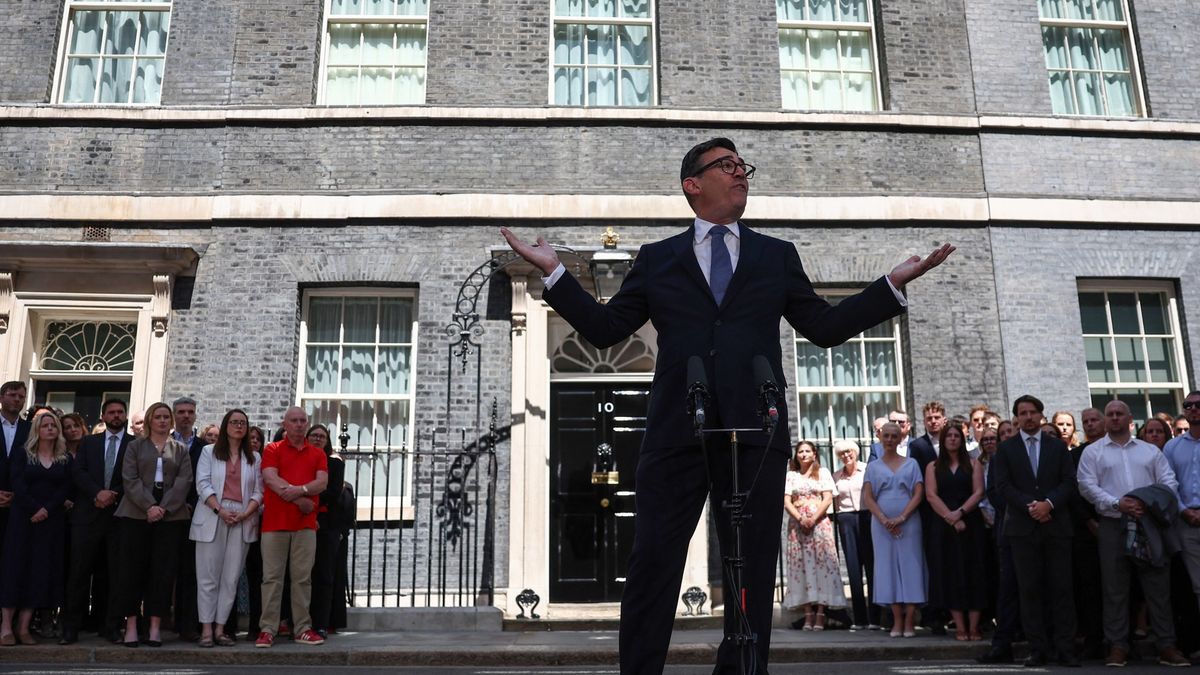
Andy Burnham formally assumed the office of Prime Minister of the United Kingdom on July 20, 2026, marking a significant juncture in British politics. His appointment, confirmed after meeting King Charles III at Buckingham Palace, positions him as the seventh premier in a tumultuous decade, underscoring a period of profound political instability that has challenged the nation's governance and international standing. Burnham's central pledge upon entering 10 Downing Street was to act as a "circuit-breaker for Britain," promising to instigate major change and usher in a "new political model and a new economic model" to address the country's deep-seated issues.
This leadership transition follows the ousting of his predecessor, Keir Starmer, just two years after a landslide election victory for the Labour Party. Starmer's departure, attributed to the ongoing gains by populist forces, highlights the volatile and unpredictable nature of the contemporary British political landscape. Burnham, often dubbed the "King of the North" for his tenure as Mayor of Greater Manchester and his advocacy for working-class issues, now faces the formidable task of consolidating power, stabilizing the domestic front, and projecting a coherent foreign policy amidst a complex global environment.
Burnham's immediate focus is squarely on domestic policy, particularly tackling the persistent cost of living crisis. He has promised to announce measures this week to provide "some breathing space" for Britons, while carefully noting that these interventions would not involve "taking risks with the economy." This indicates a delicate balancing act between addressing social welfare concerns and maintaining fiscal prudence, a challenge that will define his economic agenda. Furthermore, his commitment to issuing an immediate instruction to "end rough sleeping in our country," followed by a 10-year plan later in 2026, signals a renewed emphasis on social policy and regional development, potentially aiming to bridge the socio-economic divides that have fueled political discontent.
The political context of Burnham's rise is critical. The rapid decline in support for the governing Labour Party, just two years after a significant electoral victory, and the ascendance of Nigel Farage's populist, anti-immigration Reform UK party in opinion polls, underscore the fragility of mainstream politics. The next national vote, due in 2029, looms large, and Burnham's leadership is seen as Labour's strategic response to rein in the populist surge. His ability to connect with a broad electorate, particularly those disaffected by traditional politics, will be crucial in determining the long-term trajectory of British politics. The swift departure of key figures from Starmer's government, including Finance Minister Rachel Reeves and Deputy Prime Minister David Lammy, alongside the sacking of Business Minister Peter Kyle, signals a significant cabinet reshuffle and a clear intent by Burnham to establish his own policy direction and consolidate authority.
Despite the pressing domestic agenda, Burnham has moved swiftly to reaffirm the UK's foreign policy commitments. In a significant early diplomatic move, he indicated that Ukrainian President Volodymyr Zelenskyy would be one of the first foreign leaders he would speak with, assuring him of "resolute" British support. This commitment to Ukraine, mirroring Starmer's stance, underscores the UK's continued alignment with Western allies in confronting Russian aggression and maintaining regional stability in Eastern Europe. Such continuity is vital for reinforcing the UK's credibility within NATO and other international security frameworks.
Burnham also confirmed an early call with United States President Donald Trump, a move that highlights the enduring importance of the "special relationship" between the two nations. Establishing rapport with the US administration is crucial for navigating complex global challenges, from trade relations to security cooperation. Concurrently, Chinese Premier Li Qiang extended congratulations to Burnham, expressing hope for cooperation. This overture from Beijing signals China's interest in maintaining and potentially expanding economic and diplomatic ties with the new British government, presenting both opportunities for collaboration and potential points of geopolitical friction, particularly concerning human rights and strategic influence.
The UK's internal political instability, characterized by a rapid succession of leaders, carries significant geopolitical implications. A nation with a revolving door of prime ministers can struggle to project a consistent foreign policy, potentially eroding international confidence and weakening its diplomatic leverage on the global stage. Burnham's pledge to restore stability is therefore not merely a domestic promise but a critical component of reasserting the UK's role as a reliable and influential international actor.
His premiership will be closely watched by allies and adversaries alike. The ability of the UK to maintain its commitments to international alliances, particularly NATO, and to contribute effectively to global governance will depend heavily on the perceived stability and coherence of his government. The success of his "new economic model" will also be scrutinized by international markets and investors, impacting the UK's economic standing and its capacity to fund its global ambitions. Ultimately, Andy Burnham's tenure begins at a critical juncture, where the interplay of domestic political renewal and strategic foreign policy will determine the UK's trajectory in an increasingly complex and multipolar world.
Source referenced: ALJAZEERA
This brief was synthesized by our Editorial Engine and reviewed by The Ground Narrative team.


