TRENDING

Saturday, 19 September 2026
----------------------
8 Rabi' Al-Thani 1448 AH
Ukraine has once again used long-range drones to strike a warehouse belonging to Russia's largest e-commerce giant, Wildberries, alleging its use for military drone components. This analysis unpacks the strategic calculus behind targeting civilian infrastructure and its human cost.
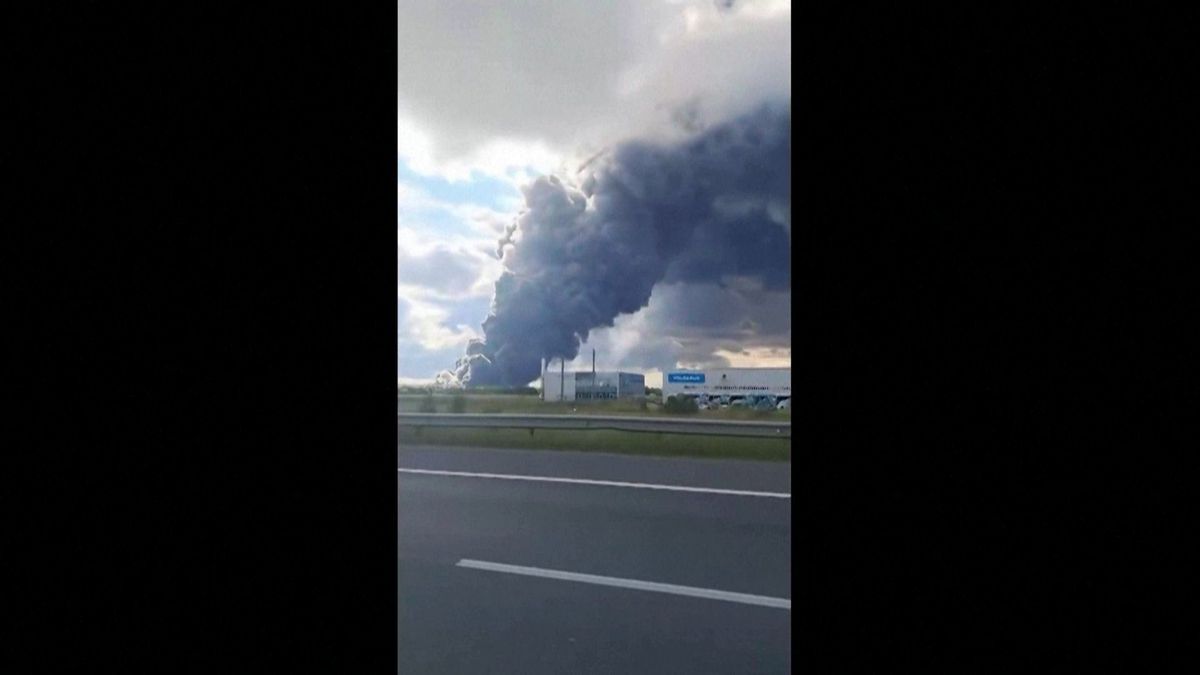
Ukraine has executed another long-range drone attack, this time hitting a warehouse operated by Wildberries, Russia's dominant e-commerce retailer. Kyiv asserts that the facility was being utilized to store components critical for Russia's military drone production. This incident marks a continuation of Ukraine's strategy to disrupt Russian logistical and industrial capabilities deep within its territory.
This strike illuminates the evolving mechanics of power in modern conflict, particularly in asymmetric warfare. For Ukraine, unable to match Russia's conventional military might, long-range drone attacks serve multiple purposes: they aim to degrade Russia's capacity to wage war by targeting its supply chains and industrial base, and they exert psychological pressure on the Russian populace by bringing the conflict closer to home. The targeting of a civilian e-commerce giant like Wildberries highlights the deep integration of Russia's civilian economy into its war effort. When a company's vast logistical network, designed for consumer goods, is allegedly repurposed for military components, its infrastructure becomes a legitimate target under the laws of armed conflict, a point Ukraine is keen to emphasize. This forces private entities to navigate a perilous landscape where commercial operations can inadvertently (or deliberately) become extensions of military logistics, making them vulnerable.
The immediate human cost of such strikes falls on the employees of Wildberries and the consumers who rely on its services. Warehouse workers face job insecurity, potential physical danger, and the broader disruption of their livelihoods. Beyond the direct impact, the psychological toll on Russian citizens is significant; the war, once a distant concern for many, now manifests as strikes on familiar civilian infrastructure, fostering a sense of vulnerability and uncertainty. While these strikes are framed by Ukraine as necessary to reduce the overall human cost of the war by degrading Russia's ability to prosecute it, the immediate consequence for ordinary Russians is a direct experience of the conflict's reach, impacting their daily lives and economic stability. The people who simply work in logistics or rely on online shopping are now caught in the crossfire of a conflict they did not choose.
What official statements often downplay or omit is the extent to which Russia's civilian economy has been co-opted or adapted to support its military objectives. This isn't merely about traditional defense contractors; it's about the dual-use nature of vast sectors, from electronics to logistics and transportation, all feeding into the war machine. Governments on both sides will frame these events through their own narratives: Russia will likely condemn the attack as terrorism against civilian infrastructure, ignoring the alleged military utility of the target. Ukraine will emphasize the necessity of targeting military-linked assets, even if they appear civilian. The deeper truth lies in the gray area where commercial enterprise and military necessity converge, creating a complex web of dependencies and vulnerabilities that are rarely acknowledged transparently. The sheer scale of Russia's reliance on readily available commercial components for its drone program, and the logistical infrastructure to move them, reveals a critical vulnerability that Ukraine is actively exploiting.
Readers should watch for several key developments. Firstly, how will Russia respond to these continued strikes on its economic infrastructure? Will it bolster air defenses around critical logistics hubs, or will it retaliate with intensified strikes on Ukrainian civilian targets? Secondly, observe the operational adjustments made by large Russian companies like Wildberries; will they attempt to distance themselves from any perceived military ties, or will the state further integrate them into the war economy? Finally, the international community's reaction, particularly from countries attempting to maintain neutrality, will be telling. These strikes push the boundaries of what constitutes a legitimate military target, and the global interpretation of these actions will shape future norms of conflict. The ongoing blurring of civilian and military supply chains will likely continue to be a defining characteristic of this conflict, with ordinary people bearing the brunt of the strategic choices made by powerful actors.
Source referenced: ALJAZEERA
This brief was synthesized by our Editorial Engine and reviewed by The Ground Narrative team.


