TRENDING
Saturday, 1 August 2026
----------------------
18 Safar 1448 AH
As the US midterm elections approach, President Donald Trump is attempting to change the narrative surrounding the Iran war. But what are the underlying power mechanics driving this shift, and who will bear the human cost? The Ground Narrative analyzes the strategic context and the potential consequences of Trump's maneuvering.
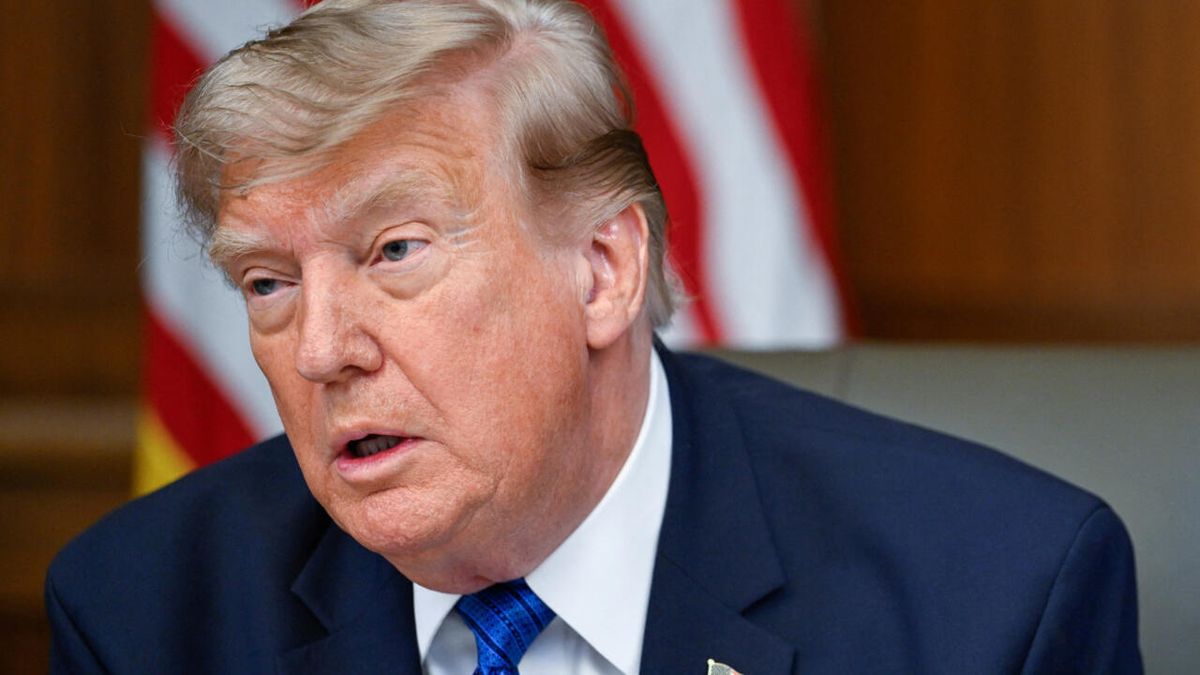
US President Donald Trump recently held a cabinet meeting at the Camp David retreat, addressing various topics, including the Iran war and the upcoming midterm elections. Trump's attempt to shift the narrative on Iran comes at a critical juncture, with the elections looming and the US-Iran conflict still simmering.
Trump's move to change the narrative on Iran is likely driven by his desire to divert attention from the conflict and focus on more favorable issues for his party ahead of the midterm elections. The US-Iran war has been a contentious issue, with many Americans expressing concerns about the escalating tensions and potential consequences. By shifting the narrative, Trump aims to regain control of the conversation and bolster his party's chances in the elections. However, this maneuver also reveals the underlying power dynamics at play, with Trump seeking to maintain his political influence and secure his party's position.
The people who will bear the human cost of Trump's narrative shift are those directly affected by the US-Iran conflict, including Iranian civilians, US military personnel, and their families. The conflict has already resulted in significant human suffering, with many lives lost and displaced. Furthermore, the ongoing tensions have created a climate of uncertainty and fear, affecting not only the people in the region but also global markets and economies. As Trump attempts to change the narrative, it is essential to remember the human cost of the conflict and the potential consequences of his actions.
What Trump and other powerful actors are downplaying is the complexity and depth of the US-Iran conflict. The issue is often reduced to simplistic narratives, obscuring the historical context, geopolitical intricacies, and human dimensions of the conflict. The US-Iran war is not just about Trump's political maneuvering or Iran's nuclear program; it is about the lives of people caught in the crossfire, the regional power dynamics, and the global implications of the conflict. By glossing over these aspects, Trump and other powerful actors are omitting the nuanced reality of the situation, which is essential for a comprehensive understanding of the issue.
As the midterm elections approach, readers should watch for Trump's continued attempts to shift the narrative on Iran and how this will impact the conflict and the people affected by it. It is crucial to monitor the responses of other global actors, including Iran, Europe, and China, as they navigate the evolving situation. Additionally, the human cost of the conflict should remain a primary concern, with attention focused on the civilians, military personnel, and families affected by the war. The next few weeks will be critical in determining the trajectory of the US-Iran conflict and the potential consequences of Trump's narrative shift.
Editor's Note: The analysis is based on publicly available information and may not reflect the full complexity of the situation.
Source referenced: FRANCE24
This brief was synthesized by our Editorial Engine and reviewed by The Ground Narrative team.


