TRENDING

Saturday, 19 September 2026
----------------------
8 Rabi' Al-Thani 1448 AH
A recent poll reveals that most Americans believe President Trump has gone too far on US immigration, while his Republican base remains largely supportive. This divide highlights the complex power dynamics at play in the ongoing debate over immigration policy. As the midterm elections approach, the issue is likely to remain a contentious point of discussion.
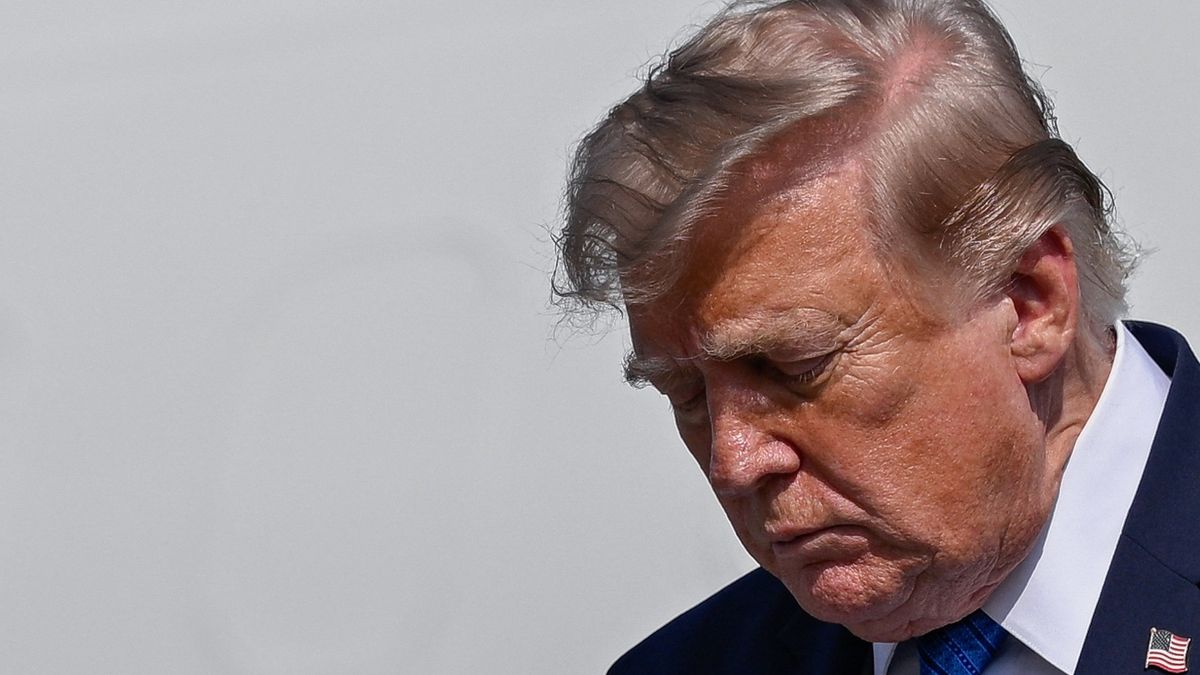
A new Associated Press-NORC Center for Public Affairs Research poll has found that only 39 percent of US adults approve of President Trump's performance on immigration, down from 49 percent at the beginning of his second term. Despite this decline, about 8 in 10 members of Trump's Republican Party continue to approve of how he is handling immigration.
The poll's findings underscore the significant divide between Trump's base and the broader American public on immigration. While Republicans are more likely to approve of Trump's handling of immigration than the economy or Iran, the majority of US adults believe he has overstepped on issues such as restricting legal immigration and deporting immigrants living in the US illegally. This disparity highlights the complex interplay between Trump's political survival, the Republican Party's stance on immigration, and the economic trade-offs involved in enforcing stricter immigration policies.
The people most affected by Trump's immigration policies are often those living in the shadows, without a voice in the national conversation. The use of traffic stops to find and arrest immigrants living in the US illegally, as well as the deployment of federal immigration agents into US cities, has sparked widespread concern and criticism. These actions have led to increased fear and anxiety among immigrant communities, with many living in constant fear of deportation and separation from their families.
What is often downplayed in the discussion around Trump's immigration policies is the significant human cost involved. The recent US Immigration and Customs Enforcement (ICE) shootings in Maine, which were linked to the practice of using traffic stops to find and arrest immigrants, highlight the dangers and complexities of enforcing these policies. Furthermore, the long-term effects of stricter immigration policies on the US economy and society as a whole are often overlooked in favor of short-term political gains.
As the midterm elections approach, the issue of immigration is likely to remain a contentious point of discussion. Readers should watch for how Trump's administration responds to the growing criticism of its immigration policies, particularly from within its own base. The shift in Republican approval of Trump's handling of healthcare, which has seen a rebound in support, may also be an indicator of the party's strategy heading into the elections. Ultimately, the outcome of the midterm elections will have significant implications for the future of US immigration policy and the lives of those affected by it.
Editor's Note: The analysis is based on a recent poll and may be subject to change as new information becomes available.
Source referenced: ALJAZEERA
This brief was synthesized by our Editorial Engine and reviewed by The Ground Narrative team.


