TRENDING

Thursday, 17 September 2026
----------------------
6 Rabi' Al-Thani 1448 AH
President Trump abruptly cancelled a planned military strike on Iran, citing a mysterious 'deal.' This analysis unpacks the hidden power plays and the real human costs of brinkmanship in the Middle East.
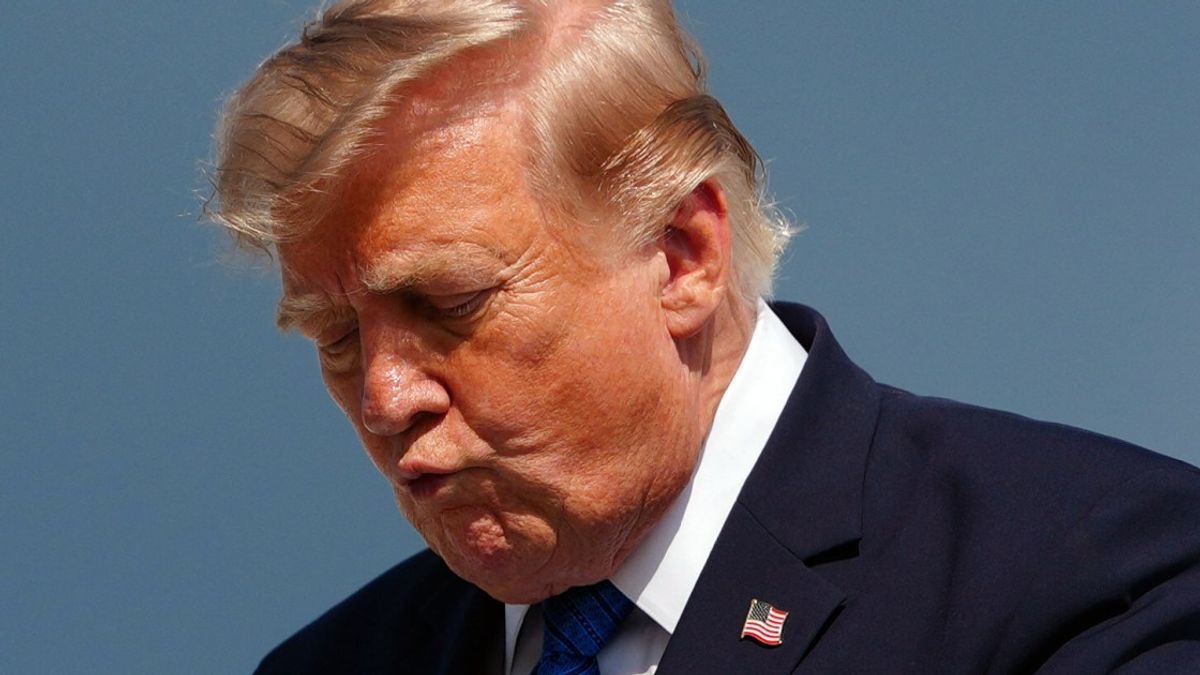
US President Donald Trump announced the sudden cancellation of a large-scale military attack on Iran, just a day after reports indicated Washington and Israel were preparing to strike Iran’s energy infrastructure. Trump claimed the decision came after "perimeters of a deal" were agreed upon following requests from Iran and other Middle Eastern countries, contingent on a quick conclusion to secure the "Immediate, Complete, and Total OPENING OF THE HORMUZ STRAIT" and end Iran's nuclear threat. This abrupt de-escalation followed heightened tensions, with the US issuing security alerts for its citizens across the region and Iran warning of a "proportionate response" to any attack.
This sudden pivot from military threat to claimed diplomatic breakthrough reveals the raw, transactional nature of regional power. At its core, this was a high-stakes game of brinkmanship, with multiple actors leveraging different forms of power. For the United States, the threat of military force served as a potent, if blunt, instrument to compel concessions, particularly regarding the Strait of Hormuz, a critical global oil choke point. President Trump's use of social media for major policy announcements underscores a personalized, unpredictable foreign policy, keeping adversaries and allies off-balance.
Iran, despite its public warnings of retaliation, appears to have engaged in back-channel communication, reportedly requesting the cessation of strikes. This indicates a strategic calculation: while projecting strength, Tehran understood the devastating potential of a direct military confrontation and sought to leverage its own position (the ability to disrupt shipping, its nuclear program) for a negotiated pause rather than an open conflict. The nuclear program, in this context, functions less as an immediate weapon and more as a powerful bargaining chip, a source of both concern and leverage.
Crucially, Saudi Arabia emerged as a key intermediary. Crown Prince Mohammed bin Salman's reported intervention, urging Trump to cancel strikes, highlights Riyadh's growing diplomatic muscle. Saudi Arabia's primary interest lies in regional stability that protects its vast oil infrastructure and economic ambitions. An uncontrolled escalation would destabilize the Gulf, risking oil prices, trade routes, and the Kingdom's security. This intervention showcases a pragmatic shift, prioritizing managed de-escalation and positioning Saudi Arabia as a critical, self-interested regional power broker.
While leaders exchanged threats and negotiated behind closed doors, the human cost of this brinkmanship was already being paid. For ordinary Iranians, the constant shadow of military conflict and crippling sanctions translates into daily anxiety and economic hardship. Strikes on energy infrastructure aren't just about oil; they threaten the economy's backbone, impacting jobs, food prices, and essential goods. The psychological toll of living under such uncertainty is immense, far removed from the strategic calculations made in distant capitals.
Across the Middle East, US security alerts for Americans served as a stark reminder of broader regional instability. This translates into disrupted lives, cancelled travel, and pervasive insecurity for expatriates and local populations. Businesses face uncertainty, investment shies away, and the prospect of further displacement looms large for communities already reeling from decades of conflict. The global economy also bears a cost: volatile oil prices driven by geopolitical tensions hit consumers worldwide, demonstrating ripple effects far beyond borders.
The most significant omission is the precise nature of these "perimeters of a deal." President Trump's vague announcement offers no details, no signatories, and no clear pathway to a formal agreement. This lack of transparency allows powerful actors to claim diplomatic victories without substantive accountability. Was a genuine breakthrough achieved, or a convenient off-ramp to avoid immediate, costly conflict? The ambiguity serves multiple purposes: Trump claims a win, Iran avoids direct military confrontation, and Saudi Arabia asserts influence without revealing mediation specifics.
Furthermore, the role of Israel in this sudden de-escalation remains largely unaddressed. Reports indicated Israel was preparing to strike alongside the US, yet they are conspicuously absent from Trump's narrative of "requests from Iran and other Middle East countries." This raises questions about Israel's full concurrence or if its security concerns regarding Iran's nuclear program are adequately addressed by this nebulous 'deal.' The silence suggests potential friction within the US-Israel alliance or a strategic decision to keep Israel's position out of the public eye during this sensitive moment.
Also unsaid is the sheer exhaustion of the brinkmanship cycle. While a strike was averted, the underlying issues — Iran's nuclear ambitions, regional proxy conflicts, and the stability of global energy routes — remain unresolved. Powerful actors benefit from the leverage created by this constant tension, but ordinary citizens pay the price for perpetual near-crisis, never knowing when the next escalation will come.
The immediate focus will be on the substance of the "deal." Will any concrete details emerge from Washington or Tehran? Will there be formal negotiations, or was this merely a temporary de-escalation? Any official acknowledgement or denial from Iran will be critical.
Next, observe the regional reactions. How will Israel privately and publicly respond to this development? Will Saudi Arabia continue its mediating role, or will its influence wane if the "deal" proves to be ephemeral? The stability of the Hormuz Strait will be a key indicator; any changes in shipping activity or security postures will signal whether a genuine understanding has been reached.
Finally, watch for the next flashpoint. History suggests that such sudden de-escalations often precede renewed tensions if the core grievances are not addressed. This "deal" may simply be a pause, a tactical retreat by all sides, rather than a fundamental shift in regional dynamics. The underlying power struggles and strategic ambitions of all players remain, ensuring that the Middle East will continue to be a region defined by its precarious balance.
Source referenced: ALJAZEERA
This brief was synthesized by our Editorial Engine and reviewed by The Ground Narrative team.


