TRENDING

Thursday, 17 September 2026
----------------------
6 Rabi' Al-Thani 1448 AH
The lines between civilian and military space assets are blurring, as everyday satellites can be repurposed for strategic advantage. This dual-use dilemma is quietly transforming Earth's orbit into a new arena for global power competition.
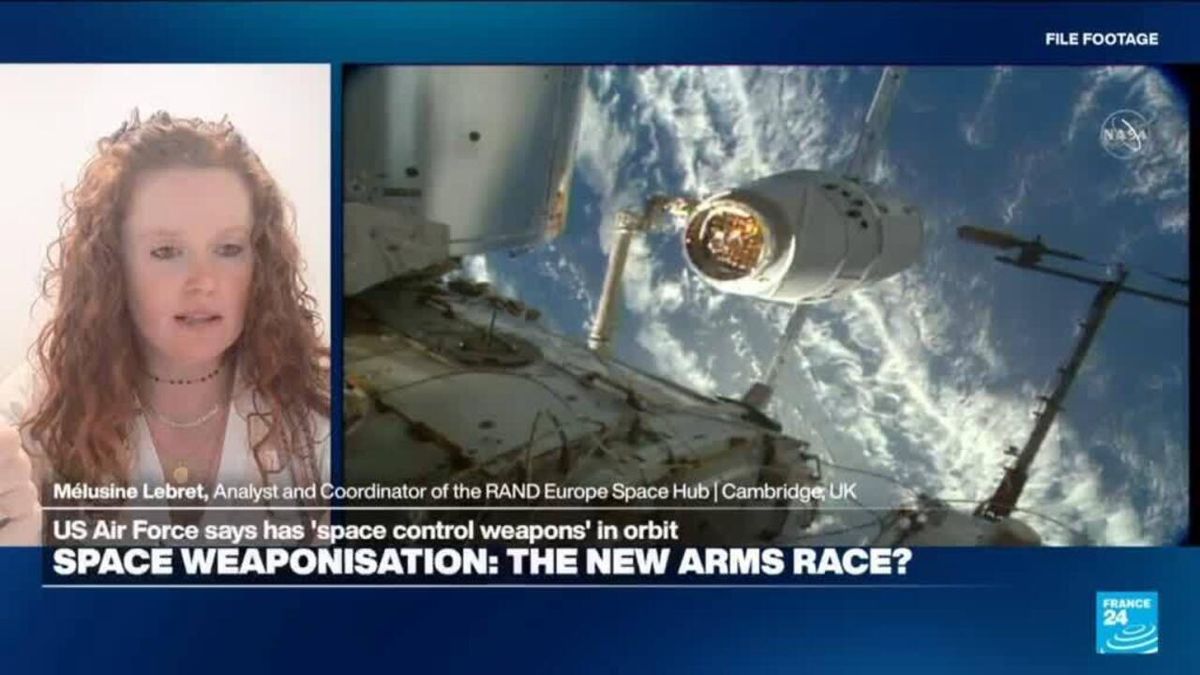
For decades, the idea of space as a realm for peaceful exploration and scientific advancement has been a global aspiration. However, a critical shift is underway: the increasing militarization of space, not through overt weapons, but by repurposing seemingly civilian satellite systems for strategic military capabilities. Experts highlight that the traditional distinction between civilian, military, or 'weaponized' satellites is becoming obsolete, creating a complex and unstable new security order where states prepare for conflict while remaining interdependent.
This quiet transformation is driven by a potent mix of national security imperatives and technological innovation. Major global powers—including the United States, China, and Russia—are locked in a race to secure dominance in Earth's orbit. The incentive is clear: control over space assets translates directly into superior intelligence, communication, navigation, and targeting capabilities on Earth. A satellite designed for weather forecasting can provide crucial meteorological data for military operations; a global positioning system (GPS) network, while vital for civilian navigation, is indispensable for precision-guided munitions.
This dual-use dynamic offers a layer of plausible deniability, allowing nations to advance military capabilities under the guise of civilian or scientific programs. It's a cost-effective approach, leveraging existing infrastructure and R&D. Furthermore, military doctrines are increasingly incorporating space as a fundamental domain of warfare, recognizing that terrestrial conflicts will be heavily influenced, if not decided, by orbital superiority. The paradox, as noted by analysts, is that while states are preparing to compete and potentially fight in space, they are also structurally dependent on a stable, usable orbital environment, which requires a degree of cooperation to manage issues like space debris and frequency allocation.
While the weaponization of space might seem like a distant, abstract concept, its human cost is tangible and far-reaching. Ordinary citizens globally stand to bear the brunt of this orbital arms race. Economically, the immense resources poured into developing and deploying these dual-use systems represent funds diverted from public services, healthcare, education, or climate initiatives. More critically, the potential for conflict in space poses an existential threat to the digital infrastructure that underpins modern life.
Imagine a world without reliable GPS, disrupting everything from global shipping and aviation to ride-sharing apps and emergency services. A conflict that damages communication satellites could cripple internet access, banking systems, and critical infrastructure worldwide. The creation of space debris, whether intentional from anti-satellite (ASAT) tests or accidental from collisions, poses a long-term threat to all orbital operations, civilian and military alike. This debris field could render parts of space unusable for generations, effectively closing off a vital frontier for future scientific, economic, and humanitarian endeavors. The human cost is not just about direct conflict, but about the slow erosion of global stability and the potential for widespread disruption to the fabric of daily life.
What powerful actors consistently downplay or omit in their public statements is the inherent instability of this dual-use paradigm. Governments often frame their space programs as purely for "peaceful purposes" or "self-defense," even as their capabilities clearly extend to offensive applications. They emphasize the benefits to science and daily life, while strategically minimizing the military potential of technologies like advanced imaging satellites or sophisticated communication networks. This rhetorical framing allows nations to push the boundaries of militarization without openly violating existing, albeit weak, international norms.
Furthermore, the difficulty in verifying the intent behind a satellite's design—is it for observation or targeting? For communication or jamming?—creates a climate of suspicion and accelerates the arms race. There are no robust international treaties or clear definitions of what constitutes a "space weapon" or an "act of aggression" in orbit. This ambiguity serves the interests of those seeking to gain an advantage, but it leaves the global public in the dark about the true risks and the potential for miscalculation that could trigger a devastating chain of events.
As the lines continue to blur, several critical developments bear watching. The proliferation of advanced anti-satellite capabilities, whether kinetic (physical destruction), electronic warfare (jamming), or cyber attacks, will be a key indicator of escalating tensions. Pay close attention to any incidents involving close approaches, suspected interference, or debris-creating events in orbit, as these could signal a shift from competition to confrontation. The role of private companies, such as those operating vast satellite constellations, will also be crucial; their commercial assets are increasingly becoming strategic tools, further complicating the distinction between civilian and military domains.
Finally, observe any attempts, or lack thereof, by international bodies to establish clear norms of behavior, transparency measures, or arms control agreements for space. Without a concerted effort to de-escalate and regulate this new frontier, the risks of a costly, disruptive, and potentially irreversible conflict in orbit will only continue to grow.
Source referenced: FRANCE24
This brief was synthesized by our Editorial Engine and reviewed by The Ground Narrative team.


